Interior French Drain vs Exterior: A Practical Comparison
Compare interior French drains and exterior drains to shield your home from water intrusion. Analytical insights, installation trade-offs, maintenance, and hybrid options from Drain Guide.


When deciding between an interior french drain vs exterior, the choice hinges on water source, disruption tolerance, and long-term goals. Interior drains mitigate basement wetness quickly with less exterior work, while exterior drains excel at redirecting groundwater away from the foundation for longer-term protection. Drain Guide recommends evaluating soil, slope, and climate to pick the most effective approach, or a hybrid plan if both indoor and outdoor water are present.
Why the interior french drain vs exterior drainage distinction matters
For homeowners facing basement dampness or yard pooling, the choice between an interior french drain vs exterior drainage is not just about price, but about where water originates and how much disruption you're willing to tolerate. According to Drain Guide, understanding the water source—groundwater, surface runoff, or a combination—helps determine whether you should pursue an interior system, an exterior system, or a hybrid. The Drain Guide team found that site conditions, building design, and local climate strongly influence performance and long-term maintenance needs. The interior-exterior distinction also affects code compliance, installation complexity, and the timeline for getting water under control.
In many homes, the most pressing problem is a damp basement after heavy rains or snowmelt. In such cases, interior drainage can provide rapid mitigation with a sump pump integration and a drain tile network beneath the floor. Exterior drainage tends to address broader groundwater movement around the foundation and can reduce basements' interior humidity more consistently over time. The choice should account for soil type, slope, vegetation, and existing plumbing, not just the visible symptoms. Additionally, considering a hybrid approach can be beneficial when both groundwater and surface water are present.
Interior French Drain: What it covers, when it's best
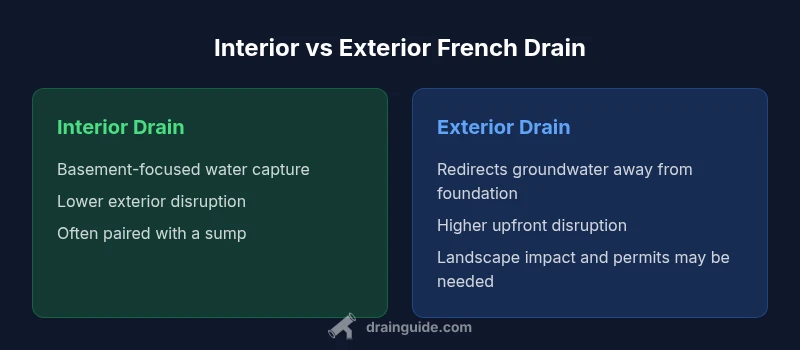
An interior drain system, often installed in basements or crawl spaces, uses perimeter trenches lined with perforated pipes and a sump pump to collect and move water toward a designated outlet. The phrase interior french drain vs exterior is most relevant here: interior systems focus on capturing water at its point of entry inside the structure. They are typically installed under the slab or along interior walls where water tends to pool, and they can be integrated with existing drainage or plumbed to a storm sewer or exterior discharge.
When inside a home, access to mechanical areas, the ability to carefully route pipes, and the availability of a stable interior space favor interior drainage. In addition, interior drains can be less disruptive to landscaping and utilities because most work takes place within the building envelope. However, interior drains often require more frequent maintenance because sediment and hair can accumulate in the pipe network, and the sump pump must be reliable and protected from power outages. The test here is to ensure a proper slope gradient and effective backfill, because a poorly designed interior system can stagnate and fail to remove water quickly enough.
Exterior French Drain: When it's the better choice
Exterior drains focus on directing groundwater away from the foundation and reducing hydrostatic pressure that can push water indoors. A properly designed exterior french drain runs a trench around the perimeter of the foundation, with perforated pipe wrapped in fabric and surrounded by gravel. This arrangement catches infiltrating water before it reaches the basement walls and channels it to an exit point such as a storm sewer, dry well, or other approved discharge. Exterior drainage is typically more effective for properties with high water tables, expansive soil with poor drainage, or sites where basement flooding is primarily groundwater-driven. The main trade-off is exterior disruption—landscaping, grading, and possibly hardscape work—coupled with higher upfront costs and potential permitting.
Key site factors: soil type, water table, and foundation risk
Soil type plays a pivotal role in both interior and exterior drainage performance. Fine silts and clay soils drain slowly, which can complicate exterior trenching but may heighten the value of an interior system where you can control the channel and slope within the structure. Sandy soils usually drain quickly, which can reduce the effectiveness of exterior solutions if not designed properly, but they also lower the risk of water pooling indoors when interior systems are well-integrated with a sump and returns. The water table level determines how aggressively you need to redirect groundwater; in high-water-table areas, exterior drainage often wins for long-term protection. Foundation risk, including cracks and nearby stairs, should guide whether you add interior channels, exterior trenches, or a hybrid strategy that addresses both internal and external water movement.
Installation considerations: indoor slabs vs outdoor trenches
Interior drains require careful cutting or trenching within the floor, reliable connection to a sump pump or exterior discharge, and meticulous backfilling to prevent settlement. The benefit is minimal exterior disruption and quicker retrofitting in existing basements, but you must plan for temporary loss of workspace and potential dust and debris during slab work. Exterior drains entail trenching around the foundation, selecting appropriate backfill materials, and ensuring proper slope to move water away from the building. They demand landscape coordination and may require permits or utility clearances. A sound design will coordinate interior and exterior elements to optimize water management while reducing maintenance headaches.
Maintenance, cost, and long-term performance
Maintenance costs and schedules vary between interior and exterior drains. Interior systems typically require periodic checkups of sump pumps, cleanouts, and pipe lines to prevent clogs, while exterior systems require periodic scrutiny of drain grates, outlet points, and the surrounding soil for sediment buildup or root intrusion. In terms of cost, interior installs often have moderate upfront costs with ongoing maintenance, whereas exterior installs can be more expensive upfront due to trenching, backfill, and landscape restoration. Longevity depends on soil conditions, backfill quality, and how well the system is protected from debris and root intrusion. With proper design, both approaches can last several decades, but exterior solutions tend to exhibit stronger long-term resilience against groundwater intrusion.
Hybrid approaches and practical planning tips
For sites with mixed water sources, a hybrid strategy can offer robust protection. For example, an interior system can handle interior hydrostatic pressure and basement seepage, while an exterior trench manages exterior groundwater. The key is a cohesive design: ensure that sump-discharge paths do not short-circuit exterior drains, and verify that grading around the foundation promotes outward water flow. Practical tips include conducting a water assessment after rainfall, consulting a drainage professional for a site-specific plan, and scheduling a phased installation to minimize disruption. A well-coordinated hybrid approach can balance immediate needs with long-term reliability.
Decision framework: create your drainage plan
A structured decision process helps homeowners move from problem identification to a chosen solution. Start by mapping water sources: interior water intrusion patterns during rain, and outdoor pooling or damp soil around the foundation. Then assess site constraints: soil type, grade, landscaping, and accessibility for exterior digging or interior work. Finally, weigh maintenance commitments, budget considerations, and potential permits. If water sources are primarily groundwater with stable soil, exterior drainage may be best; if basement symptoms dominate, interior drainage yields faster relief. Drain Guide emphasizes documenting the decision and planning for periodic system checks to sustain performance.
Comparison
| Feature | Interior Drain (Basement/Indoor) | Exterior Drain (Foundation Perimeter) |
|---|---|---|
| Water source focus | Interior water intrusions, sump load | Groundwater and surface runoff around foundation |
| Installation disruption | Low exterior disruption; most work indoors | High exterior disruption; landscaping and grading involved |
| Maintenance needs | Moderate; sediment buildup and pump maintenance | Low to moderate; outlets and backfill need periodic checks |
| Cost range (installation) | Moderate; slab work varies by home | High; trenching, backfill, and landscaping costs |
| Effectiveness over time | Mid-term relief with proper design | Long-term groundwater management with proper design |
| Permits and codes | Often fewer permits for interior work | Exterior drainage changes commonly require permits |
| Best for | Basement flooding mitigation and interior humidity control | High groundwater, soil with poor drainage, and erosion concerns |
Positives
- Both options reduce water intrusion when properly designed
- Interior drains offer quicker basement relief with less exterior disruption
- Exterior drains are robust against groundwater movement and long-term risk
- Hybrid approaches can address multiple water sources effectively
- Drainage systems can integrate with sump pumps and grading for reliability
Cons
- Interior drains may require more frequent maintenance and power during outages
- Exterior drains involve more invasive installation and landscaping work
- Both systems require accurate slope and backfill to prevent stagnation
- DIY installation risks errors in design, grading, or discharge points
Exterior drains generally provide stronger long-term groundwater control; interior drains offer faster, less disruptive basement relief.
Choose exterior when groundwater pressure is the primary concern. Choose interior for quicker basement mitigation with minimal exterior impact; consider a hybrid in complex sites.
Got Questions?
What is the key difference between interior and exterior French drains?
Interior drains address water entering the building and are installed inside the structure, often with a sump pump. Exterior drains handle groundwater around the foundation and are installed outside. The two approaches target different water sources and have distinct installation and maintenance profiles.
Interior drains work inside the building with a sump, exterior drains redirect groundwater outside.
Can you install an interior French drain in an existing slab?
Yes, it’s possible to install an interior drain in an existing slab by cutting into the concrete and routing pipes to a sump or discharge point. This work requires careful planning to manage dust, debris, and structural impact.
Yes, but it involves cutting the slab and careful routing of pipes.
Do exterior drains require permits?
Policies vary by locality, but exterior drainage work that changes grading or stormwater routes often requires permits. Check with your local building department for requirements and inspections.
Check local codes; permits are common for exterior grading changes.
What maintenance is needed for French drains?
Regularly inspect cleanouts, ensure outlets are clear, and test pumps if installed. Watch for sediment buildup, root intrusion, and signs of clogging that reduce flow.
Inspect, clear outlets, and test pumps; watch for clogging.
Can a hybrid approach be best?
Yes. A hybrid strategy can address both interior water intrusion and exterior groundwater, especially on challenging sites with multiple water sources.
A hybrid can be smart if your site has multiple water sources.
How long do French drains last?
With proper design and maintenance, French drains can last for several decades. Longevity depends on soil conditions, backfill materials, and how well the system is protected from debris and intrusion.
They last many decades with proper care.
The Essentials
- Assess water source before choosing a method
- Consider site-specific soil, grade, and foundation risk
- Weigh disruption, cost, and maintenance in your plan
- Hybrid approaches can balance short-term relief with long-term protection
- Consult a professional early to design a cohesive system