French Drain vs Channel Drain: A Side-by-Side Guide
A detailed, objective comparison of french drain vs channel drain, covering operation, installation context, maintenance, costs, and ideal use cases for homeowners seeking reliable drainage decisions.


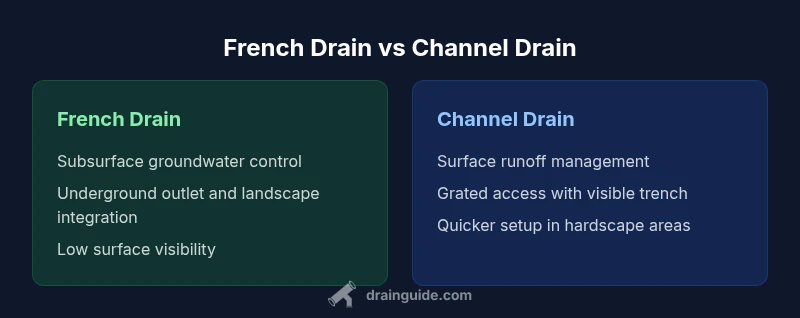
In practice, french drain vs channel drain each solves surface and subsurface water problems, but they serve different conditions. According to Drain Guide, the choice hinges on site factors, maintenance tolerance, and the desired aesthetic. A french drain is a subsurface solution that uses a trench, gravel, and a perforated pipe to redirect groundwater away from foundations and low spots. A channel drain, by contrast, is a surface system with a trough and grate that quickly removes runoff from paved areas. The short answer is: pick the option that matches where the water originates, how you want it moved, and how visible you’re willing to live with.
french drain vs channel drain: what's the difference and why it matters
Understanding the core distinction between a french drain and a channel drain helps homeowners make durable drainage choices. According to Drain Guide, these systems address water in different ways, and the right choice depends on site conditions, maintenance tolerance, and landscape goals. A french drain typically sits beneath the surface, using a perforated pipe, gravel, and fabric to guide groundwater away from foundations or low spots. In contrast, a channel drain is a surface solution that captures runoff along walkways or driveways and directs it to a lower outlet or a storm sewer. The decision isn't simply about cost; it's about where water originates, how it moves through your property, and how you want that movement to look and perform over time.
,
Comparison
| Feature | French Drain | Channel Drain |
|---|---|---|
| Drainage mechanism | Subsurface system that relies on a perforated pipe surrounded by gravel and fabric to collect groundwater and redirect it away from problem areas | Surface or near-surface system that uses a trench with a grate to collect surface runoff and convey it to an outlet |
| Installation depth | Buried below grade; depth varies with soil and targeted moisture levels (often 1–3 ft below surface) | At or just below the surface in hardscape trenches; depth guided by grade and outlet location |
| Best use case | Soils with poor drainage, high groundwater, or foundation/wedge water concerns; landscaping areas needing subgrade control | Areas with frequent surface runoff on patios, driveways, or walkways where rapid drainage is desired |
| Maintenance | Infrequent; periodic inspection for sediment, occasional gravel replacement or pipe check | Regular cleaning of the grate; debris removal; possible trench clearing if clogging occurs |
| Aesthetics | Hidden under soil or contained within landscape beds; often invisible | Visible as part of the hardscape or integrated with a decorative grate—choice affects curb appeal |
| Cost range | Moderate-to-high upfront due to trenching, gravel, and piping | Moderate upfront; cost primarily from trenching, grate, and concrete or paver work |
| Durability | Long-lasting with proper filtration and drainage design; less prone to surface debris | Durable for surface protection but can clog if debris is not managed and requires periodic maintenance |
Positives
- Subsurface drainage minimizes surface disruption and can improve foundation protection
- Channel drains offer immediate surface runoff relief for patios and walkways
- Both options, when designed correctly, help prevent waterlogging and erosion
Cons
- French drains require excavation and may disrupt landscaping during installation
- Channel drains can be more visible and require careful integration with hardscape to look intentional
- Maintenance is ongoing for both; french drains depend on proper filtration and gravel integrity
Choose french drain for long-term subsurface control; choose channel drain for rapid surface runoff and areas with heavy pavements
A subsurface approach (french drain) is generally best for groundwater management and foundation protection. A surface approach (channel drain) excels where water flows quickly across hard surfaces and needs immediate removal.
Got Questions?
What is the defining difference between a french drain and a channel drain?
The key difference is subsurface versus surface drainage. A french drain sits underground to redirect groundwater, while a channel drain sits on the surface to move runoff away quickly. Each serves distinct water sources and design intents.
French drains are underground conduits with gravel and pipe, channel drains are surface channels with grates. Choose based on whether water comes from below ground or across the surface.
Which drain is better for high groundwater or basement flooding risk?
For high groundwater or basement risk, a french drain is typically more effective because it targets subsurface water before it reaches foundations. Proper design and outlet placement are essential.
Go subsurface with a french drain to intercept groundwater before it impacts your foundation.
Can I install either drain myself, or should I hire a pro?
DIY installation is possible for basic, shallow setups, but professional installation is often recommended for proper grading, outlet alignment, and ensuring long-term performance.
DIY is possible for simple projects, but a pro helps ensure correct grading and outlet placement.
How long do french drains typically last?
With proper filtration and maintenance, french drains can last many years. Longevity depends on soil conditions, sediment buildup, and how well the system handles debris.
If well maintained, a french drain can last a long time; expect periodic checks.
Are channel drains better for driveways or patios?
Channel drains are generally better for driveways and patios where surface runoff is frequent and needs rapid removal, especially where grates can be integrated with the hardscape.
Channel drains shine where water flows across hard surfaces and you want quick relief.
Do these drains require a slope or grade to work effectively?
Yes, both systems rely on proper slope toward an outlet. A french drain requires a consistent downward grade to keep groundwater moving; a channel drain needs a slope to direct water to the outlet.
Both need a correct slope: gravity moves the water to the exit.
The Essentials
- Evaluate site water source before choosing a solution
- French drains suit subsurface drainage; channel drains suit surface runoff
- Consider maintenance burden and landscaping impact
- Plan for proper grading and outlet placement to maximize effectiveness
- Integrate with existing landscape and hardscape for best aesthetics