French Drain vs Sump Pump: A Practical Comparison
Compare french drain and sump pump setups to decide which solution fits your home drainage needs. Learn installation considerations, maintenance, and best-use scenarios for durable basement and foundation protection.


The choice between a French drain and a sump pump hinges on site drainage, water table, and maintenance preferences. In many homes, a French drain excels for passive drainage around foundations, while a sump pump handles active water removal from basements. Drain Guide's analysis suggests evaluating soil, slope, and existing runoff to pick the best solution.
French drain vs sump pump: definitions and core differences
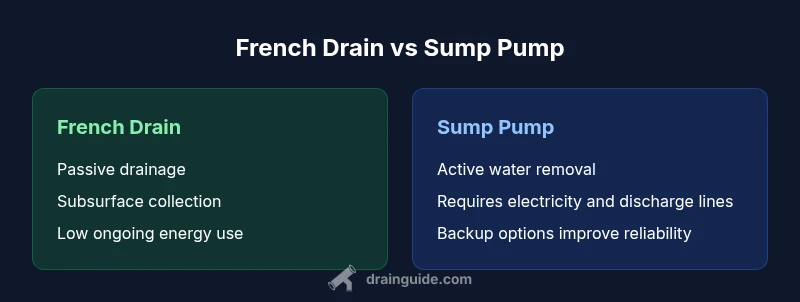
Understanding the core difference between a french drain vs sump pump helps homeowners map out a practical drainage strategy. A French drain is a buried trench filled with gravel or rock and perforated pipe, designed to redirect groundwater away from the foundation. A sump pump, by contrast, sits in a basin and actively ejects water out of the home when the water level rises. This quick distinction matters for whether you need passive drainage, active pumping, or a combination. According to Drain Guide, the decision should be driven by site conditions such as soil type, slope, drainage patterns, and the water table. If your yard drains slowly and groundwater remains around the foundation after rain, a French drain can provide continuous passive relief. If you experience basement or crawl-space flooding, a sump pump adds active removal with backup options. The right choice also depends on maintenance willingness: passive drainage works quietly in the background, while active pumps require regular checks and battery backups.
In modular terms, think of the French drain as a passive system that intercepts groundwater before it ends up where it shouldn’t, whereas a sump pump is an active tool that moves water out of a building when needed. Drainage design should account for anticipated rainfall, seasonal shifts, and soil permeability. A clay-rich soil, for example, may benefit from a more aggressive trench layout to prevent water buildup, while sandy soils often drain quickly and may not need as extensive an installation. The Drain Guide team emphasizes that early site assessment saves headaches later.
Key takeaway: French drains provide ongoing, low-maintenance relief from groundwater around your foundation, while sump pumps guard basements by actively removing water that collects in a sump basin. Both strategies can be part of an integrated solution when conditions are right.
When each system is best: use-cases and scenarios
Choosing between a French drain and a sump pump depends largely on how water behaves on your property and where you experience dampness or flooding. If you notice persistent dampness around the foundation after rain, or if your soil drains poorly and water tends to pool near the foundation, a French drain can help divert this moisture away from the home. For homes with basements or crawl spaces that flood during storms or rapid snowmelt, a sump pump provides active water removal to prevent standing water. In newer construction, a French drain may be installed as part of a broader drainage system to lower hydrostatic pressure; for older homes, a sump pump may be the more practical upgrade when water intrusion becomes frequent. Drain Guide notes that you may need a combination: passive drainage to redirect groundwater plus an active pump for emergency or high-water events. In flood-prone areas, pairing both approaches offers a layered defense. Another scenario: seasonal homes with intermittent occupancy might rely more on passive drainage to minimize energy use, while full-time residences prioritize a pump with a backup power source. The key is to map drainage sources, not just symptoms, and plan accordingly.
In short, French drains excel in passive, continuous mitigation of groundwater around the foundation, while sump pumps are the go-to for active removal of water that penetrates your interior spaces. For many homes, a hybrid approach delivers the most reliable protection against water damage. Drain Guide’s analysis shows that a well-designed system considers soil type, water table, climate, and maintenance willingness.
How a French drain works: layout and installation considerations
A French drain works by intercepting groundwater at or near the foundation and guiding it away from the home through a perforated pipe surrounded by a gravel or rock fill. The trench height and slope matter: it should be sloped away from the building to ensure gravity does the work, with the pipe leading to a dry well, a storm sewer, or a low-lying area. The system is typically buried just below grade, so surface grade is restored with soil and turf. Materials matter: high-permeability gravel and a filter fabric prevent soil clogging and keep the pipe from silting. In some installations, a cleanout point helps with future maintenance. Soil type informs trench depth and width; clay soils require wider trenches and careful backfilling to avoid compaction that reduces performance. The Drain Guide team notes that proper design, including a catch basin or a series of inline outlets, can dramatically improve efficiency and lessen long-term maintenance. When planning direction, consider existing downspouts, driveways, and landscape features to prevent new water pathways that bypass the drain. If you observe ongoing surface pooling or damp soils after rain, a deeper or extended French drain might be warranted.
Installation costs tend to reflect trenching complexity, materials, and labor. A well-planned French drain, properly integrated with other drainage features, can protect foundations for many years with minimal ongoing maintenance. Consultant guidance suggests testing the system after heavy rainfall to confirm that water is moving away from the home and not creating new pools elsewhere.
Design tips for success include aligning the drain with natural slope, ensuring a reliable outlet, and securing the system with a vent or cleanout where convenient. These steps reduce the likelihood of clogs and improve long-term performance. Drainage projects should be treated as part of an overall foundation protection plan rather than a single fix.
How a sump pump works: layout and installation considerations
A sump pump requires a dedicated basin placed in the lowest part of the building, typically a basement or crawl space. The pump sits inside the basin and activates when water rises to a predefined level, pumping it out through a discharge pipe to an outdoor barrier or municipal storm line. A check valve prevents backflow, and many systems include a battery-backed backup pump for power outages. Electrical readiness is essential: a dedicated outlet and proper grounding are prerequisites for safe operation. The discharge line should be directed away from the house to prevent re-entry, and some codes require a trench or grading changes to maintain drainage efficiency. Maintenance includes testing the pump monthly, clearing debris from the pit, and inspecting the backup battery on a regular schedule. A sump pump is particularly valuable when basement flooding is likely due to high groundwater or poor exterior drainage, but it does require ongoing attention and a power source. Drain Guide emphasizes considering climate and power reliability; in areas with frequent outages or severe storms, a dual-pump setup with a battery backup or generator is a smart precaution.
The pump’s performance hinges on outlet accessibility, proper venting, and preventing clogs in the discharge line. Regular checks during wet seasons help ensure that a sump pump remains ready to respond when needed. When evaluating a sump pump alone, remember that a malfunctioning pump during a storm can lead to significant water damage, so a backup plan is prudent.
If you’re installing both a French drain and a sump pump, plan for how the two will interact: the French drain can provide passive moisture relief while the sump pump handles active removal in the case of large influxes. For best results, consult a drainage professional who can tailor the system to your soil type and home layout.
Home layout planning: soils, slope, and drainage design
Successful drainage design begins with a precise assessment of soil type, slope, and existing drainage patterns. Soil texture influences infiltration rates: clay-heavy soils drain slowly but retain water, while sandy soils allow quicker movement but may require more outlets to relieve pressure. A careful site survey should map the soil layers, identify areas of high water accumulation, and determine the water table depth. Slope is critical: drainage runs downhill, so the direction and steepness of the grade guide where you place a French drain or sump pump discharge. In addition to the foundation, consider gutters, downspouts, and existing landscape features that channel water toward the home. Letting water flow toward planned drainage zones can reduce hydrostatic pressure and minimize erosion. The Drain Guide team recommends creating a drainage plan that includes both passive and active components if needed.
When it comes to materials, choose perforated pipes with a robust filter fabric and appropriately sized gravel. Budget for durability and weather resistance, as outdoor components endure freeze-thaw cycles in colder climates. Finally, consult local codes for drainage discharge requirements and setback distances from property lines or wells. A well-designed system may include multiple drains or laps to handle heavy rainfall events without overburdening any single outlet.
In essence, the best drainage solution balances long-term reliability with minimal disruption and cost. A comprehensive plan reduces the likelihood of costly retrofits later and helps preserve your landscape value while protecting the home. Drain Guide stresses that early planning and professional design are critical to success.
Cost considerations and maintenance: upfront vs long-term
Cost considerations for drainage projects vary widely based on site conditions, trench length, materials, and labor. A French drain’s price reflects trenching depth, width, the volume of gravel, the number of outlets, and whether an outlet is connected to a storm sewer or a dry well. Sump pump installation costs are influenced by the pump’s horsepower, the quality of the basin, the length of the discharge line, and the presence of a backup power option. Because factors differ by region and property, it’s common to encounter a broad price range. In many cases, a well-designed French drain can reduce long-term maintenance costs by lowering hydrostatic pressure and dampness around the foundation, potentially reducing future foundation repairs. A sump pump, while offering crucial protection for basements, requires ongoing energy expenditure and periodic pump maintenance, including backups and battery checks during storms. Drain Guide points out that combining passive drainage with active pumping can yield a cost-effective, durable protection strategy.
Maintenance for a French drain is often limited to periodic checks for sediment or blockage, with cleaning scheduled as needed. Sump pumps demand regular testing, outlet inspection, and backup readiness to ensure reliability during power outages. When budgeting, think not only about installation but also about long-term performance, maintenance costs, and potential replacement of pumps or pipes in the future. A proactive maintenance plan, including seasonal inspections and weather-aware discharge routing, can extend system life significantly.
In short, upfront costs vary with length and materials, but long-term savings arise from fewer foundation problems and less dampness when drainage is well designed. Drain Guide recommends a balanced approach that accounts for local climate, soil, and maintenance willingness.
Troubleshooting common issues and signs you need upgrades
Even a well-planned French drain or sump pump system can show signs that it needs attention or upgrades. Common red flags for a French drain include water pooling along the trench line, reduced drainage efficiency after heavy rainfall, or visible clay or silt in the outlet area. For sump pumps, warning signs include alarming pump noises, nuisance cycling, overflow during heavy storms, or frequent outages of backup power. Clogs in the perforated pipe or around the trap area can reduce performance for both systems, so routine inspection and cleaning are essential. If you notice persistent dampness in the basement, check the discharge path to ensure it’s clear and directed away from the foundation. Ground movement or shifting landscape can also alter the system’s effectiveness, requiring regrading or additional outlets. When in doubt, consult a drainage professional to assess whether you need to reconfigure trench layouts, adjust slope, or upgrade to a backup power solution. The Drain Guide team emphasizes that ongoing maintenance is key to preventing minor problems from becoming major failures.
Seasonal checks—especially after heavy rains or snowmelt—help identify early issues. A consolidated maintenance plan, including sediment removal, filter checks, pump testing, and backup battery tests, can dramatically improve reliability. Remember, the right maintenance reduces the risk of water intrusion and protects the home’s structural integrity over time.
Putting it together: step-by-step planning guide
A practical planning guide starts with a transparent assessment of your site’s drainage needs and ends with a durable, integrated solution. Step 1: Map drainage sources by analyzing rainfall patterns, soil type, and slope. Step 2: Decide whether passive drainage (French drain), active removal (sump pump), or a combination best addresses your problem. Step 3: Design the layout with outlets that direct water away from the house and into appropriate drainage zones. Step 4: Choose high-quality materials, such as perforated pipes, filter fabric, and appropriate aggregate, and plan for future maintenance. Step 5: Schedule installation with a reputable contractor who aligns with local codes and can provide an optional backup power plan. Step 6: Develop a maintenance schedule, testing routines, and a contingency plan for power outages. Step 7: Review success criteria—reduced dampness around the foundation, dryer crawl spaces, and a dry basement during storms. The Drain Guide team encourages homeowners to treat drainage as a holistic system rather than a single device. A thoughtful plan that considers soils, climate, and lifestyle yields the most durable protection against water damage.
Final notes on choosing between a french drain vs sump pump
The key takeaway when comparing a french drain vs sump pump is to align the solution with site conditions and maintenance expectations. French drains excel in passive, continuous management of groundwater around foundations, minimizing dampness and hydrostatic pressure over time. Sump pumps offer active water removal when water intrudes and provide critical protection for basements or crawl spaces, especially where the water table is high or rainfall is heavy. In many homes, the best approach is a layered strategy that combines both systems—using a French drain to reduce groundwater and a sump pump to handle surge water or floods. Drain Guide emphasizes evaluating soil type, slope, climate, and power reliability as the foundation of any plan. With careful design and regular maintenance, a French drain vs sump pump decision can protect your home from water damage for years to come.
Comparison
| Feature | French drain | Sump pump |
|---|---|---|
| Primary function | Passive drainage redirects groundwater away from the foundation | Active water removal from a basement or crawl space |
| Best use case | Foundation drainage and sub-surface moisture control | Basement or crawl space water removal with collected water |
| Maintenance frequency | Low to moderate; occasional inspections | Moderate; regular checks and power backup |
| Typical installation effort | Moderate to extensive installation including trenching | Moderate; needs electrical outlet and discharge line |
| Cost range (general discussion) | Medium to high (depends on trench length and materials) | Low to medium (pump + plumbing) |
| Reliability in heavy floods | Excellent with proper layout and drainage | Relies on power; performance can drop during outages |
| Longevity | Long-term with proper maintenance | Depends on pump quality and backup; potential replacements over time |
Positives
- Reduces foundation moisture and soil moisture around the home
- Passive drainage works continuously with minimal ongoing effort
- Pairs well with other drainage improvements for comprehensive protection
- Sump pump backup options provide redundancy in power outages
Cons
- French drains require significant trenching and landscape disruption
- Installation complexity increases with soil type and other obstacles
- Sump pumps rely on electricity and can fail during outages
Choose based on site conditions; a French drain is typically better for passive drainage, while a sump pump is essential for active removal and backup protection.
Select a French drain when you need ongoing groundwater relief around the foundation without relying on electricity. Opt for a sump pump if basement flooding is a risk or if you need rapid water removal during storms. For many homes, a combined approach offers the most reliable protection against water damage.
Got Questions?
What is the main difference between a French drain and a sump pump?
A French drain redirects groundwater passively away from the foundation using an underground trench and perforated pipe. A sump pump actively removes water collected in a basement or crawl space via a pump in a sump basin. The choice depends on soil, water table, and whether you need passive relief or active drainage.
A French drain is passive drainage; a sump pump actively removes water from a lower level. The right choice depends on your soil and water conditions.
When should I choose a French drain instead of a sump pump?
Choose a French drain when groundwater around the foundation remains a concern after rain and you want ongoing passive relief. A sump pump is preferable if basement flooding is likely or if surface water can accumulate in a lower level.
Choose a French drain for passive foundation drainage; a sump pump for active basement water removal.
Can I install both in the same system?
Yes. Many homes benefit from a hybrid approach that uses a French drain to reduce groundwater and a sump pump to handle surges or basement flooding. Proper design prevents water from overwhelming either system.
A hybrid setup can offer robust protection when designed correctly.
What maintenance do these systems require?
French drains require periodic checks for clogs and proper outlet function, usually less frequent than pumps. Sump pumps require regular testing, cleaning of the basin, and backup battery checks, especially before wet seasons.
Test the sump pump monthly and inspect the drain for blockages.
Are there any drawbacks to each solution?
French drains involve trenching and landscape disruption; installation cost can be significant. Sump pumps rely on electricity and can fail during power outages unless backup power is installed. Each has trade-offs based on site conditions.
Each solution has trade-offs: installation impact vs. energy dependence.
The Essentials
- Assess soil type and slope before choosing a system
- French drains favor passive drainage; sump pumps handle active removal
- Consider a hybrid approach in challenging sites
- Plan for maintenance and backup power to ensure reliability
- Integrate drainage with landscape design to optimize outcomes