Why is iPad Battery Draining Fast? Quick Fixes Guide
Discover why is battery draining fast on iPad and how to fix it quickly. Learn practical checks, settings tweaks, and prevention tips to restore iPad battery life in 2026.


Most iPads drain battery quickly due to background activity and high screen brightness. Start by disabling battery-heavy features like app refresh in the background, reducing brightness, and turning off location services for rarely used apps. If the problem persists, run a battery health check and update iPadOS to ensure optimal power management.
Why is the battery draining fast on iPad? Key causes and how they compound the issue
A common question homeowners ask is why is battery draining so fast on ipad. The short answer is that several factors work together to reduce total run time. Background activity from apps, widgets, and OS processes can keep the device awake longer than you realize. Add on-screen brightness, especially with high-refresh displays, and power-hungry features like location services, push notifications, and frequent app refresh can accelerate drain. In 2026, users expect smooth performance, but that convenience comes with power costs. Understanding the balance between performance and battery longevity helps you decide which tweaks matter most in your daily routine. This section covers the main culprits in plain terms and how to mitigate them without sacrificing usability.
How background activity saps iPad battery life
Background processes run even when you’re not actively using an app. Some apps refresh content, fetch data, or monitor notifications in the background. Each of these tiny activities adds up over hours and days, particularly if you routinely have many apps installed or enabled. The iPadOS power management system is designed to optimize this behavior, but it can’t shield you from heavy use patterns or poorly optimized apps. The fix is usually not a dramatic overhaul but a series of small, targeted adjustments that reduce wake time and keep the device responsive when you need it.
The role of display and hardware in drain patterns
The iPad’s display is a major power draw. Brightness, true tone, and high refresh rates (like ProMotion) can dramatically affect battery life, especially in outdoor or bright lighting. If you tend to use your iPad at high brightness, you’ll see more frequent charging. Other hardware factors—like a degraded battery, worn charging ports, or a charger that doesn’t regulate current well—also contribute to faster drain. Addressing these issues often yields noticeable improvements without needing a full device reset.
Common myths that waste energy and what to do instead
Many homeowners believe charging overnight or always fully charging the battery preserves life. In reality, modern lithium-ion batteries perform best with partial, regular top-ups and avoiding extreme heat. Leaving the iPad in direct sun or a hot car can accelerate aging and drain. Debunking these myths helps you craft a more realistic plan for conserving power while still enjoying full device capability. The goal is practical adjustments you can sustain over weeks and months.
Quick checks you can perform today to curb drain
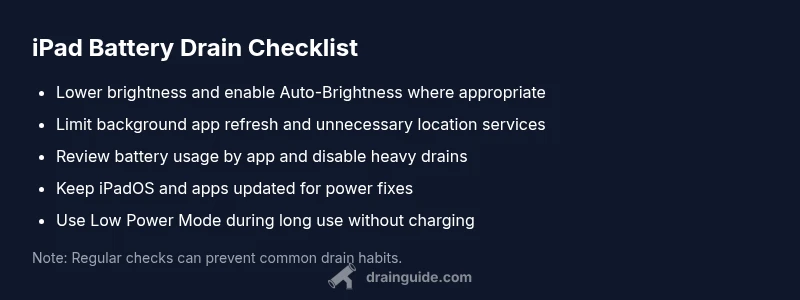
Start with small changes: enable Low Power Mode, reduce screen brightness, turn off location services for apps you don’t need, and disable background app refresh for seldom-used programs. Review push notification settings and email fetch schedules, as constant alerts wake the device. Ensure you’re on the latest iPadOS version since updates often include power-management improvements and bug fixes that affect drain.
Steps
Estimated time: 15-30 minutes
- 1
Reduce screen brightness
Open the Control Center or Settings and lower the brightness to a comfortable level. If you frequently move from indoors to outdoors, enable Auto-Brightness to adapt automatically, avoiding constant manual changes.
Tip: Pro tip: Use auto-Lock to keep the screen off when not in use to save power. - 2
Enable Low Power Mode
Low Power Mode reduces background activity, disables certain visual effects, and slows down background refresh. Turn it on when you expect longer intervals between charges.
Tip: Tip: You can automate this during charging or at low battery thresholds. - 3
Review battery usage by app
Go to Settings > Battery and inspect which apps consume the most power. Disable background activity for top culprits or replace them with lighter alternatives.
Tip: Tip: If an app consistently drains, consider reinstalling it or replacing it with an alternative. - 4
Limit background refresh and notifications
Turn off background app refresh for apps that don’t need to stay updated constantly. Reduce push notifications to essential alerts only.
Tip: Pro tip: Group notifications or set Do Not Disturb during focused work periods. - 5
Keep iPadOS and apps up to date
Install the latest iPadOS updates and ensure apps are updated. Updates often include power-management fixes and performance improvements.
Tip: Tip: Enable automatic updates if you prefer hands-off maintenance. - 6
Check battery health and consider a repair
If battery health appears degraded in Settings and performance remains poor, contact a professional or authorized service provider for diagnosis and possible replacement.
Tip: Warning: Do not attempt DIY battery replacements unless you have certified training.
Diagnosis: iPad battery drains noticeably faster than expected even with moderate use
Possible Causes
- highBackground activity from apps and system processes
- highHigh screen brightness or ProMotion-related power use
- mediumDegraded battery health or aging hardware
- mediumSoftware bugs or outdated iPadOS/app versions
Fixes
- easyLimit background app refresh and disable unnecessary location services
- easyLower screen brightness or enable auto-brightness with sensible thresholds
- easyCheck battery usage by app in Settings > Battery and restrict heavy users
- easyUpdate iPadOS and apps to the latest versions
- mediumReset settings or perform a factory restore only if issues persist after all checks
Got Questions?
What is the main reason my iPad battery drains quickly?
The most common causes are background activity from apps and a bright display. Addressing these with targeted adjustments often yields noticeable improvements without sacrificing performance.
The main reason is usually background activity and screen brightness. Tweak these to see quicker results.
How can I check which apps use the most battery on iPad?
Open Settings > Battery and review the per-app usage list. If a nonessential app drains power, disable background refresh or limit its activity.
Go to Settings, then Battery to see which apps use energy the most.
Should I replace the iPad battery if it drains fast?
If Battery Health shows significant wear and behavior doesn’t improve after tweaks, consult an authorized service provider for assessment and possible replacement.
If health is poor and performance stays bad, replacement may be needed.
Does Low Power Mode help with iPad drains?
Yes. Low Power Mode reduces background activities and can extend run time between charges, especially during long days away from power.
Yes, enabling Low Power Mode helps stretch battery life.
Is updating iPadOS always beneficial for battery life?
Updates often include performance and power-management improvements. Keeping the system current can reduce drain and fix known bugs.
Keeping iPadOS updated can improve battery performance.
What if the device still drains after all fixes?
If drain persists, perform a backup and consider a factory reset as a last resort, or consult a professional to check hardware health.
If it still drains, back up, reset if needed, and seek professional help.
Watch Video
The Essentials
- Identify and limit the top drain sources
- Tune display settings to balance usability and longevity
- Regularly review battery usage by app
- Keep iPadOS and apps updated for power fixes
- Seek professional help if battery health is poor