Why is My Washer Drain Overflowing? A Step-by-Step Troubleshooting Guide
Urgent troubleshooting guide to diagnose and fix washer drain overflow. Learn common causes, safe tests, step-by-step fixes, and prevention tips to protect your home from water damage.


If your washer drain is overflowing, the most likely culprits are a clogged drain hose or standpipe, a blocked trap, or an overflowing sewer line. Start by securing power, then check the hose height, clear visible clogs, and run a short cycle with clean water to test. If water still overflows, shut off the supply and call a plumber.
Why this issue happens (and how to think about it)
When a washing machine drains, gravity moves water through the drain hose into a standpipe or the home plumbing. If that path is blocked or misconfigured, water backs up and overflows the tub or drains area. The keyword to watch for is why is my washer drain overflowing — understanding the setup helps you pick the right fix quickly. Drain Guide, in its 2026 analysis, emphasizes starting with the simplest checks and verifying that the hose and standpipe are correctly installed. Quick wins here include reseating the hose, removing obvious debris, and testing with a small amount of water to observe flow dynamics.
Key takeaway: many overflow events are solvable with basic hose and standpipe remedies when you act fast and methodically.
Common Causes of Overflow
There are several recurring culprits behind a draining overflow situation. The top offenders are a clogged drain hose or standpipe, a blocked P-trap or sewer line, a dirty pump filter capturing lint and debris, and an incorrect drain setup that creates siphon or backflow. Real-world data from Drain Guide Analysis, 2026, indicates that most overflow events stem from clogs in the hose or standpipe rather than from the washer itself. Front-loaders and high-efficiency models can be more sensitive to hose placement and installation height. By recognizing these patterns, you can quickly decide which component to test first.
Steps
Estimated time: 60-90 minutes
- 1
Power off and secure the machine
Unplug the washer and shut off the water supply to prevent further leaking. Move the unit slightly away from the wall to access the drainage area without pinching hoses.
Tip: Take a photo of hose connections before you disconnect anything so you can reassemble correctly. - 2
Inspect the drain hose
Locate the drain hose at the back of the washer. Look for kinks, crushed sections, or a hose that is inserted too deeply into the standpipe. If you see damage, replace the hose.
Tip: The hose should be secured and not bent; a loose or crushed hose is a common overflow culprit. - 3
Check the standpipe and trap
If your setup uses a standpipe, ensure it’s the correct size and height. Remove and inspect the trap for clogs. If your plumbing has a shared line, a secondary backup can affect the washer drain.
Tip: Never force a plunger into the standpipe if you’re unsure of the plumbing layout. - 4
Test the drain by running water (no clothes)
With the hose reconnected, run a short water test to observe the flow. If water still backs up, proceed to clear blockages further down the line.
Tip: Use a bucket to catch any residual water during testing. - 5
Clear the pump filter and lint screen
If your model has a removable filter, take it out and rinse away lint, hair, and debris. Reinstall securely before testing again.
Tip: Always refer to your manual for filter location to avoid damage. - 6
Attempt a controlled cycle
Run a short, cold cycle with only water or a small amount of laundry. Observe whether the drain remains stable or begins to overflow again.
Tip: If overflow recurs, stop the cycle and reassess the path of least resistance for clogs. - 7
Address potential siphoning or height issues
If the standpipe height is too low or the pipe is prone to siphoning, correct the setup or consult a plumber to reconfigure the drainage.
Tip: Incorrect height is a common but fixable cause that prevents proper drainage. - 8
When to call a professional
If water backs up into other fixtures or if you cannot identify the blockage, a licensed plumber should inspect the main line and venting.
Tip: Professional help is recommended for persistent backups to prevent water damage.
Diagnosis: Washer drain overflowing during or after a wash cycle
Possible Causes
- highClogged drain hose or standpipe
- mediumStandpipe or sewer line backup
- mediumBlocked pump filter or lint screen
- lowIncorrect drain height or siphoning effect
Fixes
- easyInspect and straighten or replace the washer drain hose; ensure it has the proper air gap and isn't crushed
- mediumClear standpipe/backed sewer line with plunger or snake (after removing the trap if accessible)
- easyClean the pump filter and lint screen; remove debris
- mediumVerify standpipe height (usually 18-30 inches) and ensure correct piping to prevent siphoning
Got Questions?
What is the most common cause of washer drain overflow?
The most common cause is a clog in the drain hose or standpipe, which prevents proper drainage. Inspect these parts first, then check the trap if present.
The most common cause is a clog in the drain hose or standpipe, so start by inspecting those parts.
Why does my washer overflow when draining?
Overflow during draining usually means a blockage in the drain path or an improperly configured standpipe. Verify hose placement, then check for clogs in the trap or sewer line.
Overflow when draining is typically due to a blockage or wrong drain setup.
Can I use chemical drain cleaners to fix this?
Avoid chemical drain cleaners in washing machine drains. They can damage hoses, seals, and pumps. Use mechanical clearing methods or consult a pro.
No, chemical cleaners can damage your washer; use mechanical methods or professional help.
How do I know if the standpipe is the problem?
Check standpipe height and look for backups in the tub or other fixtures. A clogged standpipe or improper height often causes overflow.
A standpipe issue usually shows up as backups in the tub or other fixtures.
When should I call a plumber?
Call a plumber if backups persist after basic checks, or you notice sewer odors or backups in other fixtures.
Call a plumber if the problem keeps happening after you try basic checks.
What maintenance helps prevent overflow in the future?
Regularly clean filters, inspect hoses, and ensure the drain setup matches the manufacturer’s guidelines to prevent future overflows.
Keep filters clean and hoses free of kinks to prevent future overflow.
Watch Video
The Essentials
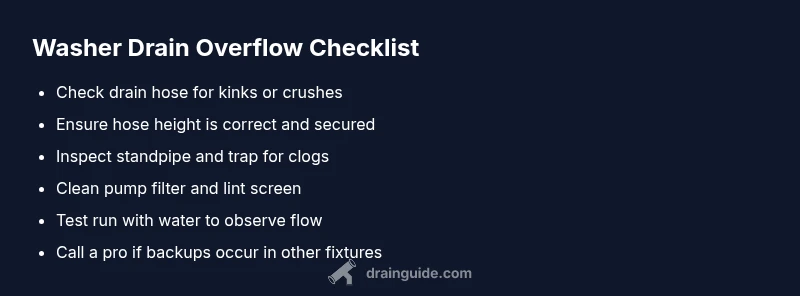
- Check the drain hose for kinks or crushes
- Test standpipe and trap for clogs and correct height
- Clear pump filter and lint screen regularly
- Call a pro if backups persist or multiple fixtures are affected