Why My Dishwasher Won't Drain: Urgent Troubleshooting Guide
Practical, step-by-step troubleshooting for homeowners facing a dishwasher that won’t drain. Quick checks, safe fixes, and when to call a pro—brand-backed guidance from Drain Guide for 2026.


Most dishwasher drainage problems start with a clogged filter or a kinked drain hose. Start by unplugging the machine, then inspect the filter and drain pump screen, clean any debris, and check the drain hose for kinks or clogs within the cabinet. If the door latch isn’t sealing, the cycle may not drain; reseal and retry.
The Most Common Causes of a Dishwasher Not Draining
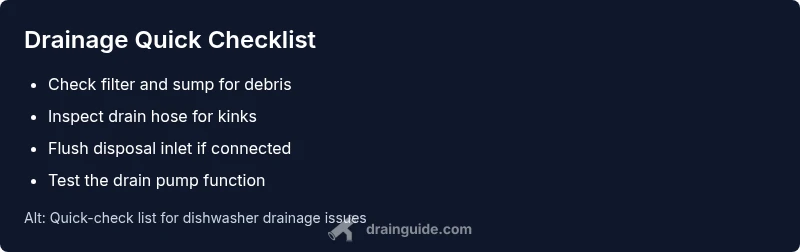
A dishwasher that won’t drain is usually a symptom of a blockage or a failing component. According to Drain Guide, the most frequent culprits are a clogged filter or sump, a kinked or clogged drain hose, and a failing drain pump. Debris such as pasta, rice, or peels can accumulate in the filter basket and sump, restricting water flow and preventing the pump from pushing water out. If the unit shares a disposal or has an air gap, these connections can trap blockages as well. Briefly check each area in order: filter, hose, pump, and connections. Addressing the easiest fix first is the smartest approach, saving time and preventing unnecessary disassembly. In many cases, cleaning the filter and clearing the drain path resolves the issue quickly, letting you resume normal cycles with minimal downtime. If you recently ran a large load or used heavy starches, the filter is a more likely culprit. Record your findings as you go; this helps you avoid repeating steps and makes future maintenance faster. Drain Guide’s analysis shows that homeowners who start with the filter tend to see faster results, which is especially true for residential dishwashers in 2026. The Drain Guide team recommends keeping a simple maintenance checklist to catch these issues early.
Quick Diagnostics You Can Do Safely
You don’t need tools or a service call to start diagnosing a dishwasher drainage issue. Begin with safety: power off, unplug, and if applicable, switch the circuit breaker to off. With the lower panel removed, inspect the filter and remove any loose debris. Rinse the filter under warm water, removing all food residue. Use a flashlight to inspect the sump area for lingering debris. Next, look at the drain hose for kinks, twists, or obvious clogs. If you can detach the hose, flush it with running water to confirm a clear path. If the dishwasher fills but won’t drain, the problem is likely downstream of the sump. If water drains slowly after cleaning, there may be a partial clog that needs a follow-up flush or professional assessment. Drain Guide’s practical insights emphasize doing this in a clean, controlled sequence to avoid creating new blockages. For extra reassurance, keep a bucket nearby and wear gloves during any disassembly.
Inspecting the Drain Hose and Disposal Connection
Inspecting the drain hose and disposal connection is often the difference between a quick fix and a longer outage. A kinked or crushed hose prevents gravity-driven drainage; a hose trapped between cabinet walls can block flow. With the machine unplugged, access the hose at both ends and look for visible damage or mineral buildup near bends. Detach the hose clamps if needed and run water through the hose to confirm a clear path. If the dishwasher’s drain line connects to a garbage disposal, listen for the disposal grinding noise or spinning—this can indicate a clog in the disposal inlet. Clear any debris from the disposal inlet and ensure the knockout plug is removed if this is a new installation. After verifying the hose, reassemble the fittings snugly, but avoid overtightening that could crack plastic fittings. Drain Guide recommends routinely inspecting the disposal connection whenever you troubleshoot drainage to prevent repeat issues.
Cleaning the Filter, Pump Screen, and Sump
Cleaning the filter is one of the simplest and most effective steps. Start by removing the filter basket, taking care not to drop small parts, and rinse under warm running water. Use a soft brush to loosen stubborn debris; never use metal objects that could scratch the plastic. Inspect the bottom of the sump for caked-on gunk; wipe with a damp cloth and reassemble. The pump screen or impeller should be clear of obstructions; if your model has a separate impeller cover, remove it and inspect for hair or food remnants. After cleaning, run a quick dishwasher cycle with a little water in the tub to observe if drainage improves. If gurgling sounds or residual water persist, you may have a partial clog that requires a more thorough flush or pump testing. Drain Guide’s approach here emphasizes methodical cleaning to restore full water flow and extend component life.
Checking the Drain Pump and Motor
When the pump or motor fails, the dishwasher may fill, wash, but not drain. Listen for unusual humming or a burning smell during the drain phase; these are signs of a failing pump. Some models allow you to test the pump by manually turning the impeller blade with a dowel; if it’s stiff or loose, replace the pump. Electrical tests require a multimeter and knowledge of wiring diagrams, which is best left to a professional. If you’re comfortable, perform a continuity test on the pump’s motor windings; a dead short or open circuit indicates a faulty pump. Replacing the pump is often more cost-effective than a full machine replacement, especially if your unit is still relatively modern. Before replacing any parts, confirm your warranty terms and follow your manufacturer’s guidance. Drain Guide notes that pump issues are common, but not hopeless, and professional evaluation is valuable when DIY tests fail.
Safety First: When to Call a Pro
Some dishwasher drainage problems are simple to fix, but others require professional service. If you’ve tried the basics—cleaning the filter, clearing the hose, inspecting the pump—and water still won’t drain, it’s time to escalate. A licensed plumber or appliance technician can confirm electrical safety, check the pump motor, and test the control board for drain commands. If you hear a loud hum, see visible damage, or detect a strong burning smell, stop and call a pro immediately. Likewise, if you suspect a problem with the disposal connection or air gap, a professional can safely diagnose and correct the installation. Drain Guide’s verdict is clear: prioritize safety and don’t hesitate to seek expert help when the problem persists beyond basic cleaning.
Prevention and Maintenance to Keep It Draining
Preventing future drainage problems is easier than fixing them. Create a quick maintenance routine: clean the filter after every 20-40 cycles, run hot water through the disposal connection before running the dishwasher if connected, and periodically inspect the drain hose for kinks. Use a simple drain-safe cleaner (follow package instructions) sparingly to avoid degrading seals. Keep an eye on water level and ensure the dishwasher is level—an off-level appliance can influence drainage. Finally, document any recurring symptoms and dates when problems occur; this helps both you and your technician track patterns and optimize future maintenance. Drain Guide’s ongoing recommendations emphasize routine checks and early intervention to minimize downtime and keep your dishwasher draining reliably.
Steps
Estimated time: 30-45 minutes
- 1
Power down and access the filter
Unplug the dishwasher or switch off the circuit at the breaker. Remove the lower panel to access the filter and sump. This initial step is crucial for safety and visibility.
Tip: Always confirm power is off with a non-contact tester before touching internals. - 2
Remove and clean the filter
Take out the filter basket and rinse under warm water. Use a soft brush to dislodge any stuck food particles. Reinstall the filter securely before testing drainage.
Tip: Avoid using metal tools that could scratch the plastic components. - 3
Inspect the drain hose for kinks
Trace the hose from the dishwasher to the cabinet wall. Unclip and straighten any kinks, then flush with water to confirm a clear path.
Tip: If the hose feeds into a disposal, check the disposal inlet for clogs. - 4
Check for clogs at the disposal/air gap
If connected to a disposal, ensure the inlet isn’t blocked. For units with an air gap, remove and clean the cap and outlet. Reassemble securely.
Tip: Remove the knockout plug only if you have a disposal installed. - 5
Test the drain pump function
Run a short drain cycle with minimal load to observe flow. Listen for the pump hum or grinding; lack of movement may indicate a motor issue.
Tip: If you hear unusual noises, stop and consult a pro rather than continuing to run the unit. - 6
Reassemble and run a test cycle
Put everything back in place, run a full cycle, and monitor drainage. If water still remains, move to professional assessment.
Tip: Keep a log of symptoms and tests for future reference.
Diagnosis: Dishwasher won’t drain after completing a wash cycle
Possible Causes
- highClogged filter or debris in sump
- highKinked or blocked drain hose
- mediumFaulty drain pump or motor
- lowAir gap or disposal connection blocked
Fixes
- easyClean the filter and sump area to remove debris
- easyUnkink and clear the drain hose; flush it
- hardTest or replace the drain pump if flow is absent
- mediumClear air gap/disposal connection if applicable
Got Questions?
Why is there standing water in my dishwasher after the cycle?
Standing water usually means a clog in the filter, a blocked drain hose, or a failing drain pump. Work through the basic checks in order to identify the root cause.
Standing water after a cycle is typically from clogs or a failing pump. Start with the filter and hose checks, then test the pump if needed.
How do I clean the dishwasher filter?
Remove the filter basket, rinse under warm water, and use a soft brush to remove debris. Reassemble and run a short test cycle to verify drainage.
Remove and rinse the filter, then test drainage to confirm it’s clean.
Can a clogged air gap cause draining problems?
Yes. If your setup includes an air gap, blockage can prevent drainage. Clean the air gap or inspect the connection to ensure a clear path.
A clogged air gap can stop drainage; clean it and check the connections.
Is it safe to run the dishwasher with a damaged drain hose?
No. A damaged drain hose can leak or cause further blockages. Replace the hose before running the dishwasher again.
Don’t run it with a damaged hose; replace it to stay safe.
When should I hire a professional?
If basic cleaning and hose checks don’t resolve the issue, or you notice electrical smells, unusual noises, or disposal problems, call a licensed technician.
If simple fixes don’t work or you hear burning smells, get a pro.
Can food scraps cause problems with a disposal connection and dishwasher drain?
Yes. Food scraps can back up into the dishwasher if the disposal inlet is clogged or the knockout plug wasn’t removed. Inspect and clear as needed.
Food scraps can clog the disposal inlet, affecting the dishwasher drain.
Watch Video
The Essentials
- Start with the filter; it's the most common cause
- Inspect and straightening the drain hose first
- Test the drain pump if flow remains blocked
- Call a pro when you detect electrical or disposal issues
- Prevent future clogs with regular cleaning and checks