Install Bathroom Drain: Step-by-Step DIY Guide
Learn how to install a bathroom drain safely and correctly with Drain Guide’s step-by-step guide. Practical, DIY-friendly instructions for homeowners to prevent leaks and ensure reliable drainage.


According to Drain Guide, you can install a bathroom drain with basic plumbing tools and careful preparation. This quick guide outlines the goal, essential safety steps, and the key prerequisites before starting. You’ll learn a streamlined, step-by-step method to install the drain, seal joints, and test for leaks, reducing the risk of future clogs or water damage. Follow these steps to complete a professional, code-compliant install.
Understanding why proper drain installation matters
A bathroom drain is a closed system designed to move wastewater away while preventing sewer gases from entering your living space. A sloppy install can lead to leaks around the flange, slow draining, gurgling noises, and even mold growth behind walls. According to Drain Guide, the right combination of flange type, sealant, and correct trap alignment is essential for longevity. The Drain Guide team found that most leaks originate at poorly seated joints or mismatched pipe materials. By planning for venting, slope, and accessible cleanouts, you reduce maintenance and future headaches. This section explains why precision in the early steps pays off with long-term reliability.
Planning and measurements for a bathroom drain
Before you touch tools, map out the drain location, flange size, and connection to the waste line. Measure the drain hole diameter on the tile or vanity base and confirm the flange thread type (for replacement parts). Check local code requirements for slope and venting, especially for showers or bathtubs with built-in traps. Gather the parts that match your chosen drain kit (PVC, ABS, or metal) and ensure you have compatible gaskets, seals, and connectors. A well-planned layout minimizes tile removal and reduces the risk of an improper seal later. Drain Guide analysis emphasizes taking accurate measurements and verifying compatibility with existing plumbing to avoid rework.
Choosing drain components and materials
Drain assemblies come in several configurations: flange-and-nut, clamping ring, and adjustable height variants. Choose materials compatible with your piping (PVC-to-PVC, PVC-to-metal, or metal-to-metal) and consider corrosion resistance in a bathroom environment. A standard bathroom drain kit includes a flange, a drain body, a compression seal, a tailpiece, a P-trap, and slip-joint connectors. For tile installations, a sloped drain flange with a proper gasket is essential to prevent standing water. Keep in mind that some manufacturers require specific sealants; always follow the product instructions. Using mismatched parts creates leaks, odors, and future failures. Drain Guide Team notes that matching components from the same family simplifies installation and maintenance.
Preparing the installation space
Clear the area and remove existing drain components carefully. If you are replacing an old drain, take photos of the setup to guide reassembly. Remove any grout or caulk around the drain opening and inspect the subfloor or shower pan for soggy spots. Ensure there is a clean, dry surface for new seals. If you encounter damaged subfloor or wet insulation, address those issues before continuing. Label or organize the parts as you go, so you don’t mix nuts, washers, or gaskets. A tidy workspace reduces mistakes and speeds up the install.
Installing the drain flange and body
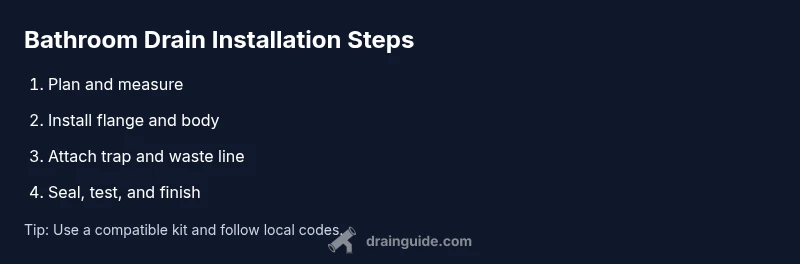
Install the flange first, ensuring it sits flush with the finished surface. Thread the drain body into the waste line using the appropriate sealant (putty for metal, silicone for tile, or solvent cement for PVC). Tighten nuts or compression rings until snug, but avoid overtightening, which can crack the flange or crack tile. Align the flange so the bottom of the tile line sits correctly and the trap arm will connect without kinks. If your drain kit includes a gasket, place it in the correct orientation before seating the drain. Take a photo after each major step to document configuration in case you need to troubleshoot later.
Sealing joints, installing the trap, and connecting to waste line
Apply plumber's putty or silicone at every joint as recommended by the manufacturer. Install the P-trap and trap arm, ensuring a clean, dry connection that allows for easy disassembly. When connecting to metal pipes, use PTFE tape on threaded joints and avoid tape on slip joints where it can shed into the system. If using PVC or ABS, use primer and cement in a well-ventilated area and allow proper curing time before pressure testing. Perform a careful check to ensure the trap remains properly oriented and that there are no cross-threaded connections.
Testing for leaks and finishing touches
With the trap fitted and sealed, slowly fill the drain with water to test for leaks around the flange, seals, and joints. Look for drips under the tile line and verify that the trap holds water as expected. If you see leaks, depress joints slightly and re-seat sealed areas, then re-test. Once the system is leak-free, re-caulk around the tile edge or finish, wipe away excess sealant, and recheck after curing time. Keep the area dry during curing to avoid mold growth.
Common mistakes and how to avoid them
Rushing the sealant cure time can lead to premature leaks. Mixing different brands of parts can cause incompatibility and weaker seals. Using metal-on-metal threads without plumbers tape creates friction and leaks. Failing to check for venting or adequate slope can cause slow drainage or gurgling sounds. Always measure twice, dry-fit parts, and follow manufacturer instructions closely. The right sequence minimizes callbacks and callouts for leaks.
Maintenance tips after installation
Inspect the drain monthly for signs of leaks or slow drainage. Clean the strainer and remove hair buildup with a small brush. Avoid chemical drain cleaners that can corrode seals; instead, use a mild enzymatic cleaner if needed. Periodically recheck the caulk line around the tile edge and refresh sealant every few years or as wear dictates. A simple, proactive maintenance routine saves time and money in the long run.
Authority Sources
- https://www.iapmo.org/
- https://extension.oregonstate.edu/
- https://extension.illinois.edu/
These sources provide general guidance on residential drain installation and safe plumbing practices.
Tools & Materials
- Adjustable wrench(For tightening slip joints and nuts)
- Channel-lock pliers(Grip and twist stubborn joints)
- Pipe wrench(Helpful for metal pipes, optional)
- PTFE tape (Teflon tape)(Seal threaded joints)
- Plumber's putty or silicone sealant(For sealing flange-to-tloor connections)
- PVC/ABS primer and solvent cement(Use if plastic drains/pipes are PVC/ABS)
- Silicone caulk(Seal tile edges and finishing gaps)
- Measuring tape(Size drain opening and components accurately)
- Utility knife(Trim foam or excess material)
- Bucket and rags(Contain spills and clean work area)
Steps
Estimated time: 90-120 minutes
- 1
Remove old drain assembly
Power down any nearby fixtures if needed; carefully detach the existing drain and capture its configuration for reference. Note any tile damage and plan to address it. This sets the stage for a clean installation.
Tip: Take clear photos from multiple angles before disassembly. - 2
Measure drain hole and flange size
Measure the current hole diameter and determine the flange type required for replacement. Confirm thread size and compatibility with chosen drain kit to prevent mismatches.
Tip: Bring old parts to the store to verify fit. - 3
Choose compatible drain and sealant
Select a drain kit that matches your piping material (PVC, ABS, or metal) and pair it with the appropriate sealant. Consistency reduces leaks and simplifies maintenance.
Tip: Avoid mixing metals and plastics unless specified by manufacturer. - 4
Install drain flange and body
Set the flange flush with the finished surface. Thread the drain body into the waste line using the recommended sealant. Tighten gradually to avoid cracking tiles.
Tip: Dry-fit first to ensure alignment. - 5
Attach tailpiece and trap
Connect the tailpiece to the drain body and install the P-trap with proper orientation. Ensure all slip joints are snug without overtightening.
Tip: Keep trap aligned to prevent kinks. - 6
Seal joints and connect to waste line
Apply putty or silicone at joints as directed. Use PTFE tape on threaded metal joints and cement for PVC when required. Allow curing time as specified.
Tip: Ventilate the area when using solvent cement. - 7
Test for leaks
Slowly fill the drain to check for leaks around the flange and joints. If leaks appear, reseat joints and re-test before proceeding.
Tip: Test with the longest possible water load to simulate real use. - 8
Finish and verify
Caulk the tile edge where needed, clean excess sealant, and confirm the system remains leak-free after curing.
Tip: Keep area dry during curing to prevent mold.
Got Questions?
What is the first step to install a bathroom drain?
Identify the drain type, remove the old unit if present, and take reference photos before disassembly. This helps ensure you choose compatible parts and reassemble correctly.
Identify the drain type, remove the old unit, and take photos to guide reassembly.
Do I need a vent for a bathroom drain?
Yes, most installations require proper venting to prevent siphoning and ensure smooth drainage. Check local codes and plan venting accordingly.
Yes. Most bathrooms require venting; check your local code.
What tools are essential for installing a bathroom drain?
You’ll need adjustable wrenches, PTFE tape, a silicone sealant or plumber's putty, a measuring tape, and a P-trap assembly. Optional items include a pipe wrench and channel-locks for stubborn joints.
Essential tools include wrenches, tape, sealant, and a P-trap.
Can I install a bathroom drain over tile?
Yes, many drains are designed for tile installations. Use a suitable flange and gasket, and ensure you seal around the tile edge to prevent water intrusion.
Yes, with the right flange and gasket, you can tile around it properly.
How long does a typical bathroom drain install take?
Most installations take about 1 to 2 hours for a straightforward replacement, longer if tile work or subfloor repairs are required.
Typically about 1 to 2 hours, depending on prep work.
Should I use PVC, ABS, or metal drain components?
Choose based on your existing piping and local code. PVC/ABS are common in modern bathrooms, while metal drains are durable but require compatible fittings.
Pick based on your pipes and code requirements; PVC/ABS are common.
What should I do if I see a wet subfloor after installation?
Stop and reassess the seal and joints. Address moisture and inspect for damaged substrate before continuing to avoid mold.
If the subfloor is wet, pause and fix the substrate before proceeding.
Watch Video
The Essentials
- Plan, measure, and gather compatible parts before starting.
- Seal joints properly to prevent leaks and odors.
- Test for leaks thoroughly before finishing.
- Maintain the drain regularly to avoid future clogs and issues.