Drain Valve Replacement for Water Heaters: A Practical Guide
Learn to safely replace the drain valve on a water heater with this comprehensive, DIY-friendly guide. Tools, materials, step-by-step instructions, pro tips, and safety considerations to prevent leaks and water damage.


In this guide, you will learn how to replace the drain valve on a water heater safely and correctly. You’ll identify the right valve, shut off power and water, drain the tank, remove the old valve, install a compatible replacement with proper sealing, and test for leaks before restoring service. According to Drain Guide, use manufacturer-recommended parts to ensure a reliable seal.
Why Replace Drain Valve on a Water Heater
A failing drain valve can leak, corrode, or fail to seal properly, which may lead to water damage and mineral buildup inside the tank. Replacing the valve is a common maintenance task that keeps your heater draining reliably and helps protect your home from moisture-related problems. According to Drain Guide, replacing a faulty drain valve when corrosion or leakage is observed prevents further damage and preserves hot-water performance. Before you begin, confirm the heater’s make and model to ensure you buy the correct valve. While many valves share standard thread sizes, some brands use unique fittings, so matching thread size, orientation, and seal material is essential. Always consult the manufacturer’s guidance and your local codes if you’re unsure about compatibility or installation specifics.
Valve Types and Compatibility
Drain valves come in a few common configurations, but most residential heaters use a hose-thread style with a 3/4-inch NPT connection. Some older units employ compression valves or different seat materials, which means you must choose a valve that matches thread type, body size, and sealing method. When shopping, check the valve’s: thread size, the presence of a coupling nut, and whether the valve supports a hose connection. If you’re replacing a valve with a different style, you’ll also need to adapt the hose and ensure the new valve can be sealed against the tank without leaking. If you’re uncertain, bring the old valve to the hardware store to compare.
Safety Prerequisites and Planning
This task involves hot water, metal fittings, and stacked hardware near electrical or gas components. Turn off power (electric) or gas supply to the water heater before work. Close the cold-water supply to stop new water entering the tank, then open a hot-water tap somewhere else in the house to vent air and relieve pressure. Have a bucket and towels ready to catch any residual water. Drain Guide analysis shows that working with a cool tank and secure tools minimizes scalding risk and prevents sudden water spray. Wear protective gloves and eye protection, and keep kids and pets away from the work area. If you’re uncomfortable with any step, consider a professional.
The Replacement Process at a Glance
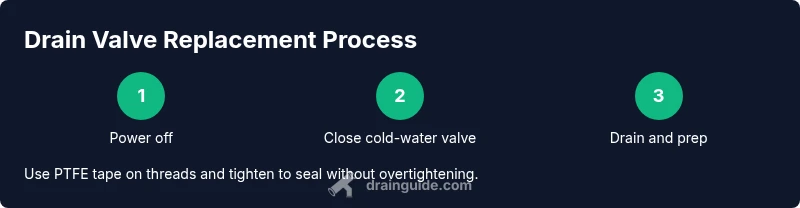
This section provides a high-level overview of what you’ll do before moving to the detailed steps. Prepare the workspace, confirm valve compatibility, and gather your materials. You’ll isolate the heater, drain a portion of the tank, remove the old valve, install the new valve with proper sealing, refill the tank, and perform a leak check. The goal is a secure, drip-free connection and a fully functional drain that won’t leak during normal operation. Remember to verify all connections after pressure testing and to restore power or gas only after the system is refilled and stable.
Common Mistakes and Preventive Care
Common missteps include over-tightening valve connections, which can strip threads or crack the tank fitting, and using the wrong thread sealant or no sealant at all. Always apply PTFE tape to the male threads in the correct direction (clockwise as you install) and avoid tape buildup inside the valve. Don’t leave the area wet or dirty, as mineral buildup around the valve seat can cause leaks later. If you notice persistent dripping after installation, re-tighten gradually and re-check with the tank fully pressurized. Drain Guide’s ongoing guidance emphasizes following manufacturer recommendations to maintain warranty coverage and system integrity.
AUTHORITY SOURCES
- https://www.energy.gov/energysaver/water-heating
- https://www.energy.gov/eere/buildings/articles/hardening-basics-home-water-systems
- https://www.epa.gov/safe-drinking-water
What to Expect After Replacement
After installing a new drain valve, slowly refill the tank, bleed air from the system by opening a hot water faucet, and verify no leaks at the valve. Restore power or gas once the tank is full and the water clears to normal pressure. Monitor the valve for the first 24 hours and periodically check during the first week of operation. Properly sealed connections reduce future maintenance needs and help extend the heater’s service life.
Tools & Materials
- Bucket or catch basin(Place under valve to catch water during removal and testing.)
- Adjustable wrench(Used to loosen and tighten valve fittings.)
- PTFE thread seal tape (plumber's tape)(Wrap 2-3 turns around valve threads before installation.)
- New drain valve compatible with your water heater(Ensure correct thread size and valve type for your model.)
- Rags or towels(Keep work area clean and dry; wipe spills promptly.)
- Hose (optional)(Attach to drain valve to guide water to a drain.)
Steps
Estimated time: 60-90 minutes
- 1
Power down and isolate the heater
Switch off the electrical breaker or set the gas control to off for the water heater. This prevents electrical shock or gas ignition while you work near hot components.
Tip: Double-check the power switch at the panel and confirm no circuits are live before touching wires. - 2
Close the cold-water supply
Shut the cold-water inlet valve to stop new water from entering the tank during the replacement.
Tip: If the valve is hard to turn, apply a small amount of penetrating oil and wait a few minutes before retrying. - 3
Vent and drain the tank portion
Attach a hose to the drain valve and open the valve partially to relieve pressure and drain water into a safe location. Draining a portion reduces the weight and pressure when removing the old valve.
Tip: Have a bucket ready for any remaining water and protect floors from spills. - 4
Remove the old drain valve
Use the adjustable wrench to break the old valve free, then unscrew it completely. Inspect the tank opening for corrosion or debris.
Tip: If threads are corroded, clean them with a wire brush and a little distilled water before proceeding. - 5
Prepare and install the new valve
Wrap the male threads with PTFE tape in the direction of installation, then thread the new valve by hand and tighten with a wrench until snug. Avoid overtightening, which can damage threads.
Tip: If the valve has a gasket, ensure it seats properly against the tank surface. - 6
Refill and bleed the system
Close the drain valve, open the cold-water supply fully, and let the tank refill. Open a hot-water faucet to vent air until steady water flows.
Tip: Don't rush; allow air to escape to prevent air locks after refill. - 7
Test for leaks and restore service
Once full, restore power or gas and observe the drain valve for several minutes. If a leak appears, tighten slightly and recheck.
Tip: If you notice a persistent drip after tightening, reseal or replace the valve.
Got Questions?
Do I need to drain the entire tank to replace the drain valve?
No. It’s usually enough to drain the tank portion below the valve to prevent spills and relieve pressure. Leaving some water in the tank lowers the risk of burns and splashback while you work. If the valve is leaking or corroded, you may need to drain more water.
You generally don’t have to drain the whole tank. Drain just enough to work safely and keep water from spilling when you remove the old valve.
What type of valve should I buy for replacement?
Buy a valve that matches the heater’s thread size and connection type (often 3/4 inch NPT). If in doubt, bring the old valve to the store to compare. Ensure the valve is rated for potable water and is compatible with your heater model.
Choose a valve that matches the existing threads and seat material to ensure a proper seal.
Can I reuse the old valve or parts?
In most cases, reuse is not recommended. Replacing with a new valve and related fittings reduces the chance of leaks and ensures a clean seal.
New parts are safer and more reliable than reusing old ones.
Is it safe to do this myself or should I hire a pro?
If you’re comfortable with basic plumbing tasks and can safely shut off power/gas, you can perform the replacement. If you encounter corrosion, hard-to-reach valves, or uncertain gas connections, hire a professional.
For complex situations or gas-powered heaters, consider a licensed plumber for safety.
What should I do if I see a leak after replacement?
Shut off power, repressurize slowly, re-tighten connectors, and inspect for debris. If leaks persist, replace the valve or consult a professional.
If leaks persist after tightening, stop and seek expert help.
How long does this job typically take?
Most homeowners complete the task in about an hour to two, depending on equipment access and valve type. Allow extra time for testing and addressing any fitting issues.
Expect around an hour or two, depending on access and valve compatibility.
Watch Video
The Essentials
- Prepare safely with power off and water isolation.
- Match valve type and thread size before replacement.
- Seal threads properly with PTFE tape to prevent leaks.
- Bleed air and test for leaks after refilling the tank.