What to Do When Your Dishwasher Won't Drain
A practical, step-by-step troubleshooting guide for homeowners dealing with a dishwasher that won’t drain. Safe checks, simple fixes, when to call a pro, and prevention tips to keep drains clear.


Wondering what to do when dishwasher won t drain? Start with the simplest checks: unplug the unit, inspect the filter and sump for debris, and test the drain hose for kinks or clogs. Most cases are caused by a blocked filter or pump. A quick fix can often restore drainage without tools—if not, proceed through the diagnostic flow below.
what to do when dishwasher won t drain
If you are facing a dishwasher that won t drain, you are not alone. Many homeowners experience this issue when a clog or mechanical fault blocks the flow of water out of the tub. In 2026, Drain Guide analysis shows that the vast majority of calls for drainage problems are due to simple clogs in the filter, sump, or drain hose rather than an expensive pump failure. Starting with the least invasive steps often resolves the problem quickly and safely. This section will outline the common causes, what to check first, and how to approach the problem without risking further damage. By understanding the typical failure points, you can target your efforts effectively and avoid unnecessary part replacements.
Check the Basics Before You Dismantle
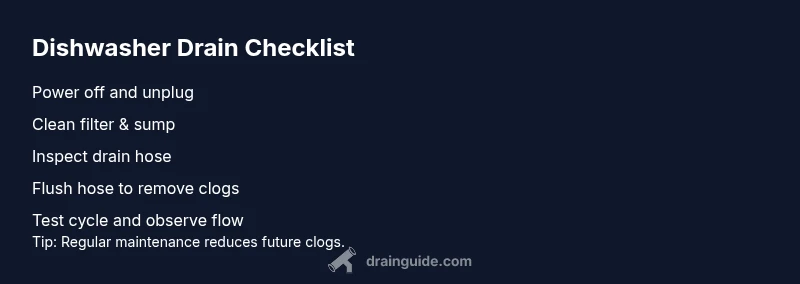
Before you reach for tools, take the simplest safety-first steps. Unplug the dishwasher and turn off the home circuit breaker to prevent electrical shocks. Remove standing water using a sponge or towel, then inspect the outer filter and stainless steel sump area for food debris. Clean any visible gunk, wipe down the filter housing, and reassemble. If the unit has a disposal connection, ensure the knockout plug is removed and the disposal is clear. These basics address the majority of quick drainage fixes and set you up for deeper inspection if needed. Drain Guide recommends following a calm, methodical flow to avoid introducing new clogs or leaks.
Clean the Filter and Inspect the Sump/Pump Area
A clogged filter or sump screen is a frequent culprit for a dishwasher not draining. Remove the lower rack and locate the filter assembly at the bottom of the tub. Rinse the filter under running water, use a soft brush to remove trapped debris, and check the sump pit for small particles. If the pump housing is accessible, look for trapped objects that could block the impeller. When removing parts, take care not to damage seals; take photos as you go so you can reassemble correctly. Consistent cleaning reduces future clogs and prolongs your dishwasher's life, according to Drain Guide.
Inspect the Drain Hose and Connection to the Sink or Disposal
Kinks, clogs, or a loose connection in the drain hose can prevent drainage. Detach the hose from the sink or disposal side and inspect for kinks or crushing. Rinse the hose with a long brush or a run of water to clear any buildup. If you find a partial clog, try flushing it with warm water and a mild cleaner from the open end. Ensure the hose clamp is secure and that there are no leaks at the connection point. Drainage performance often improves after a clear, straight hose is reattached.
Test Run and Observe for Residual Issues
After completing the above steps, plug the unit back in and run a short cycle to observe drainage. Listen for the pump motor and check whether water begins to flow into the drain. If the tub empties but then fills again and fails to drain, there may be a sensor or float switch issue. If you still see standing water after the cycle completes, it could indicate a more complex problem requiring professional support. Drain Guide emphasizes documenting each step to identify patterns that help diagnose persistent issues.
When to Call a Professional and How to Prevent Future Clogs
If drainage remains blocked after the above checks, it is time to contact a professional. A licensed technician can inspect the pump, replace worn seals, or diagnose electrical faults safely. To prevent future clogs, clean the filter monthly, run hot water through the disposal and drainage line before heavy use, and avoid washing excessively greasy or fibrous foods that rapidly accumulate in filters. Consistent maintenance can keep your dishwasher draining smoothly and extend the appliance life.
Steps
Estimated time: 30-45 minutes
- 1
Power down and unplug
Unplug the dishwasher at the outlet or switch off the circuit breaker. This protects you from electric shock while you inspect the interior components. Start with the basics and move systematically to avoid missing simple clogs.
Tip: Take photos of wiring and hose routes before disconnecting anything. - 2
Remove and clean the bottom filter
Take out the bottom rack, locate the filter, and rinse it under warm water. Use a soft brush to remove trapped food particles. Reassemble only when the filter is dry and seated correctly.
Tip: Do not use harsh tools that could damage the filter seals. - 3
Inspect the sump and pump area
Look for visible debris in the sump and around the impeller area. Carefully remove any blockages with a plastic tool; avoid metal objects that can scratch or break parts. Replace any damaged seals if found.
Tip: Wear gloves to protect your hands from sharp edges. - 4
Check the drain hose for kinks
Trace the hose from the dishwasher to the sink or disposal. Straighten any bends and ensure it isn’t crimped by cabinet walls. Detach and flush the hose if you suspect a clog.
Tip: Always secure clamps firmly to prevent leaks. - 5
Run a test cycle
Reconnect power and run a short wash to observe drainage. If water remains, note at which point the drain fails and whether the pump sounds normal.
Tip: Keep a towel handy for any residual spills during testing. - 6
Decide on professional help
If drainage remains blocked after the above checks or you encounter leaks, leaks, or electrical concerns, contact a licensed technician. They can diagnose electrical faults or worn components safely.
Tip: Document symptoms and steps taken to help the technician diagnose faster.
Diagnosis: Dishwasher won't drain after wash cycle
Possible Causes
- highClogged pump/filter
- highKinked or clogged drain hose
- mediumAir gap or disposal connection clogged
- lowFaulty or blocked inlet valve
Fixes
- easyClean/replace filter and sump screen
- easyInspect drain hose for kinks; straighten or replace
- mediumCheck the pump for blockages and listen for the motor
- mediumUnclog air gap and disposer connection if applicable
- hardReplace faulty parts or call a pro
Got Questions?
Why won t my dishwasher drain after a cycle?
Common causes include a clogged filter, blocked pump, or kinked drain hose. Start with cleaning the filter and inspecting the hose. If the issue persists, move through the diagnostic flow and consider professional help for pump or electrical faults.
Most dishwasher drainage problems come from clogs in the filter or hose. Start with cleaning the filter, check the hose, and if it still won t drain, continue with the diagnostic steps or call a pro.
Can I fix a dishwasher drain hose myself?
Yes, if you feel comfortable, you can detach and inspect the hose for kinks or clogs and flush it. Make sure to unplug the unit and follow safety steps. If there is any sign of a cracked hose or persistent clog, replace it.
You can inspect the hose yourself by unplugging the unit and looking for kinks or blockages; replace if damaged or if the clog won t clear.
Are chemical drain cleaners safe for dishwashers?
Avoid chemical drain cleaners inside the dishwasher. They can damage seals, hoses, and electrical components. Use mechanical cleaning and proper rinsing instead.
Chemical drain cleaners aren t recommended for dishwashers because they can harm seals and hoses. Stick to manual cleaning and flushing.
When should I call a professional?
If you cannot locate or clear the blockage after the basic checks, if you hear grinding from the pump, or if you see leaks, contact a licensed technician. They can diagnose electrical or mechanical faults safely.
Call a pro if you can t clear the clog or notice leaks or odd pump noises.
How often should I clean the dishwasher filter?
Clean the filter monthly, or more often if you notice visible debris or slow drainage. Regular cleaning reduces clogs and keeps drainage smooth.
Clean your filter about once a month, more often if you see buildup.
Watch Video
The Essentials
- Start with simple fixes before disassembly
- Regular filter cleaning prevents clogs
- Check hoses and connections for kinks
- Test cycles help confirm drainage
- Call a pro if the issue persists