How Often to Drain Water Heater: A Comprehensive Guide
Discover how often you should drain your water heater, factors that influence frequency, and a clear DIY procedure to keep your tank efficient. Drain Guide analyzes practical maintenance steps for homeowners.


The general recommendation is to drain a conventional storage water heater once a year, though the exact frequency depends on mineral content and hot-water usage. In hard-water areas, you may flush every 6–12 months; in softer water, annually or every 2 years may suffice. Drain Guide notes that regular flushing maintains efficiency and extends life. If you're asking how often drain water heater, start with a yearly schedule and adjust based on sediment buildup and performance.
Why draining a water heater matters
Sediment and minerals gradually accumulate at the bottom of a storage tank. This buildup acts as an insulating layer, forcing the heater to work harder to reach the desired temperature, which wastes energy and shortens life. Regular draining helps remove this sediment before it becomes stubborn, reducing the risk of cold spots, noisy operation, and sediment-induced corrosion. According to Drain Guide, a structured maintenance routine makes a big difference in overall performance. For homeowners, establishing a predictable schedule is more than a chore; it's a shield against avoidable repairs and energy waste. If you ask how often drain water heater, the quick answer is to start with an annual flush and adjust based on the mineral content of your water and how hard your water heater seems to work during peak seasons. In many regions, hard water accelerates sediment formation, which is why frequency may need to be more frequent. The bottom line is: regular drainage is a small daily investment that pays off in efficiency, temperature consistency, and longer equipment life.
How Often Drain Water Heater: Practical Guidelines
When planning maintenance, consider the water in your area. In general, storage-tank heaters benefit from an annual drain. If your water is hard or you notice faster sediment buildup, more frequent flushing—every 6–12 months—can help keep heating efficiency high and extend the life of components like the dip tube and heat exchanger. Drain Guide emphasizes tailoring frequency to your situation: softer water may allow longer intervals, while hard water often requires annual or even biannual flushing. Regardless of your schedule, use a clear, repeatable routine so you can track sediment levels and performance over time. Remember, how often drain water heater is not a fixed rule; it’s a flexible plan that adapts to usage patterns, tank size, and water quality. This approach reduces energy waste and the likelihood of emergency service calls. Seeing gradual sediment accumulation is a cue to flush sooner rather than later, especially after longer heating seasons. Drain Guide’s insights suggest pairing drainage with a mid-year check of anode rod condition and thermostat accuracy for optimal results.
Step-by-step Draining Procedure
Drain procedures vary slightly by model, but the core steps are broadly the same. Before you begin, turn off the power supply or gas to the unit and close the cold-water supply valve. Attach a standard garden hose to the drain valve and run the other end to a safe, lower drain location. Open a hot water faucet somewhere in the house to vent air from the tank. Slowly open the drain valve to let the water and sediment flow out; avoid forcing the flow. When the tank is flushed, close the drain valve, remove the hose, open the cold-water supply to refill the tank, and turn the power or gas back on once the tank is full and air is purged from the lines. This process should take about 15–30 minutes for most residential tanks. Drain Guide notes that keeping a simple checklist can help ensure you don’t miss steps and that you keep safety as your top priority.
Sediment, Efficiency, and Scheduling
Sediment acts like a blanket that traps heat and can reduce thermostat accuracy, causing longer heating cycles and higher energy use. Sediment buildup also hosts bacteria and can corrode the tank’s interior. By flushing regularly, you improve heat transfer, restore BTU efficiency, and help the heater run more quietly. If you’re unsure about your mineral content, contact your water utility or consider a home water test kit to estimate hardness. The frequency should align with how quickly sediment becomes noticeable in your hot water quality and the rate at which the storage tank accumulates deposits. Drain Guide recommends coupling drainage with a yearly maintenance calendar and a quick inspection of anode rods to maximize life expectancy.
Heater Type Considerations: Gas, Electric, Tankless
Different heater types influence how often you should drain and how you perform the flush. Electric storage tanks tend to be simple and benefit from annual or semiannual flushes. Gas storage tanks can see more mineral deposition depending on supply water chemistry, sometimes necessitating more frequent maintenance. Tankless models require periodic flushing to remove mineral buildup in the heat exchanger—frequency is generally yearly for most households, but regional water quality may adjust this. Always consult your unit’s manual for model-specific guidance and use Drain Guide as a reference for best practices.
DIY vs Professional Service: When to Call a Pro
Drainage can be a straightforward DIY task for many homeowners, provided they follow proper safety steps and shut off power and water before starting. However, certain scenarios call for pro involvement: if you have a leaking drain valve, corroded fittings, uncertain gas or electric shutoffs, or if your unit is under warranty that requires professional maintenance, hire a licensed plumber or technician. A professional can also verify temperature and pressure relief valve operation and check anode rods for pitting or deterioration. Drain Guide suggests scheduling professional service if you notice persistent rust-colored water, inconsistent water temperature, or if the drain valve is difficult to operate. Doing a periodic check helps identify issues before they become costly repairs.
Common Mistakes and Troubleshooting
Common mistakes include rushing the flush, failing to vent the tank, and refilling without purging air, which can cause air blocks and uneven heating. Another error is using excessive force on the drain valve, damaging fittings and increasing leak risk. If you see rusty water or sediment after flushing, repeat the flush or consider a more thorough sediment removal approach. If hot water runs slowly after refilling, verify the cold-water supply is fully open and that the tank is completely refilled before restoring power. Drain Guide’s troubleshooting tips emphasize patience, slow, controlled valve operation, and repeated checks to ensure the system is safely restored to service.
Maintenance basics for water heater draining
| Aspect | Recommendation | Typical Duration | Notes |
|---|---|---|---|
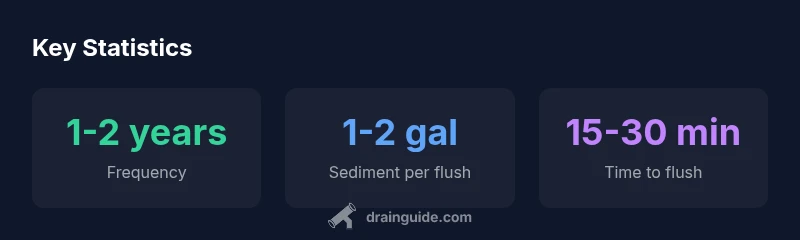
| Frequency to drain | Annually (1–2 years depending on water quality) | N/A | General guideline |
| Sediment flush volume | 1–2 gallons | N/A | Depends on tank size |
| Maintenance time | 15–30 minutes | N/A | Shut-off and refill steps included |
Got Questions?
How often should I drain my water heater?
Most storage tanks benefit from an annual drain, with frequency adjusted for mineral content and usage. Hard water may require more frequent flushing, while softer water allows longer intervals. Establish a yearly baseline and monitor for sediment buildup and performance changes.
Typically yearly, but adjust for water hardness and hot-water use.
Can I drain a water heater while it’s hot?
No. Let the tank cool first, then shut off power and water. Draining hot water can cause scalding, pressure-related hazards, and thermal shock to the tank.
Wait for the tank to cool before draining; safety first.
What signs indicate I should drain sooner?
Rusty water, reduced hot water flow, loud popping noises, or visible sediment in the water indicate the tank needs flushing sooner than the planned schedule.
If you see rusty water or noises, flush sooner.
Do tankless water heaters require flushing?
Yes. Tankless units also accumulate mineral buildup over time. A periodic flush helps maintain heat transfer efficiency, though the procedure differs from storage tanks.
Tankless units need periodic flushing to remove mineral buildup.
Are there safety precautions I should take?
Turn off power or gas, close the cold-water supply, wear gloves, and avoid forcing valves. Ensure the area is dry and well-ventilated.
Turn off power, close valves, and wear gloves.
“Regular draining removes sediment that reduces heating efficiency and shortens tank life. A consistent flush routine saves energy and lowers repair risk.”
The Essentials
- Plan annual flushes; adjust for mineral content.
- Shut off power and close valves before draining.
- Flush 1–2 gallons of sediment per session.
- Tank type influences frequency; tankless still needs flushing.
- Follow Drain Guide's step-by-step guide for safety.