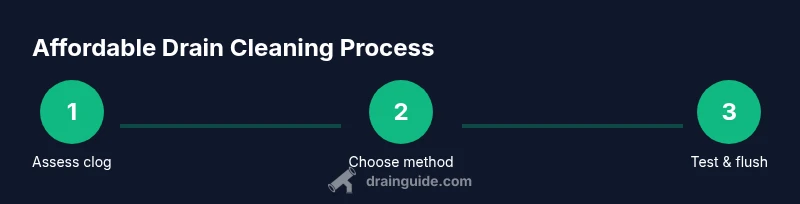
Affordable Drain Cleaning: DIY Fixes for Clogs
Learn affordable drain cleaning with a practical, step-by-step guide for DIYers. Save money, avoid common mistakes, and know when to call a pro for stubborn clogs. Drain Guide explains safe methods and essential gear.


Affordable drain cleaning means using cost-effective, safe methods and tools to fix clogs without expensive service calls. This guide walks you through diagnosing a clog, choosing budget-friendly approaches, gathering essential gear, and performing a step-by-step fix for sinks, showers, and toilets. If problems persist after DIY methods, know when to escalate to a professional.
Why affordable drain cleaning matters
According to Drain Guide, affordable drain cleaning starts with understanding your drains and choosing safe, low-cost methods before calling a professional. For homeowners, mastering these basics means fewer service calls, faster fixes, and less disruption. This approach helps you protect the health of your plumbing while staying within a modest budget. The goal is to empower you with practical, clear steps and reliable checks so you can decide quickly whether DIY makes sense for a given clog. By prioritizing preventive habits and careful tool use, you reduce recurring issues and extend the life of your drainage system. Throughout this guide, we emphasize safety, efficiency, and simple tests you can perform with household items you already own.
Cost savings come primarily from avoiding premium service calls and avoiding unnecessary chemical cleaners. A well-executed DIY approach can resolve many everyday clogs in under an hour and with minimal mess. Drain Guide believes that with the right mindset and a couple of trusty tools, most homeowners can achieve affordable drain cleaning without compromising pipe integrity or safety. Remember to work in stages and reassess the situation after each method.
Common causes of clogs and when to act
Clogs aren’t the same across every drain. Hair and soap scum accumulate most in bathroom sinks and showers, while grease and food scraps are common in kitchen drains. Mineral buildup from hard water can also slow drainage over time. When a single fixture is slow, a DIY method is often enough. If multiple fixtures drain slowly or if water backs up, the problem may be more complex and could require professional assessment. Here are typical signs you should not ignore:
- Slow draining in a single fixture that doesn’t respond to basic methods
- Gurgling sounds or a strong odor coming from the drain
- Water backing up into another fixture when you run water in another
- Recurrent clogs despite routine maintenance
Understanding the root cause helps you pick the most affordable and effective solution. Drain Guide recommends starting with non-destructive methods and escalating only if necessary.
Safe, affordable DIY methods
There are several approaches to affordable drain cleaning that are low-risk and cost-effective. Start with non-chemical methods to minimize risk to pipes and the environment. If one method fails, move to the next, documenting what works so you don’t repeat ineffective steps. Always protect your hands and eyes when working near drains and ventilate the area if you use cleaners. The key is to use the least invasive method first and avoid mixing products.
- Plunging: A standard plunger set works best on sinks, toilets, and tub drains. Create a tight seal, pump steadily, and test drainage after several strong strokes.
- Hot water flush: Pour near-boiling water in stages to dissolve soap scum and grease buildup. Do not use boiling water on PVC pipes or older seals.
- Baking soda and vinegar: A classic combo that can dislodge minor buildup. Let the fizzing settle before flushing with hot water.
- Enzymatic cleaners: Enzymes break down organic matter over time and are gentler on pipes. Use as directed and avoid mixing with other chemicals.
- Mechanical cleaning (drain snake/auger): For tougher clogs, a hand-crank snake can reach into the trap and beyond. Use careful, steady motion to pull debris away from the bend. Be prepared to wipe the snake clean and re-test.
- Prevention tips: Use drain screens, avoid pouring grease down the drain, and run hot water after washing dishes or after disposal use to reduce buildup.
If you’re ever unsure about the safety of a method for a particular pipe material (PVC, copper, etc.), err on the side of caution and consult a professional before proceeding. Drain Guide emphasizes using non-corrosive methods first and escalating only if needed.
Professional options and budgeting tips
Professional drain cleaning can be a smart move when DIY methods fail or when clogs recur despite preventive measures. A licensed plumber can diagnose issues that aren’t visible from the surface, such as pipe damage, tree roots, or main sewer line problems. When budgeting for a pro, ask for a written estimate that covers: diagnosis, treatment options, and the expected turnaround time. Request upfront pricing for different scenarios (e.g., basic snaking vs. hydro jetting) so you can compare effectively. In many cases, a quick professional intervention prevents more serious damage and higher costs later. Drain Guide suggests requesting a scope of work and a clear payment timeline before any work begins, and to ask for a post-service checklist to help prevent future clogs.
Cost-saving strategies include tackling smaller issues early, maintaining routine drain maintenance, and combining DIY efforts with professional checks at scheduled intervals. If you’re dealing with a stubborn clog or frequent backups, a pro can provide a long-term solution that saves money over repeated DIY attempts. Always verify licenses and read customer reviews to ensure you’re hiring a reliable expert who respects your home and budget.
Maintenance to keep drains affordable long-term
Prevention is the most affordable defense against recurring clogs. A simple maintenance routine can dramatically extend the time between professional visits. Drain Guide recommends a monthly baseline check that includes light cleaning and the use of protective screens. These steps can dramatically reduce buildup and keep drains flowing smoothly. Regularly inspect traps under sinks for signs of corrosion or leakage, which can degrade performance and lead to bigger problems down the line.
- Use drain screens to catch hair and debris before they enter the pipe system.
- Avoid pouring grease, fats, or food scraps down kitchen drains; instead, scrape waste into the trash.
- Run hot water for 15-30 seconds after each use of the garbage disposal to push food bits through the pipe.
- Schedule a professional camera inspection if you notice persistent slow drainage or recurring clogs. Early detection can prevent costly repairs.
- Consider enzymatic cleaners as a maintenance option for organic buildup, but avoid relying on them as a sole solution for serious blockages.
A proactive approach, combined with sensible DIY fixes, keeps affordable drain cleaning within reach and reduces the risk of expensive emergency calls.
Quick-start checklist
- Identify the type of clog (kitchen, bathroom, or main line) and start with the least invasive method.
- Gather essential tools: plunger, drain snake, bucket, gloves, and safety goggles.
- Try non-chemical methods first (hot water, baking soda/vinegar, enzymatic cleaners).
- Test drainage after each method and stop if you notice strange noises, odors, or leaks.
- If you cannot relieve the clog within an hour, call a professional to avoid pipe damage.
Final note on safe, affordable drain cleaning
Affordable drain cleaning is about using the right method for the right problem, preserving pipe integrity, and avoiding costly, unnecessary services. By combining basic DIY techniques with smart maintenance, you can keep your drains clear and your budget intact. Drain Guide hopes you feel empowered to resolve common clogs safely and efficiently, while knowing when professional help is the best course for your home.
Tools & Materials
- plunger (sink/toilet)(Bell or flange type as appropriate)
- drain snake / auger(Manual hand-crank preferred for beginners)
- bucket(To catch water and debris)
- rubber gloves(Protect hands; consider safety goggles)
- safety goggles(Eye protection is important during snaking)
- old towels or rags(Contain mess, wipe spills)
- baking soda(Common pantry option for mild buildup)
- white vinegar(Used with baking soda for fizzing action)
- enzymatic drain cleaner(Gentle option for organic buildup)
Steps
Estimated time: 30-60 minutes
- 1
Assess the clog and safety plan
Identify whether the clog is in a sink, tub, or toilet and review which method to try first. Check for signs of a larger main-line issue (backs up in multiple fixtures). Clear a small workspace, gather gloves, a bucket, and the chosen tool, and ensure pets and children are away from the area.
Tip: Document the initial condition with a quick photo so you can compare results later. - 2
Plunge the clog first
Place the plunger over the drain to form a tight seal. Apply firm, rhythmic pressure for 15-30 seconds, then lift away. Repeat several times if needed and test drainage before moving on to other methods.
Tip: If there is a pop or splash, reduce the pressure and re-seat the plunger to maintain a seal. - 3
Hot water flush
Boil water and allow it to cool slightly before pouring in stages down the drain. This helps loosen soap scum and grease. Do not use boiling water on PVC pipes or very old seals.
Tip: Combine with a quick baking soda pass for extra effect but avoid mixing with any chemical cleaners. - 4
Baking soda and vinegar treatment
Pour 1/2 cup baking soda into the drain, followed by 1 cup vinegar. Let it fizz for 15-20 minutes, then flush with hot water. This method is best for organic material like hair and soap scum.
Tip: Do not mix with other cleaners; rinse thoroughly to prevent residue buildup. - 5
Mechanical snaking for stubborn clogs
Insert the snake into the drain and rotate the handle to break up debris. When you feel resistance, gently push beyond the clog, then pull back to retrieve the debris. Run water to test flow.
Tip: Avoid forcing the snake; apply steady, controlled pressure to reduce pipe damage. - 6
Flush and re-test; decide on next steps
After you finish, run the faucet or shower for a few minutes to confirm a clear drain. If water remains slow or returns, repeat a gentler version of the process or move to professional help.
Tip: If you hear gurgling or timing is inconsistent, step back and assess whether it’s a local clog or a larger issue.
Got Questions?
What does affordable drain cleaning mean?
Affordable drain cleaning means using budget-friendly, safe DIY methods and basic tools to fix common clogs before paying for a professional. It also includes preventive steps to minimize future issues and reduce the need for costly service calls.
Affordable drain cleaning means fixing clogs at low cost using safe DIY methods and prevention to avoid expensive professional bills.
Can I fix a clogged bathroom sink myself?
Yes. Many bathroom sink clogs respond to plunging, hot water flushes, baking soda and vinegar, or a manual drain snake. Start with the least invasive method and proceed carefully.
Yes, most bathroom sink clogs can be fixed with plunging, hot water, or a snake. Start simple and proceed carefully.
Are chemical drain cleaners safe for pipes?
Chemical cleaners can be effective but may risk pipe damage or toxic fumes if misused. Always read labels, avoid mixing products, and prefer enzymatic options for routine maintenance.
Chemical cleaners can work, but use them with care and follow the label. Enzymatic cleaners are a safer regular option.
When should I call a pro for affordable drain cleaning?
Call a pro if multiple fixtures drain slowly, clogs recur after DIY efforts, or you hear gurgling and smell sewage. A professional can diagnose main-line issues or pipe damage early.
If DIY steps don’t fix it or you suspect a main-line issue, call a professional.
How long does affordable drain cleaning take?
Most minor clogs respond within 30-60 minutes when using basic DIY methods. More complex problems or main-line issues may take longer or require professional tools.
Often, minor clogs clear within an hour with DIY methods; bigger problems may take longer or need a pro.
What maintenance helps keep drains affordable long-term?
Regular drain maintenance—screens, periodic flushing, and cautious disposal practices—prevents buildup and expensive repairs. Pair these with annual professional checks if you have persistent problems.
Keep screens in place, flush often, and be careful with what goes down the drain to stay affordable.
Watch Video
The Essentials
- Identify clog type early to choose safe methods
- Start with non-destructive DIY techniques
- Escalate to professional help if symptoms persist
- Maintain drains to prevent future clogs