Do It Yourself Drain Cleaning: A Practical Guide
Learn safe, effective DIY drain cleaning techniques for common clogs. This guide covers tools, step-by-step methods, maintenance, and when to call a professional.


By the end, you'll confidently tackle common drain clogs using a DIY approach and simple safety checks. This guide covers tool preparation, step-by-step clearing methods, and when a professional is needed. You’ll learn to evaluate your drain, choose the right method, and reduce the risk of damage, and keeps you prepared for common hiccups along the way.
Understanding DIY Drain Cleaning
According to Drain Guide, do-it-yourself drain cleaning is a practical first step for many minor clogs. It emphasizes methodical preparation, safe practices, and avoiding unnecessary chemical exposure. Before you reach for tools, take a moment to identify the type of clog (kitchen sink, bathroom sink, tub, or shower) and the likely cause (hair, soap scum, food particles, or mineral buildup). This initial assessment will help you choose the most effective approach and reduce the chance of making a bigger mess.
DIY drain cleaning isn’t about brute force; it’s about using the right tool for the job and understanding drain anatomy. A simple blockage near the drain mouth can often be cleared with a plunger, while deeper blockages may require a drain snake or auger. Persistent clogs, foul odors, or repeated incidents should trigger a professional evaluation to rule out pipe damage, tree roots, or sewer line issues. The aim is to restore flow safely while protecting your plumbing from damage and your home's plumbing system from unnecessary chemical exposure.
When you plan to DIY, gather the essential tools, wear protective gear, and work patiently. Proper technique matters more than brute force. If you’re ever unsure, consult your local home improvement resources or a licensed plumber before attempting a risky maneuver.
Drain cleaning can be cost-effective, but missteps can lead to leaks, burst pipes, or bad chemical reactions. A well-executed DIY approach minimizes downtime and improves your confidence in handling future maintenance tasks. Drain Guide’s approach emphasizes safety, a clear plan, and knowing when to escalate to a professional if needed.
Safety First: PPE and Hazard Awareness
Safety is the backbone of any DIY drain cleaning effort. Start with basic personal protective equipment: durable gloves, protective eyewear, and long sleeves to protect exposed skin from splashes. Ensure good lighting and ventilate the area to avoid inhaling fumes from cleaning agents. Never mix different cleaners or introduce unknown liquids into a clogged drain, as chemical reactions can release toxic gases or heat that could harm you or damage the plumbing.
Be mindful of sewer gases and slippery floors. If you have a history of allergy to cleaners or sensitive skin, consider a weaker solution and test a small area first. Keep children and pets away from the work zone. Have a bucket, towels, and a tray to contain spills so you don’t contaminate your kitchen or bathroom.
If you’re dealing with a septic system, avoid harsh chemical cleaners that can disrupt the septic microbial balance. In those cases, stick to mechanical methods and enzyme-based products designed for septic-safe use. When in doubt, pause and consult a professional rather than risk a chemical mishap.
Tools, Materials, and Home-Setup
Before you start, confirm you have the right tools and a clean workspace. A plunger (cup type for sinks and toilets) can often clear shallow clogs if used correctly. A drain snake or auger helps you reach deeper blockages. A bucket catches water and debris; towels block spills; gloves and goggles protect you from splashes. A flashlight helps you inspect dark piping, and an adjustable wrench allows you to disconnect sections if needed.
Other useful items include hot water, dish soap, baking soda, and white vinegar for gentle flushing and odor control. If you plan to use a chemical cleaner, choose a septic-safe, enzyme-based formula or one labeled for home plumbing use, and follow the instructions precisely. Keep a record of what you tried and the results to inform any future attempts.
Plunger Method: Quick Fix for Minor Clogs
The plunger is your friend for minor, near-surface clogs. Start by adding a small amount of water to the basin so the plunger seals well. Place the plunger over the drain, then push down firmly and pull up without breaking the seal, repeating 15–20 times. If the water drains steadily after these pushes, you’ve likely cleared the blockage. If not, proceed to a snake or alternate method.
For sink drains with overflow openings, cover the overflow with a wet cloth to maintain pressure. If a toilet is clogged, use a toilet plunger designed for sanitary use and work slowly to avoid splashing.
Tip: Keep the plunger clean and dry when not in use to prevent mold growth. If plunger use doesn’t improve flow after a couple of attempts, it’s time to try a different method or consult a professional.
Snakes, Augers, and Reaching Deeper Clogs
A drain snake (auger) can reach deeper into pipes where a plunger cannot. Insert the snake into the drain, turning the handle clockwise as you push forward. When you feel resistance, slowly rotate and push until you either break through or the blockage clears. Withdraw the snake slowly to avoid damaging the pipe, and remove any debris that clings to it.
For stubborn clogs, you may use a flexible auger with a built-in guide to navigate twists and turns more safely. Always keep the auger straight and avoid forcing it; if you meet persistent resistance, stop and evaluate the next step. After removing the blockage, flush with hot water to clear any loosened material from the pipe.
Drain Guide analysis shows that many DIY attempts resolve minor clogs with basic tools, but deeper blockages often require persistence and proper technique. If you’re unsure about proceeding, do not force the snake through a bend; instead, disassemble the trap or call a professional for a more thorough clearing.
Alternatives, Chemicals, and Environmentally Friendly Options
Chemical cleaners can be effective in some cases, but they carry risks for your pipes, skin, and the environment. If you choose a chemical product, select one labeled as safe for septic systems and follow the manufacturer’s directions precisely. Consider safer alternatives first whenever possible, such as enzyme-based cleaners, hot water flushes, and regular maintenance.
Enzyme-based cleaners use bacteria to digest organic buildup and are gentler on pipes and the environment. They’re especially useful for routine maintenance to prevent future clogs. If you suspect mineral buildup, you may use a descaling product designed for household drains, but avoid mixing it with other cleaners.
Prevention is better than remediation. After a successful DIY clearing, take steps to reduce future clogs: use drain screens, avoid pouring grease down the sink, run hot water after each use, and periodically flush with a baking soda and hot water combination. Drain Guide’s verdict is to treat DIY methods as a first line of defense and escalate when needed to protect your home’s plumbing.
Tools & Materials
- Plunger (cup-style for sinks, flange-style for toilets)(Choose the right type for the drain you’re cleaning; keep it clean and dry when stored.)
- Drain snake / hand auger(Select a flexible snake with a long handle; for toilets, use a toilet auger.)
- Bucket(Catch water and debris to keep the area clean.)
- Rubber gloves(Protect hands from grime and cleaning agents.)
- Safety glasses(Shield eyes from splashes; keep face away from the drain.)
- Flashlight(Inspect dark piping and traps.)
- Adjustable wrench(Disassemble P-traps if needed.)
- Old towels or rags(Contain spills and dry the area.)
- Dish soap(Optional for lubrication and easier snake movement.)
- Baking soda and vinegar(Optional for odor control and light buildup.)
- Enzyme-based cleaner (septic-safe)(Safer alternative to harsh chemical cleaners.)
Steps
Estimated time: 45-60 minutes
- 1
Assess clog and safety readiness
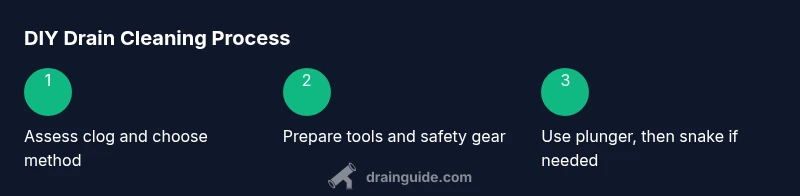
Begin by identifying the type of clog and the best initial method. Check for any signs of sewage backup, which requires professional intervention. Review safety steps and gather all tools before you start to avoid interruptions.
Tip: Always plan your approach before touching the drain to prevent accidental spills. - 2
Prepare the workspace
Clear the area around the drain, place a bucket under the pipe, and lay towels to catch spills. Put on gloves and goggles, and ensure good lighting. If you’re working under a sink, unplug any electrical devices nearby and open the cabinet to access the trap.
Tip: Ventilate the area; good airflow reduces chemical exposure risk. - 3
Attempt the plunger method
Fill the basin with enough water to cover the plunger, then create a tight seal over the drain. Use quick, firm pushes for 15–20 cycles, keeping the seal intact. If the clog clears, run hot water for a minute to rinse the pipe.
Tip: For sinks with an overflow, seal the overflow opening with a wet cloth to maintain pressure. - 4
Use a drain snake for deeper blockages
Insert the snake into the drain and gradually feed it forward while turning the handle clockwise. When you feel resistance, push a bit further, then slowly retract while continuing to rotate. Remove debris from the snake as it exits.
Tip: Do not force the snake through hard resistance; it can damage piping. - 5
Flush and inspect the trap
Run hot water down the drain to flush loose debris. If you removed the P-trap, reinstall it securely with a gasket and plumber’s tape as needed. Check for leaks and ensure water flows freely.
Tip: Reassemble carefully; a loose trap can cause leaks and odors. - 6
Consider safe chemical options (optional)
If you opt for a chemical cleaner, choose a septic-safe, enzyme-based product and follow instructions precisely. Do not mix products. Use sparingly and avoid repeated heavy use.
Tip: Chemicals should be your last resort after non-chemical methods have failed. - 7
Test the drain and monitor
Run multiple cycles of water to confirm consistent flow. Check for odors and gurgling; these can indicate remaining buildup or partial blockages. Keep a log to track recurrence.
Tip: If the drain re-clogs within days, seek a professional assessment. - 8
Wrap up and plan prevention
Clean and dry tools, store them properly, and install drain shields or screens to reduce future clogs. Schedule routine maintenance every few months to keep drains clear.
Tip: Prevention reduces longer, more expensive repairs later.
Got Questions?
Can I use baking soda and vinegar to clear a clog?
Baking soda and vinegar can help with light buildup and odors, but they rarely clear stubborn clogs. They’re best used as a preventive or supplementary step, not a primary fix for tough blockages.
Baking soda and vinegar can help a little, but for stubborn clogs you’ll likely need mechanical methods.
Is it safe to use chemical drain cleaners for kitchen sinks?
Chemical drain cleaners are harsh and can damage pipes if used improperly. They may harm septic systems and can be hazardous in homes with children or pets. Use them sparingly and only as directed, or avoid them when possible.
Chemical cleaners can damage pipes and are not ideal for frequent use; consider safer alternatives first.
How long does DIY drain cleaning take?
A typical routine DIY drain cleaning session takes about 30–60 minutes, depending on clog depth and technique used. More stubborn clogs may require additional attempts or a professional assessment.
Most DIY clogs take about half an hour to an hour, depending on complexity.
Should I remove the P-trap during cleaning?
Removing the P-trap can help clear blockages near the drain and lets you inspect for hair or debris. Reassemble tightly to prevent leaks, and use plumber’s tape if needed.
Yes, removing the P-trap can help; reattach it securely to stop leaks.
What if water backs up after cleaning?
Backups after cleaning can indicate a deeper clog or sewer line issue. Pause and avoid chemical overuse; consider professional assessment, especially if multiple drains are affected.
If water backs up again, stop and call a pro for a deeper inspection.
When should I call a professional?
Call a professional if clogs persist after multiple DIY attempts, water backs up, you smell sewage, or you suspect sewer issues or damaged pipes. A pro can safely resolve deeper blockages and assess for structural problems.
Call a professional if the clog won’t clear after multiple attempts or you suspect sewer issues.
Watch Video
The Essentials
- Assess the clog before starting.
- Prioritize safety to avoid injuries.
- Begin with mechanical methods before chemicals.
- Know when to stop and call a professional.
- Practice regular maintenance to prevent future clogs.