How to Clean Drains: A Practical DIY Guide
Learn safe, effective methods to clean drains in kitchens and bathrooms. This Drain Guide tutorial covers natural and chemical options, safety tips, tools, and maintenance to prevent clogs.


You will learn how to clean drains safely and effectively, with a plan that includes identifying the clog type, choosing the right tools, and applying proven methods for natural and chemical cleaners. Before you start, have gloves, a bucket, a plunger, and access to clean water. This guide covers kitchen and bathroom drains, safety precautions, when to call a pro, and maintenance tips to prevent future buildup. You'll find step-by-step actions, product considerations, and quick-reference checklists. According to Drain Guide, prevention is easier and cheaper than cure, and a clear maintenance routine reduces recurring clogs.
Understanding drain science and why clogs happen
Drains are designed to move wastewater away from fixtures using gravity and the familiar S- or P-trap that prevents sewer gases from entering the home. Over time, hair, soap scum, grease, food particles, and mineral buildup cling to the interior walls, narrowing the passage. A slow drain is usually the result of gradual accumulation, not a single momentary blockage. By recognizing the cause, you can choose the safest, most effective cleaning method. According to Drain Guide, prevention is easier and cheaper than cure; a little maintenance goes a long way. This article is written for homeowners and DIY enthusiasts who want practical, proven methods to clean drains without costly repairs.
Safety first: essential precautions before you begin
Cleaning drains can involve dirty water, chemical cleaners, and sharp tools. Always wear closed-toe shoes, gloves, and eye protection. Work in a well-ventilated area; never mix cleaners unless the manufacturer explicitly allows it. Keep children and pets away from the workspace. If you notice strong fumes or burning odors, stop and ventilate the area. A little planning and PPE dramatically reduces risk when handling drain-related tasks.
Tools and materials you’ll need
Before you start, gather the basics so you aren’t pausing mid-task:
- Plunger (cup/bellows) – required
- Drain snake or auger – required
- Bucket, old towels, and rags – required
- Flashlight – optional but helpful
- Adjustable wrench and screwdriver – optional
- Baking soda and white vinegar – optional for natural cleaning
- Chemical drain cleaner (caustic or acidic) – optional, use with caution
- Protective eyewear and gloves – required for safety
Having these ready reduces surprises and keeps the workflow steady. Drain Guide emphasizes starting with mechanical tools before chemical cleaners to minimize exposure and hazards.
Quick-start overview of the steps you’ll follow
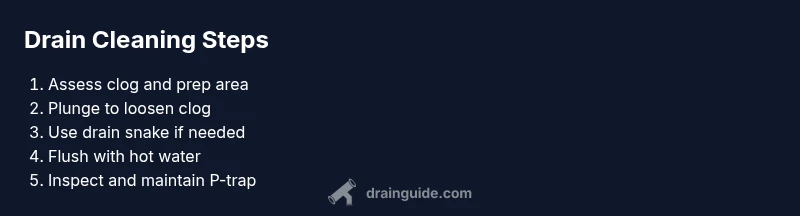
This method works for most household drains, including kitchen sinks and bathroom basins. Start by assessing the clog and clearing the area, then choose a primary method (plunger, snake, or natural cleaner). If the clog persists, move to alternative methods in a logical sequence. Always flush with water at the end to verify clearance and prevent new buildup. The goal is to restore normal flow safely and efficiently.
Natural cleaners that actually work (when used correctly)
Baking soda and white vinegar react to create fizz that helps dislodge minor buildup. Pour 1/2 cup baking soda into the drain, followed by 1 cup white vinegar. Wait 15–30 minutes, then flush with hot water. This approach is chemical-friendly and can reduce minor blockages, especially when combined with mechanical methods for stubborn clogs.
The P-trap: why you should consider cleaning it too
The P-trap is the curved pipe under most sinks. It collects water to seal against sewer gases and can accumulate hair, soap, and debris. If you can safely reach it, place a bucket beneath, loosen the slip nuts, and wipe away buildup. Reassemble, then run hot water to confirm a free flow and no leaks. Cleaning the P-trap often makes a noticeable difference in drain performance.
Step-by-step cleanup overview for kitchen and bathroom drains
Kitchen drains often collect grease and food debris, while bathroom drains contend with hair and soap scum. Start with mechanical methods (plungers or snakes) before moving to chemical cleaners. Maintain patience: most clogs respond to a method in 15–30 minutes of persistent effort. For stubborn clogs, repeat the process in stages rather than forcing a single aggressive action.
How to test your drain after cleaning
Run hot water for several minutes and observe the flow. If drainage remains slow, repeat the chosen method or switch to an alternate approach. A properly cleaned drain should clear with a single flush of hot water and show no gurgling or backups in adjacent fixtures. Regular testing helps you catch issues before they escalate.
Maintenance as a habit: keeping drains clear long-term
Create a tiny maintenance plan: flush with hot water weekly, use a natural cleaner monthly, and inspect under-sink areas for leaks. Consider a simple hairscreen and avoid pouring grease down the drain. Drain Guide suggests pairing preventive steps with periodic professional checks if you notice recurring issues.
Common mistakes to avoid
Avoid mixing chemical cleaners, as dangerous fumes can result. Don’t force a tool or over-torque connections, which can crack pipes. Don’t ignore slow drains; early intervention saves time and money. If you’re uncertain about the pipe material (PVC vs metal), test small sections first and consult a plumber if needed.
Troubleshooting flow: quick decision guide
If water backs up into other fixtures, stop cleaning immediately and seek professional help. If the clog is localized and the plunger or snake works, you’re likely dealing with a simple blockage. For persistent issues, escalate to remote checks or on-site inspection by a licensed plumber. Drain Guide is here to help homeowners decide when DIY is appropriate and when to call in a pro.
Final checks and next steps
Close the loop by verifying that all fixtures drain smoothly and there are no leaks. Keep a small maintenance log and schedule periodic checks. By building a routine, you’ll reduce the likelihood of major clogs and keep your home’s drainage system healthy.
Tools & Materials
- Plunger (cup/bellows)(Flat-bottom kitchen sink plunger works best; ensure a good seal.)
- Drain snake / auger(Choose a flexible, hand-crank model for ease of use.)
- Bucket(Used to catch water and debris when opening the trap.)
- Old towels or rags(For drying hands and catching splashes.)
- Gloves(Protect hands from grime and cleaners.)
- Flashlight(Helps inspect dark pipes and the trap area.)
- Adjustable wrench(Useful for loosening slip nuts on the P-trap.)
- Baking soda(Natural cleaner option.)
- White vinegar(Natural cleaner option.)
- Chemical drain cleaner(Last-resort option; use only with safety precautions.)
Steps
Estimated time: 60-90 minutes
- 1
Identify clog and prep area
Inspect the fixture and surrounding area to determine the likely clog location. Clear space, place a bucket beneath the trap, and turn off water supply if needed. This prevents mess and helps you work efficiently.
Tip: Wear eye protection; even small clogs can spray when disturbed. - 2
Remove standing water and debris
If the sink or tub is full, use towels to absorb water and a cup to scoop the remaining water. This reduces splash and makes plunging or snaking more effective.
Tip: Keep a damp cloth handy to wipe surfaces as you go. - 3
Try the plunger first
Seal the drain and apply steady, controlled pressure to loosen the clog. If you can feel the clog move, repeat several cycles until the water starts to drain.
Tip: Use a sink plunger rather than a toilet plunger for best seal and leverage. - 4
Introduce the drain snake
Insert the snake into the drain and rotate the handle to extend the auger. When you feel resistance, gently push forward and pull back to break up debris.
Tip: Avoid forcing the snake; gentle pressure is more effective and less likely to damage pipes. - 5
Section-by-section clearing
Worked sections one at a time to avoid tangling. When you feel the clog yield, retract slowly while continuing to rotate.
Tip: Take breaks if you feel resistance; fatigue can lead to mistakes. - 6
Flush with hot water
After the clog clears, pour boiling or near-boiling water to wash away remaining particles and reset the trap.
Tip: Be cautious with boiling water near PVC pipes; use hot, not boiling, if uncertain. - 7
Use natural cleaners (optional)
If you prefer a gentler approach, pour 1/2 cup baking soda, then 1 cup vinegar, wait 15–30 minutes, and flush with hot water.
Tip: Never mix baking soda and bleach; it can release harmful gases. - 8
Inspect and clean the P-trap
Place a bucket under the trap, loosen slip nuts, remove the trap, and clean out debris. Reassemble tightly and test drainage.
Tip: Check for cracks or leaks while the trap is exposed. - 9
Test the drain”,
Run water for several minutes to ensure consistent flow and no leaks. If flow is slow, repeat a previous step or switch methods.
Tip: If water backs up into other fixtures, stop and seek professional help. - 10
Record and schedule maintenance
Document what approach worked and set a routine for monthly checks and periodic cleanings to prevent future clogs.
Tip: Use a simple calendar reminder for maintenance tasks.
Got Questions?
How can I tell if my drain needs cleaning?
Signs include slow drainage, frequent backups, and gurgling sounds. If the clog resists initial attempts with a plunger, proceed with a snake or natural cleaner. Regular maintenance helps prevent these issues from occurring.
Look for slow drainage, backups, or gurgling sounds. If it doesn't improve after basic plunging, try a snake or natural cleaner and plan routine maintenance.
Can baking soda and vinegar really clean drains?
Baking soda and vinegar can help with minor buildup when used as a gentle, chemical-free approach and should be followed by a thorough flush with hot water. For stubborn clogs, mechanical methods are usually more effective.
Baking soda and vinegar can aid mild buildup, but for stubborn clogs you’ll likely need a plunger or snake.
Are chemical drain cleaners safe for PVC pipes and seals?
Many chemical cleaners can harm PVC pipes and sealants if overused or misused. Always follow label directions, ventilate the area, and consider alternatives before using caustic cleaners.
Chemical cleaners can damage pipes if used improperly. Read the label and consider safer methods first.
Should I remove the P-trap to clean a drain?
Removing the P-trap can be effective for deep blockages, but it requires care to avoid leaks. Place a bucket underneath, loosen the nuts, and inspect for debris. Reinstall tightly and test for leaks.
Yes, you can remove the P-trap to clear debris, but do it carefully and check for leaks when you’re done.
How long does a DIY drain cleaning typically take?
Most DIY drain cleanings take 30–90 minutes depending on the clog and method used. If you don’t see improvement after a couple of attempts, consider pausing and seeking professional help.
Most DIY cleanings take about half an hour to an hour and a half. If it doesn’t clear after a couple attempts, call a pro.
When should I call a professional?
Call a professional if multiple fixtures are affected, if you notice persistent backups, or if you’re unsure about pipe material or accessibility. A licensed plumber can diagnose leaks, damaged pipes, or more complex drainage problems.
If several fixtures backup or you’re unsure about the pipes, it’s best to call a professional.
Watch Video
The Essentials
- Identify clog type before choosing a method
- Use mechanical methods first to minimize chemical exposure
- Do not mix cleaners; follow safety guidelines
- Inspect the P-trap to remove stubborn accumulations
- Create a maintenance routine to prevent future clogs