Brawn Drain vs Brain Drain: A Practical Drain Troubleshooting Comparison
An analytical comparison of brute-force drain fixes versus diagnostic, root-cause strategies. Learn when to apply each approach, plus a cohesive hybrid method for homeowners.


Brawn drain vs brain drain frames two ends of a practical strategy for clogged drains: brute-force, hands-on fixes versus a diagnostic, root-cause approach. The smarter path for most homes blends both mindsets—start with quick checks to identify obvious clogs, then employ a planned diagnostic step before applying targeted fixes. This hybrid method reduces repeats, protects pipes, and saves time in the long run.
Defining the Concepts: brawn drain vs brain drain in drain troubleshooting
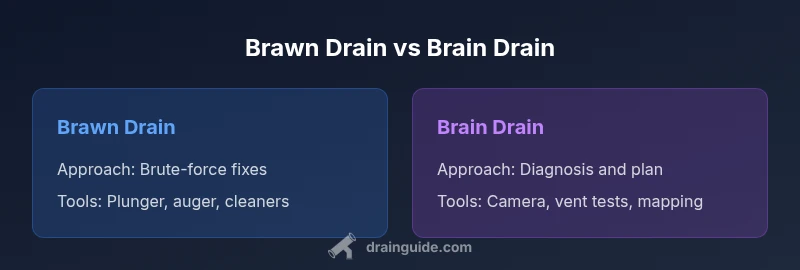
In household drainage work, the phrase "brawn drain vs brain drain" captures two contrasting mindsets. A brawn drain approach relies on hands-on, brute-force tactics: plungers, manual snakes, forceful flushes, and the heavy use of chemical cleaners to push a clog loose. A brain drain approach prioritizes diagnosis, planning, and systemic thinking: mapping the drainage layout, identifying venting or trap issues, and testing hypotheses about the root cause before acting. The distinction matters because the wrong approach can waste time, damage pipes, or simply move a clog from one location to another. According to Drain Guide, homeowners who begin with a quick diagnostic check and then apply targeted fixes tend to see fewer repeat clogs and less risk of overexerting pipes. The goal isn't to pick one tactic over the other forever but to know when to switch gears and how to sequence actions for the best long‑term outcome.
format
wordCount
Comparison
| Feature | Brawn drain | Brain drain |
|---|---|---|
| Approach | Brute-force methods (plungers, snakes, caustic cleaners) | Structured diagnosis and planning (root-cause analysis, vent checks, system mapping) |
| Typical Tools | Plunger, hand auger, chemical cleaners | |
| Time to Resolution | Often faster for simple clogs | Often longer upfront but reduces repeats and damage risk |
| Cost Range | Low upfront tool costs | Moderate to high if professional involvement is required |
| Best For | Isolated, obvious clogs; DIYers | Recurring problems or complex drainage systems |
| Risk | Potential damage or mess from improper chemical use | Lower risk with a methodical approach and proper safety |
Positives
- Immediate action for simple clogs with common tools
- Low upfront costs for basic DIY tools
- Quick wins can build momentum for maintenance
- Clear feedback loop when fixes succeed
Cons
- Potential pipe damage or sewer stress from aggressive chemical use
- Recurring issues if root causes aren’t addressed
- Mess and exposure to debris; safety risks
- Less predictability for complex drainage layouts
Hybrid approach wins for most homes: diagnose first, fix second, and escalate when needed
A balanced strategy minimizes damage and repeat calls. Start with brain drain to identify root causes, then apply targeted brawn fixes for quick wins. Escalate to a professional for complex layouts or persistent clogs.
Got Questions?
What is meant by brawn drain in household plumbing?
A brawn drain approach relies on brute-force methods like plunging, snaking, and sometimes chemical cleaners to push a clog through the pipe. It emphasizes quick, physical action rather than a full diagnostic process. While it can work for simple clogs, it carries risks if used without care or knowledge of the plumbing layout.
A brawn drain means using brute-force fixes like plungers and snakes to clear a clog, usually without a full diagnosis.
What is brain drain in drain troubleshooting?
Brain drain is the diagnostic, plan-first approach. It involves mapping the drainage system, testing for venting or trap issues, and forming a hypothesis about the root cause before taking action. This method reduces unnecessary fixes and helps prevent repeat problems.
Brain drain means diagnosing the root cause before acting, rather than jumping straight to fixes.
Are chemical drain cleaners safe to use as part of a brawn drain strategy?
Chemical drain cleaners can clear some clogs quickly, but they pose safety and pipe risks if misused. Always follow label directions, ventilate the area, and consider safer, targeted methods as part of a broader brain drain plan.
Chemicals can help, but they must be used carefully and as part of a bigger diagnostic plan.
When should I hire a professional plumber?
If clogs recur, cover multiple fixtures, involve multiple drain lines, or if you hear gurgling and venting problems, it’s time to call a professional. A plumber can perform camera inspections, identify root causes, and implement lasting fixes.
Call a pro when the problem is persistent or complex beyond DIY scope.
How can I tell if a clog is systemic rather than local?
Look for patterns across fixtures: if multiple drains are slow, your plumbing may have a systemic issue such as venting problems or main line blockage. Local clogs usually affect a single fixture.
If several drains are slow, think systemic; a single clogged fixture is more likely local.
Is a camera inspection worth it for preventing future clogs?
A camera inspection helps identify root causes like pipe damage, misalignment, or tree roots. It’s a proactive step that informs targeted fixes and reduces future call-backs.
Camera inspections can save time and money by pinpointing problems early.
The Essentials
- Diagnose before you fix to avoid repeating clogs
- Use basic tools for simple blockages, and reserve chemicals for careful, limited use
- Document symptoms to spot patterns and prevent recurrences
- Prefer a hybrid approach for long-term drain health and safety
- When in doubt, consult a licensed plumber for complex systems