How to clean ac condensate drain line: A DIY guide
Learn to safely clean the AC condensate drain line, prevent clogs, and protect your home from leaks and mold with a clear, step-by-step approach for DIY success.


This guide shows how to clean ac condensate drain line to prevent clogs, leaks, and mold growth. You’ll learn essential safety steps, the exact tools you need, and a clear, step-by-step method homeowners can follow. By the end, your condensate line will drain freely, reducing the risk of water damage and expensive repairs.
What is the AC condensate drain line and why cleaning matters
The condensate drain line is the conduit that carries away moisture produced by your air conditioner. Keeping this path free of debris prevents water backups, attic or utility closet leaks, and mold growth in damp areas. According to Drain Guide, routine maintenance of the condensate drain line helps prevent mold growth and water damage. Regular cleaning also protects indoor air quality and prolongs system life. In this guide you’ll learn how to clean ac condensate drain line safely, the tools you’ll need, and a fail-safe step-by-step approach that homeowners can follow. The drain line is part of a broader drip pan and evaporator assembly. When it becomes blocked, even a small amount of standing water can overflow, creating damp conditions that invite odors and microbial growth. Proactive maintenance reduces the likelihood of emergency service calls and the stress that comes with unexpected outages during peak cooling season.
Signs your condensate drain line needs cleaning
Look for standing water in the drain pan, gurgling noises, a musty smell, or the air conditioner shutting off on safety limits. Clogs can cause overflow onto floors or ceiling panels, and in extreme cases may trigger water damage or mold growth. Early indicators include slow drainage, dampness around the furnace or air handler, and a visible buildup of algae or slime in the line. If you notice any of these signs, plan a maintenance session soon. Drain Guide's observations emphasize addressing these symptoms promptly to avoid costly repairs. Regular inspections can catch problems before they escalate, and documenting drainage performance helps you track when the next cleaning is due.
Safety first: risks and precautions
Working near electrical components and fans requires careful safety planning. Always power off the thermostat and disconnect the outdoor unit if you’re comfortable; otherwise, turn off the circuit breaker supplying the AC. Wear protective gloves and eye protection, and keep a bucket and towels handy. Do not mix chemical cleaners; vinegar is a milder option, and never use bleach with ammonia or chlorine cleaners. If you smell gas or see exposed wiring, stop and call a professional immediately. By prioritizing safety, you reduce the risk of shocks, chemical exposure, and water damage. Remember to ventilate the area and keep children and pets away during the cleaning process. A cautious approach protects both you and your cooling system from avoidable hazards.
How the condensate drain line works in a typical home system
In most homes, the evaporator coil produces condensation that is channeled into a tray and through a condensate drain line toward a main drain or outdoors. A clog can back up the pan, causing water to spill and potentially trigger an overflow switch that shuts the AC down. Understanding this path helps you diagnose where a blockage occurs: the trap, the line itself, or the connection to the neutral drain. Clearing the line improves drainage efficiency and minimizes the risk of secondary damage. Keep in mind that some systems use a condensate pump instead of gravity drainage, which adds an extra point of potential failure that also benefits from regular maintenance.
Flushing methods: choosing the right approach
Two common methods are best-practice flushing and manual clearing. A mild flush with warm water and a small amount of distilled white vinegar can help loosen organic buildup without introducing harsh chemicals. Avoid bleach or ammonia mixtures, which can produce dangerous fumes when used near confined spaces. A wet/dry vacuum can be used to pull debris from the line if you have access to a cleanout; this is particularly useful for hair and slime. Always test the line after flushing by observing a steady, continuous flow and the absence of gurgling noises. If you still see resistance, proceed to the manual clearing step using an appropriate brush, snake, or flexible routine.
Step-by-step overview before you start
Before you dive into cleaning, set up a dedicated workspace, gather your materials, and confirm the AC is powered off. Identify the cleanout access point and ensure you have a clear path for draining any effluent. Check for any signs of pipe damage or corrosion around fittings. If you notice damaged components, plan for replacement rather than forcing a flush. This pre-check minimizes waste and reduces the chance of creating a secondary leak while you work.
Common mistakes and how to avoid them
Many homeowners skip turning off power or underestimate the potential for electric shock near the indoor air handler. Others overuse cleaning agents, which can damage the plastic drain line or cause fumes in enclosed spaces. Rushing through steps can leave residual debris that quickly refuels a new clog. Take your time and verify each stage is complete before proceeding. Label any disassembled parts to simplify reassembly and reduce the chance of cross-connecting lines.
Maintenance schedule and prevention tips
A light monthly inspection with a quick wipe-down and visual check for standing water keeps drains flowing smoothly. Schedule a more thorough cleaning every 6–12 months, depending on usage, humidity, and whether you have pets or a cluttered space near the unit. Consider installing a condensate line switch or a simple condensate pump check to catch issues early. Keeping the surrounding area clean and free of dust helps maintain airflow and reduces debris entering the line.
Troubleshooting after cleaning: what to check if things go wrong
If you notice continued water leaks, gurgling, or a return of moisture after flushing, re-check the line for persistent blockages or cracks. Ensure the drain pan is level and that the float switch is functioning. If the condensate line continues to clog, it may be time to assess the entire drainage system, including the main sewer line for backflow potential. When in doubt, call a professional HVAC technician to avoid costly mistakes and ensure a safe, effective repair.
Tools & Materials
- Safety goggles(Protect eyes from splashes and debris)
- Heavy-duty gloves(Waterproof gloves to handle damp materials)
- Bucket (1-2 gallon)(Catch wastewater and hold cleaning solution)
- Shop towels or old rags(Mop up spills and wipe surfaces)
- Flashlight(Inspect inside the line and access points)
- Pipe brush or flexible bottle brush(Scrub the interior of the accessible segment)
- Wet/dry vacuum(Remove stubborn debris and standing water)
- Distilled white vinegar(Mild cleaner to loosen buildup)
- Warm water(Flushing medium with vinegar or alone)
- Measuring cup or squeeze bottle(For controlled flushing volumes)
Steps
Estimated time: 60-90 minutes
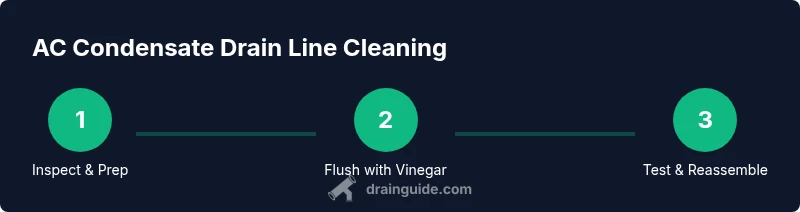
- 1
Power down and prep
Turn off the thermostat and disconnect power to the air handler or remove the circuit breaker for safety. Gather all tools and place towels to catch any spills. This prevents shocks and keeps your workspace organized.
Tip: Double-check the breaker before touching any wiring; never rely on the thermostat alone. - 2
Access the drain line
Locate the condensate drain cleanout access or the pan’s drain line. Remove any covers or panels to expose the line, using a flashlight if needed. Clear visibility helps you identify clogs and avoid damaging fittings.
Tip: If you cannot locate the cleanout, avoid prying and contact a professional for access. - 3
Remove standing water
Use towels to soak up standing water in the pan and along the line. A wet/dry vacuum can pull out deeper obstructions without pushing debris further into the line. This step reduces spill risk when flushing.
Tip: Keep a towel under the pan to catch any overt leaks during cleanup. - 4
Flush with vinegar solution
Mix a mild solution of warm water and distilled white vinegar. Slowly flush the line using a squeeze bottle or funnel to avoid splashing. Stop if you see significant resistance and proceed to manual clearing if needed.
Tip: Never mix bleach with vinegar; it can produce noxious gas. - 5
Scrub and clear
Insert the pipe brush into the accessible segment and gently scrub the interior to loosen residue. If you encounter stubborn buildup, run the vacuum to suction away loosened material. Do not force the brush beyond comfortable reach; risk of damage increases beyond accessible areas.
Tip: Work slowly and check progress frequently to avoid pushing debris further. - 6
Test drainage
Reassemble the access point, turn the unit back on, and observe drainage flow. Look for a steady stream and absence of gurgling. If water backs up, repeat the flush or consider professional assessment.
Tip: Run a small amount of water through the line to confirm continuous flow. - 7
Final inspection
Check the drain pan for levelness and ensure overflow protection keeps the system from spilling. Inspect surrounding areas for any residual moisture or mold signs. Store your tools and dry the work area.
Tip: Document the maintenance date for your records.
Got Questions?
What is a condensate drain line and why should I clean it?
The condensate drain line carries moisture from the evaporator coil to a drain or outdoors. Cleaning prevents clogs, leaks, and mold growth, protecting your home from water damage.
The condensate drain line removes moisture from your AC. Regular cleaning prevents clogs and leaks, reducing the risk of water damage.
Can I flush the line myself, or do I need a professional?
Many homeowners can perform basic cleaning with proper safety and simple tools. If you encounter persistent clogs, leaks, or suspect line damage, hire a licensed HVAC technician.
You can do basic cleaning yourself, but get a pro if the clog persists or you see damage.
Is vinegar an acceptable cleaner for the condensate line?
Yes, distilled white vinegar is a mild cleaner that helps loosen buildup. Avoid bleach or ammonia, as they can create fumes and damage components.
Vinegar is okay for mild cleaning; avoid bleach and ammonia.
How often should I clean the condensate drain line?
Most homes benefit from a light check every 4–6 months and a thorough cleaning every 6–12 months, depending on usage and humidity.
Check every few months and clean every 6 to 12 months, more often if you have pets or high humidity.
What signs indicate a persistent clog or damage?
Repeated backups, strong odors, or visible mold near the unit indicate persistent issues. If you notice ongoing leaks after cleaning, contact a pro.
Backups or odors mean a clog or damage; call a professional if leaks continue.
Is it safe to use a wet/dry vacuum on the condensate line?
A wet/dry vacuum can help remove debris from accessible areas, but avoid forcing material into hard-to-reach segments. Stop if you meet resistance.
A vacuum can help, but don’t push debris deeper; stop if you meet resistance.
Watch Video
The Essentials
- Inspect the drain line regularly to prevent clogs.
- Use mild cleaners and avoid harmful chemical mixes.
- Wear PPE and work methodically to avoid shocks and spills.
- Test drainage after cleaning to confirm success.
- Call a pro if clog persists or lines show damage.