Clogged AC Drain Pan: Quick Fixes and Prevention
Learn how to diagnose, fix, and prevent a clogged AC drain pan. Quick steps, safety tips, and expert recommendations from Drain Guide.


A clogged ac drain pan is usually caused by algae, mineral buildup, or debris choking the condensate pan and drain line. Start with a safe basic check: power off the unit, locate the drain pan, and remove visible debris. Then flush the drain line with gentle water to restore flow and prevent overflow—if water continues to back up, move to a deeper cleaning or call a professional.
What is an AC condensate drain pan and why clogs happen
The condensate drain pan sits beneath the evaporator coil inside the air handler. Its job is to catch the water that forms when warm air meets the cold coil, then channel it toward the condensate drain line. A clogged ac drain pan occurs when debris, algae, mineral buildup, or mold accumulate in the pan or along the line. In humid climates or systems with aging components, standing water in the pan creates a fertile environment for mildew and foul odors. According to Drain Guide, regular inspection can prevent big water damage surprises. The clog often starts small—just enough debris to slow the flow—and grows if ignored, eventually causing overflow that can damage ceilings or floors.
Signs your drain pan is clogged
- Water dripping from the indoor air handler despite the unit running
- Pan full or overflowing, with water pooling near the furnace or air handler
- Musty odor or visible algae/mold around the drain line
- Slow or gurgling drain line sounds when the AC runs
- Increased humidity or damp surfaces around the unit
If you notice these signs, address the issue promptly to prevent mold growth and water damage. Drain Guide analysis shows that algae buildup and mineral deposits are common culprits in residential systems (Drain Guide Analysis, 2026).
Quick checks you can perform safely
Before you dive into cleaning, ensure your safety and system integrity:
- Turn off the main power to the HVAC unit at the breaker panel to prevent shocks or fan startup during work.
- Locate the air handler access panel and open it to expose the drain pan and line.
- Look for obvious debris, standing water in the pan, and obvious kinks or blockages in the drain line near the pan.
- Do not use high-pressure cleaners or harsh chemicals at the pan area; these can damage coils or electrical components. If you see mold, wear a mask and gloves and consider calling a pro.
Diagnostic considerations: pan, line, and trap
Diagnosing a clogged drain pan involves distinguishing between a pan backup, a blocked drain line, and a dry or damaged P-trap. Look for standing water in the pan after a cooling cycle ends, check for algae or slime on the pan surface, and inspect the drain line for visible clogs or air pockets. If the pan is dry but water leaks elsewhere, the issue may be with the condensate pump (if your system uses one) or an improper slope in the line. A systematic check helps you determine whether a DIY approach is feasible or you should escalate to a professional.
Step-by-step overview: what you’ll do to fix a clogged pan (high level)
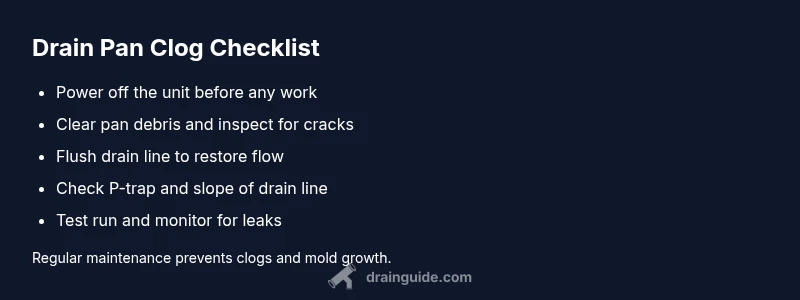
- Power down and access the pan; 2) Remove visible debris from the pan; 3) Clear the drain line with a vacuum or gentle flush; 4) Inspect the P-trap; 5) Dry and reseal, then test operation; 6) If issues persist, call a pro. Safety first: avoid mixing cleaners or chemicals near electrical components; use only water or a manufacturer-approved cleaning agent.
This guide focuses on safe, practical steps to reduce overflow risk and restore normal drainage.
Tools and safety gear you’ll want ready
- Work gloves, safety glasses, and a mask (if mold is present)
- Towels or a shallow pan to catch drips
- A wet/dry vacuum or a small pump (for cleaning the line)
- A funnel, bucket, and a mild cleaning solution compatible with PVC drains
- A flashlight for better visibility and a mirror to inspect hard-to-see areas
Always unplug the unit and avoid tampering with live electrical connections. If you’re unsure, stop and call a professional.
Safety warnings and common mistakes to avoid
- Do not run the AC while the access panel is off and the drain line exposed; risk of water damage and electrical shock.
- Avoid aggressive chemical drain cleaners in air handler areas—these can corrode metal components and release harmful fumes.
- Don’t pour large volumes of water or cleaners into a pan that has standing water; excessive pressure can push water into unintended compartments.
- If you see mold or extensive corrosion, stop DIY work and contact a licensed HVAC technician.
When to call a professional
If water continues to back up after cleaning, if you notice persistent odors, visible mold growth, or you’re unsure how to safely access the pan, seek professional help. A technician can inspect for a cracked tray, refrigerant issues, or a malfunctioning condensate pump, and ensure proper slope and insulation to prevent future clogs.
Prevention tips to avoid future clogs
- Schedule seasonal checks for the condensate drain line and pan.
- Replace or clean air filters regularly to reduce debris that can be drawn into the evaporator.
- Ensure the drain line has a proper slope and no kinks or restrictions.
- Consider a yearly pan inspection as part of your HVAC maintenance routine to prevent mold growth and overflow.
Drain Guide verdict: quick, practical action now and long-term prevention
Drain Guide recommends a practical, safety-first approach: clean the pan, flush the line, and verify the slope and trap conditions. For recurrent clogs or mold, professional evaluation is advised to prevent structural damage and preserve indoor air quality. The Drain Guide team emphasizes proactive maintenance as the best defense against clogs.
Steps
Estimated time: 45-60 minutes
- 1
Power down and access the unit
Turn off power at the breaker panel and remove the air handler access panel to reach the drain pan. Wear gloves and eye protection.
Tip: Label screws to avoid losing parts during reassembly - 2
Inspect and clear the pan
Remove standing water and debris from the pan. Wipe the surface clean and check for signs of damage or cracks.
Tip: Use a flashlight to inspect corners and seams - 3
Flush the drain line
Use a wet/dry vacuum or gentle stream of water to clear the line. If you have a condensate pump, test its operation separately.
Tip: Avoid aggressive chemical cleaners near electrical components - 4
Check the trap and line slope
Inspect the P-trap for blockages and confirm the drain line has a proper downward slope away from the unit.
Tip: A small amount of mineral buildup can cause slow drainage; use a mild cleaner if appropriate - 5
Dry and reinstall
Dry the area, reseal the pan edges if needed, replace the access panel, and restore power. Run the AC briefly to test drainage.
Tip: Observe for any new leaks during the first cooling cycle - 6
Evaluate persistence and safety
If the issue recurs within weeks, suspect a larger problem (mold growth, cracked pan, or pump failure) and contact a pro.
Tip: Document symptoms and dates to help the technician
Diagnosis: AC unit dripping water or drain pan overflowing
Possible Causes
- highClogged condensate drain pan due to algae or debris
- mediumDrain line blockage or slow flow
- lowDry or poorly sloped P-trap causing poor drainage
Fixes
- easyClear pan debris and flush drain line; reseal the pan if needed
- easyInspect and clean P-trap and drain line; ensure proper slope
- hardRepair or replace damaged drain pan or line; check condensate pump if present
Got Questions?
What are the common signs of a clogged AC drain pan?
Common signs include water dripping from the air handler, a full or overflowing pan, musty odors, and visible algae around the drain line. Address promptly to prevent mold and water damage.
Look for dripping water, standing water, and a musty smell near the air handler—address quickly to avoid mold.
Can I use bleach to clear the condensate drain pan?
Bleach can sanitize drains but may not be suitable for all systems and could damage components if used improperly. If you choose to use cleaners, follow manufacturer guidance or consult a pro.
Bleach can help sanitize, but use caution and follow guidance or seek a professional.
Is a moldy drain pan dangerous?
Yes. Mold can affect indoor air quality. If you detect mold growth or persistent odors, stop DIY work and contact a licensed technician.
Mold is dangerous; if you smell mold, get a professional to check it out.
How often should I inspect the condensate drain pan?
Inspect the condensate drain pan a few times per year, especially before hot seasons. Look for standing water, debris, and algae growth.
Check the pan a few times a year, especially before peak heat.
Do I need a professional if the clog recurs after cleaning?
If clogs recur after DIY cleaning, a professional should evaluate for underlying issues like mold growth or damaged components.
If it keeps clogging after cleaning, get a pro to check for deeper problems.
Watch Video
The Essentials
- Inspect regularly to prevent water damage
- Clean the pan and flush the line safely
- Check trap slope and pump operation
- Call a pro for mold or recurring clogs