Stopped Up Air Conditioner Drain: Quick Fix & Prevention
Urgent, practical troubleshooting for a stopped up air conditioner drain. Learn common causes, safe fixes, and prevention tips with Drain Guide’s trusted, DIY-friendly guidance.


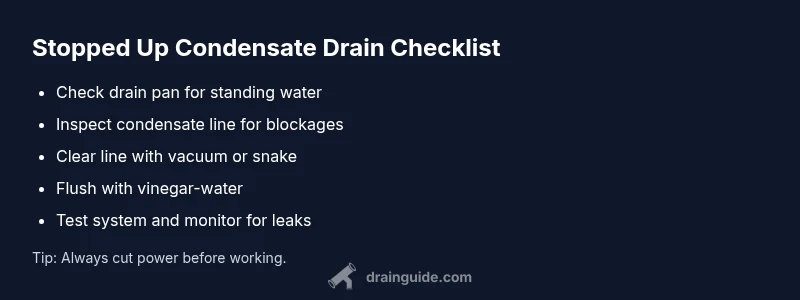
Most often, a stopped up air conditioner drain is caused by a clogged condensate line or pan. Quick fix: power off the unit, empty the pan if accessible, then clear the line with a wet/dry vacuum or a drain snake. Flush with vinegar-water, then test; if it returns, call a professional.
What causes a stopped up air conditioner drain
A stopped up air conditioner drain is usually caused by a clogged condensate drain line or a full, dirty drain pan. Over time, algae and mineral buildup can form a sludge that blocks the narrow drainage path. Hot, humid climates accelerate moisture production, and if the line isn't sloped properly, water can pool and stagnate. Debris from the indoor unit, such as dust and fibers, can also get drawn into the line. A blocked line can trigger overflow, prompting a drip or a clogged sensor that may cause the system to shut off, potentially causing comfort loss or water damage. According to Drain Guide, many homeowners underestimate how quickly a simple clog can escalate into overflowing water and costly damage. Addressing the blockage early saves time, money, and avoided headaches.
This guide sticks to practical, DIY-friendly steps you can perform safely. You’ll learn to identify the symptoms, perform quick checks, and execute a methodical fix that minimizes risk to your home and equipment.
Common symptoms indicating a clog
Look for signs like a puddle beneath the indoor air handler, a strong musty odor near the drain, gurgling noises from the drain line, or the unit shutting off due to an overflow sensor. A high humidity level in the space, unusually high energy use, or water staining on ceilings or walls near the unit may also indicate a hidden clog. A slow-draining condensate pan or water backing up into the secondary pan are important indicators. If you notice any of these symptoms, stop using the unit until you clear the blockage to avoid electrical hazards or water damage. Drain Guide emphasizes reacting quickly to these signals.
Early detection is critical: the longer a clog sits, the higher the risk of mold growth, overflow, and damage to nearby finishes.
Quick checks you can perform safely
First, turn off the AC power at the breaker and at the thermostat to reduce the risk of shock. Check the drain pan for standing water and remove any obvious debris. Locate the condensate drain line access point (often a PVC pipe) and inspect for visible blockages. Use a wet/dry vacuum to suction from the drain opening, which often pulls the clog free. If you can't access the line, skip to flushing with vinegar-water. Do not use bleach or harsh chemicals around the coils. Ensure the unit is level so water flows toward the drain; a mislevel unit is a common cause of backups. Always keep kids and pets away from wet areas.
These steps prioritize safety and minimize the chance of triggering electrical hazards while you diagnose the blockage.
Tools and safety you need
Before you start, gather a few basic tools: a wet/dry vacuum, a drain snake or flexible wire, a flashlight, a bucket, and protective gloves. Wear eye protection in case of splashing. Keep a towel handy for any spills. Never work on energized components; cut power at the breaker. If you notice burnt smells, scorched wiring, or melted insulation, stop immediately and call a pro. Drain Guide recommends keeping your work area dry and organized to prevent accidental slips or short circuits.
Cleaning methods: flushing and clearing the line
Clear the line first with suction from the drain opening using a wet/dry vacuum. If the clog is stubborn, feed a flexible drain snake gently into the line and twist to break up the blockage. Follow with a vinegar-water flush (1 cup vinegar to 1 gallon water) to disinfect and rinse out residue. Re-check the line for flow and listen for a smooth, steady drain. If you still see standing water after multiple attempts, the clog may be deeper or the line may be broken, and it’s time to escalate to professional service or install a secondary drainage path as a safeguard.
Avoid chemical drain cleaners in air conditioner lines—they can corrode copper or PVC and release fumes near the coils.
Prevention and daily maintenance to avoid future clogs
Create a simple maintenance routine to prevent clogs: check the condensate line monthly for visible debris, clean the drain pan annually, and replace or clean the air filter regularly to reduce excess moisture. Ensure the condensate line has a proper slope toward the drain and consider installing a condensate overflow switch or an emergency drain line as a backup. In humid climates, you may benefit from an auxiliary drain line that routes water safely away from living areas. Drain Guide emphasizes consistency—short, regular checks beat large, costly overhauls.
When to call a professional and what to expect
If you cannot clear the line with a vacuum or snake, or if the line is damaged, deforming, or silted beyond simple cleaning, contact a licensed HVAC technician. A pro can locate the clog with specialized cameras, assess the integrity of the drainage system, and install a secondary drain path if needed. Expect a safety-first approach: power down, protect wiring, and verify proper condensate disposal. Regular maintenance scheduling with a pro reduces the odds of recurring clogs and extends the life of your AC.
How Drain Guide recommends approaching the fix (summary)
A systematic, safe workflow reduces risk and downtime. Start with power-down and visual checks, then attempt suction and mechanical clearing. Flush the drain with a mild cleaner and water, avoid harsh chemicals, and finish with a test run. If the blockage persists, escalate to a professional while implementing preventive measures. Drain Guide’s practical approach centers on clear steps, safety, and prevention.
Steps
Estimated time: 45-60 minutes
- 1
Power down and access the drain area
Switch off the HVAC system at the thermostat and circuit breaker. Remove any accessible panels to reach the condensate drain pan and line. Visualize the path water takes from the pan to the drain outlet, noting any obvious blockages or standing water.
Tip: Working with dry hands and dry surfaces reduces the risk of short circuits. - 2
Inspect the drain pan and line
Check the pan for standing water, corrosion, or debris. Inspect the drain line inlet for visible blockages. If you see algae or slime in the line, plan to clear with suction and a gentle flush.
Tip: Take a photo before cleaning to verify orientation later. - 3
Clear the line with suction
Attach the wet/dry vacuum to the drain outlet and run it for 1–2 minutes to draw out the clog. Seal the connection as tightly as possible to maximize suction. If you can’t seal, try multiple short bursts rather than forcing continuous suction.
Tip: Do not bend or kink the hose; keep the vacuum stable to avoid leaks. - 4
Try a mechanical clearing method
If suction alone doesn’t clear the clog, insert a flexible drain snake or thin wire into the line and rotate gently to break up the blockage. Do not push hard; resist the urge to ram the snake into the pipe.
Tip: Work slowly and keep the snake aligned with the line to avoid puncturing or bending it. - 5
Flush with vinegar-water
Mix equal parts white vinegar and water, and flush through the line using a funnel or the snake’s access point. The solution helps rinse debris and inhibits mold growth. Allow the line to drain completely before rechecking.
Tip: Never mix bleach with vinegar in the same container; use vinegar alone for this step. - 6
Test and reassemble
Restore power and run a test cycle. Observe the condensate flow for several minutes to ensure steady drainage. Reinstall panels and confirm there are no leaks or unusual noises.
Tip: Keep a close eye on the unit for the first 24 hours after the fix.
Diagnosis: Water overflowing from the AC drain pan or an active clog
Possible Causes
- highClogged condensate drain line due to algae/sludge
- mediumBlocked or dirty condensate pan or drain outlet
- lowImproper drainage slope or plumbing trap issue
Fixes
- easyClear line with wet/dry vacuum and flush with vinegar-water; clean pan and outlet
- mediumInstall a condensate overflow switch or secondary drain line if available
- hardInspect/repair drainage slope or return to manufacturer guidelines
Got Questions?
What causes a clogged condensate drain in an air conditioner?
Clogs are usually caused by algae, mineral buildup, and debris in the condensate line or pan. Poor drainage slope and misalignment can also contribute. Regular maintenance reduces these risks.
Clogs are usually algae and debris in the condensate line or pan, and poor slope can contribute. Regular maintenance helps prevent it.
Can I use bleach or chemical cleaners in the condensate drain?
Chemical drain cleaners can damage the condensate line and coils. Use milder flushing methods like vinegar-water and consult a professional for persistent clogs.
Avoid chemical cleaners; they can harm the system. Use vinegar-water and seek a pro for stubborn clogs.
How often should I clean the condensate drain?
Inspect and clean the condensate line at least once every season, or more often in humid climates. Regular checks help prevent mold, leaks, and overflow.
Check the condensate line every season, more often if you live in a humid area.
Is it safe to use a shop vacuum on the drain line?
Yes, using a shop vacuum to pull debris from the drain line is typically safe if you follow safety steps and shut off power. Ensure a good seal and avoid touching live components.
Using a shop vacuum can work if you power down and seal well. Don’t touch live parts.
What if water still overflows after cleaning?
If water continues to overflow, the clog may be deeper, the line damaged, or a secondary drain failed. Stop using the unit and call a professional for a comprehensive check.
If overflow continues, call a professional for a thorough check.
When should I replace the drain pan or line?
Replacement is needed when there is permanent damage, cracks, or repeated clogs that cannot be resolved with cleaning. A pro can recommend the best replacement options.
Replace if damaged or repeatedly clogged; consult a pro for options.
Watch Video
The Essentials
- Clear clogs early to prevent overflow
- Use suction and gentle mechanical clearing first
- Avoid chemical drain cleaners around coils
- Implement preventive maintenance to avoid future clogs