Commercial Drain Cleaning: A Step-by-Step Guide for Businesses
Learn step-by-step how to plan, execute, and maintain commercial drain cleaning safely and effectively for restaurants, hotels, and offices with practical tools, methods, and prevention strategies.


This guide helps facility managers and DIY enthusiasts perform effective commercial drain cleaning. You will learn when to tackle clogs, what tools are required, and a step-by-step process that minimizes downtime and odors. Essential prerequisites include proper PPE, a safe work area, and access to the right equipment. According to Drain Guide, using commercial-grade gear improves reliability and safety.
What commercial drain cleaning covers
In commercial settings, drain cleaning goes beyond home plumbing. It encompasses large-capacity systems such as grease traps, floor drains in kitchens, condensate lines in cafeterias, service sinks in hotel laundry, and main lines serving multiple fixtures. This guide focuses on proactive maintenance and rapid-response tactics for facilities that cannot afford lengthy downtime. We will discuss typical clog causes, the range of techniques used by professionals, safety considerations, and when to bring in contractors. For property managers, understanding the scope helps you allocate budget, schedule interruptions, and coordinate with maintenance teams. Grease-laden kitchens create unique challenges, requiring grease trap inspection and maintenance as part of routine drain care. Restaurants especially rely on compliant cleaning protocols to prevent backups that could disrupt service or violate health codes. The Drain Guide team emphasizes that preventive maintenance is more cost-effective than emergency repairs. By outlining the most common scenarios and the tools that address them, this article equips you to make informed decisions and communicate clearly with service providers.
Industrial facilities, schools, and office towers may feature combination traps, interceptor piping, and venting requirements that influence method selection. The right approach depends on pipe diameter, material (PVC, cast iron, or steel), and the presence of ongoing discharges (such as brine or chemical cleaners). In addition to clearing blockages, good practice includes inspecting for root intrusion, jammed disposals, or collapsed sections and planning a long-term solution rather than a quick fix.
Why professional-grade equipment matters
Consumer tools and household augers reach their limits in commercial environments. Industrial hydro-jetters, high-torque power augers, CCTV inspection cameras, and root-cutting blades enable thorough cleaning with minimal guesswork and faster results. Using proper gear reduces downstream damage, restores flow more reliably, and supports safety and health-code compliance. The Drain Guide analysis shows that equipment choice correlates with downtime reduction and fewer service calls, especially in grease-heavy settings like restaurant kitchens. When used correctly, these tools also minimize the need for repeated interventions and allow for more predictable maintenance planning.
Equipping your crew with scalable options—from manual snakes for small branches to high-pressure jets for main lines—helps align cleaning strategy with load, pipe age, and fixture density. Remember that equipment selection should be matched to the pipe material (PVC, cast iron, or steel) and to the type of clog (organic buildup, grease, or solid waste). Proper gear, combined with trained operators, yields safer work, faster clearance, and fewer collateral damages.
Common causes of commercial drain clogs
Commercial drains face a distinct set of stressors compared to residential systems. Food service environments contribute grease and solids that cling to pipe walls, while commercial laundry, restrooms, and HVAC condensate lines introduce lint, hair, and mineral deposits. Improper disposer use or disposing of wipes and other non-flushable items also creates stubborn blockages. Over time, grease interceptors and trap seals can degrade, allowing fats and oils to accumulate in interceptor piping. Mineral buildup from hard water accelerates scaling in older metal pipes, reducing diameter and increasing pressure. In addition to physical blockages, venting issues and trap seals can cause slow drainage or gurgling sounds. The Drain Guide team notes that understanding the blockage profile—whether grease, hair, or mineral scale—is essential to selecting the most effective cleaning method and avoiding unnecessary teardown of systems.
Overview of cleaning methods: mechanical, hydro-jetting, and enzymatic approaches
Commercial drain cleaning relies on a hierarchy of methods tailored to the blockage type and system layout. Mechanical cleaning uses augers and drain snakes to physically break up or retrieve obstructions. Hydro-jetting employs high-pressure water streams to scour the interior pipe walls, restoring roughness and flow but requiring careful pressure control to prevent pipe damage. Enzymatic and bio-based cleaners can help prevent future buildup in conjunction with physical cleaning but are not substitutes for removing hard blockages in main lines. Each method has appropriate contexts: mechanical cleaning for short runs or accessible sections, hydro-jetting for heavy grease or mineral buildup, and enzymatic treatments for ongoing maintenance in low-flow sections. The choice should factor in pipe material, radius, and the potential for chemical interactions with nearby equipment, food waste, or chemical discharges. A well-planned approach also coordinates with downtime windows and building operations to minimize disruption.
Safety and regulatory considerations for commercial drain cleaning
Safety is non-negotiable in commercial environments. Before work begins, ensure all workers have appropriate PPE (gloves, eye protection, and, where required, respiratory protection). Lockout/tagout procedures may be necessary to isolate power and water sources, especially in kitchens or laundry facilities. Ventilate work areas to manage fumes from cleaning agents, and keep slip hazards under control with spill containment measures. Chemical cleaners used in commercial settings should comply with local health codes and environmental regulations to protect employees and reduce environmental impact. When dealing with grease interceptors or oily effluents, follow guidelines for disposal and avoid mixing cleaners with incompatible substances. Finally, confirm licensing or certification requirements for the chosen contractor and retain documentation for audits and maintenance records.
Preventive maintenance strategies for facilities to reduce clog risk
Preventive maintenance is more cost-effective than reactive cleaning. Implement a routine inspection schedule for grease traps, floor drains, and trap seals, and ensure interceptors are pumped at recommended intervals. Train staff to dispose of fats and solids properly, and post clear signage near dishwashing and food prep areas. Use strainers on sinks and floor drains where feasible, and maintain a predictable cleaning cycle that combines mechanical cleaning with periodic hydro-jetting in grease-prone zones. Track indicators such as drain slowdowns, discharge odors, or unusual noises to trigger a proactive cleaning session. A documented maintenance plan helps facilities stay compliant with health codes and reduces emergency downtime.
Choosing the right contractor or in-house team for commercial drain cleaning
Decide between building an in-house team or contracting a specialist based on facility size, downtime tolerance, and budget. Look for contractors with proven experience in your sector (e.g., food service or hospitality), along with references and a plan for emergency response. Verify licenses and insurance, confirm access to the right equipment, and request a written maintenance schedule and performance metrics. A good partner will provide pre-work assessments, post-cleaning verification (including flow tests or CCTV footage when applicable), and a clear warranty or service-level agreement. For larger facilities, consider a service provider that can coordinate with other trades to minimize disruption and provide ongoing maintenance support.
Troubleshooting common issues and when to escalate
If drainage remains sluggish after cleaning, re-evaluate for more complex issues such as root intrusion, collapsed or misaligned pipes, or improper venting. In such cases, escalation to a licensed plumber or pipe rehabilitation specialist may be required. Persistent odors, recurring clogs on multiple fixtures, or evidence of sewer gas should prompt immediate action and a formal assessment. Document all steps taken, the tools used, and the observed results to guide subsequent maintenance and future interventions.
Tools & Materials
- Industrial-grade hydro-jetter(High-pressure water unit capable of clearing grease and mineral buildup; ensure operator trained)
- Heavy-duty drain auger (drain snake)(Long-reach model suitable for main lines; compatible with commercial pipes)
- CCTV inspection camera(Optional for confirming pipe condition behind blockages)
- PPE package (gloves, goggles, face shield, impermeable apron)(Include hearing protection if using loud equipment)
- Lockout/tagout kit(Use when shutting off power or water sources near work area)
- Flow meter or dye test kit(Helps verify restoration of flow after cleaning)
- Grease trap access tools(Specialized tools for trap access and pump-out coordination)
- Buckets, towels, containment mats(Contain spills and manage wastewater responsibly)
- Enzymatic or bio-based preventive cleaners(For ongoing maintenance in low-flow sections)
Steps
Estimated time: 60-120 minutes
- 1
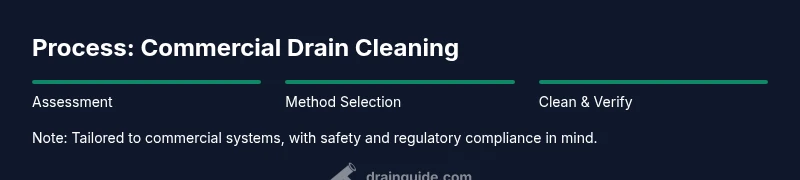
Assess the site and plan
Survey the affected area, map drain routes, identify access points, and locate shut-offs. Check for electrical hazards, chemical storage, and ventilation needs. Document key fixtures and organize a downtime window with facility management.
Tip: Take photos and create a simple diagram of the drainage network for reference. - 2
Isolate the system and secure the area
Lock out electrical sources where applicable and isolate the affected drainage line to prevent cross-contamination. Post warning signs and ensure personnel understand restricted zones. Confirm that all PPE is available and worn properly before work begins.
Tip: Ensure adequate lighting and ventilation; confirm water shutoff is fully engaged. - 3
Choose the cleaning method
Decide on mechanical cleaning, hydro-jetting, or enzymatic treatment based on blockage type, pipe material, and location. For grease-heavy main lines, plan hydro-jetting at controlled pressures to avoid pipe damage. If the line is partially infested with hair or solids, augmented mechanical cleaning may be preferred.
Tip: Start with mechanical cleaning for suspected solids; escalate to jetting for tough grease if needed. - 4
Execute the cleaning
Apply the chosen method in a controlled sequence, monitor pressure and flow, and avoid overexerting the system. Stop immediately if you observe pipe deformation or unusual sounds. Collect waste according to local disposal rules.
Tip: Work from the cleanout toward the main line to prevent pushing debris downstream. - 5
Test the system and verify results
Run water through all affected fixtures to confirm clearance. Use dye tests or a flow meter if available to verify consistent discharge. If flow remains restricted, reassess blockage location or consider CCTV verification.
Tip: Document flow metrics and capture a before/after photo for records. - 6
Document and schedule preventive maintenance
Record the methods used, equipment, and results. Schedule regular inspections, grease trap pumping, and potential follow-up cleaning. Establish a maintenance window that minimizes business disruption and aligns with health-code compliance.
Tip: Create a standard operating procedure (SOP) for future cleanings to speed up responses.
Got Questions?
What is commercial drain cleaning?
Commercial drain cleaning involves inspecting and clearing blockages in large-scale drainage systems found in restaurants, hotels, offices, and other facilities. It uses professional tools and methods to address grease, scale, and solid obstructions while minimizing downtime and complying with safety standards.
Commercial drain cleaning is clearing large facility drains with professional tools to minimize downtime and meet safety rules.
When should a business hire a professional plumber for drain cleaning?
If clogs persist after basic attempts, involve heavy grease buildup, structural pipe damage, or sewer-related odors, a licensed contractor should be engaged. For complex systems and critical downtime, professionals offer specialized equipment and state-compliant practices.
If clogs persist or there’s heavy grease or potential damage, hire a licensed contractor.
Can I perform commercial drain cleaning in-house?
Small-scale facilities with trained staff and access to appropriate equipment can perform basic cleaning, but many commercial tasks require specialized tools and professional oversight to avoid damaging pipes and voiding warranties. Plan for safety training and regulatory compliance.
In-house work is possible for simple cases if staff are trained and equipment is appropriate.
What safety gear is essential for commercial drain cleaning?
At minimum, use chemical-resistant gloves, splash goggles or a face shield, a protective apron, and hearing protection when using loud equipment. Ensure ventilation and lockout controls are in place, especially near kitchens and laundry facilities.
Wear gloves, eye protection, and PPE; ensure good ventilation and proper controls.
What maintenance practices help prevent future clogs?
Regular grease trap pumping, routine drain inspections, and the use of strainers on sinks reduce solids entering the system. Train staff on proper disposal and schedule periodic professional cleanings based on usage and building type.
Regular maintenance and proper disposal practices prevent many clogs.
Are enzymatic cleaners safe for commercial plumbing?
Enzymatic cleaners can support maintenance but are not a substitute for mechanical cleaning of main lines. Use them as part of a larger strategy and follow manufacturer directions to avoid reactions with cleaning chemicals.
Enzymatic cleaners help with ongoing maintenance but don’t replace mechanical cleaning.
Watch Video
The Essentials
- Assess hazards and plan before tools.
- Choose method based on blockage type and pipe material.
- Use commercial-grade equipment for reliability.
- Test flow after cleaning to confirm success.
- Schedule preventive maintenance to prevent future clogs.