Condensate Drain Line: DIY Diagnosis and Maintenance
Learn how to inspect, flush, and maintain a condensate drain line to prevent clogs, mold, and water damage. A homeowner-friendly, step-by-step guide with safety tips and pro recommendations.


This guide helps you diagnose and clear a condensate drain line, preventing backups and mold. You’ll learn when to clean, how to flush safely, and what tools to use, plus safety steps for working with HVAC condensate lines. No special trade tools beyond common household items are required. It covers DIY steps, warning signs, and when to call a pro.
What is a condensate drain line and why it clogs
The condensate drain line is the small pipe that carries moisture away from the evaporator coil in your air conditioner or furnace. When dirt, algae, mineral buildup, or a misrouted drain trap accumulate, the line can clog, causing backups that trigger overflow pans or moisture alarms and potentially water damage. In humid climates, condensate lines work continuously and are prone to mineral deposits if they’re not maintained. Regular checks help prevent mold growth in the drain pan and surrounding areas. This section explains how the line works, what typically causes clogs, and how to approach inspection without professional tools.
Understanding the path of the condensate line—through the air handler, into a drain pan, and out to the house drain—helps you pinpoint where a clog occurs and how to access it safely.
Signs that your condensate drain line needs attention
Look for signs of a blocked condensate drain line: water pooling near the furnace or appliance, an overflowing drain pan, a gurgling sound in the drain line, or a persistent musty smell indicating mold growth. If your system trips a float switch or displays a “backup” warning, treat it as an urgent cue to inspect the line. Regular checks can catch slow leaks before they become major problems. Keep an eye on the condensate pan’s visible area and any discharge line that exits your utility space.
Safety first: hazards and precautions
Working with HVAC equipment involves electricity and water near metal components. Always shut off power to the furnace/air handler at the breaker panel, and if possible, at the thermostat. Wear rubber gloves and eye protection, and use a bucket to catch drips. Do not use aggressive chemical drain cleaners in condensate lines, as strong cleaners can damage metal pipes and contaminate the condensate. If you notice exposed wiring, corrosion, or a persistent leak, stop and call a pro.
Tools and materials you’ll need
To inspect and clear a condensate drain line safely, assemble basic tools and supplies first. A sturdy bucket (2–4 gallons), a roll of paper towels, rubber gloves, a flashlight, and a flexible drain snake or auger are very helpful. Mild dish soap and white vinegar can aid in dissolving minor deposits when used with hot water. A wet/dry vacuum can help remove standing water if you have a stubborn clog and do not have a cleanout. Keep a towel handy for spills and a bottle of water for rinsing.
Step-by-step cleaning and clearing a condensate drain line
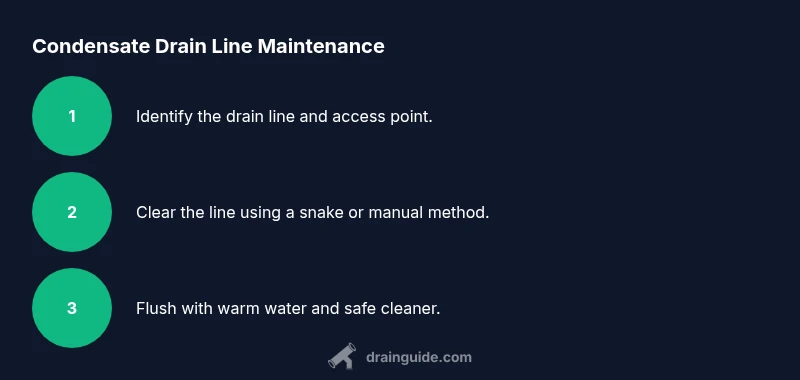
Follow a methodical process to clear a condensate line without damaging the system. Start by turning off the system and locating the cleanout or access point. Use the bucket to catch any water, and gently remove visible debris by hand. If a clog persists, insert a flexible drain snake and rotate to break up material, then flush with a hot water and vinegar solution. Finish by running clean water through the line to confirm free flow, then reassemble and power the system back on. If any step feels risky, stop and seek professional help.
Flushing and preventive maintenance
Regular maintenance is the best defense against clogs. Flush the line every 6–12 months, or after heavy cooling season usage, with warm water and a mild cleaning solution like vinegar (never harsh chemicals). Install or verify an accessible cleanout for easier future access. Keep the condensate pan free of standing water and inspect the line’s exterior for cracks or leaks. A simple maintenance routine reduces the risk of mold growth and water damage.
When to call a professional
If you cannot locate the cleanout, the line remains blocked after a safe flushing attempt, or you notice continuous backups despite clearing efforts, it’s time to call a licensed HVAC technician. Persistent odors, mold, or electrical concerns near the unit also warrant professional assessment. A pro can perform a camera inspection, check for line misrouting, and determine if replacement or a condensate pump is needed.
Authority sources
- https://www.energy.gov/ (U.S. Department of Energy – HVAC and moisture management basics)
- https://www.epa.gov/ (Environmental protection guidelines for moisture and mold prevention)
- https://www.ashrae.org/ (ASHRAE standards and best practices for condensate management)
Tools & Materials
- Bucket (2–4 gallons)(Catch condensate and spills during the process)
- Rubber gloves(Protect hands from metal edges and mold)
- Flashlight(Inspect hard-to-see sections and access ports)
- Paper towels or rags(Clean up spills and wipe components)
- Flexible drain snake or auger(Clear stubborn clogs beyond the cleanout)
- Mild dish soap(Assist cleaning with hot water)
- White vinegar(Dissolve minor mineral deposits when flushed with hot water)
- Wet/dry vacuum(Optional for removing standing water)
Steps
Estimated time: 60-75 minutes
- 1
Power down and locate access
Turn off the furnace/AC at the breaker and locate the condensate drain line access point or cleanout. Set up your bucket to catch any discharge and ensure you have room to work.
Tip: Double-check that power is truly off to avoid shocks. - 2
Access the drain line
Find the end of the line or the cleanout. If there is a trap or elbow, note how it’s connected and prepare to work around any hardware or screws.
Tip: Use the flashlight to illuminate tight spots. - 3
Remove visible debris
Carefully pull out any hair, lint, or obvious blockage by hand or with pliers. Place debris in the bucket and wipe the area clean.
Tip: Avoid forcing material back into the line. - 4
Open the path with a drain snake
Insert the snake into the line and rotate while pushing forward to break up the clog. Retrieve any material and wipe the snake as you go.
Tip: Do not force the snake; resistance may indicate a misalignment. - 5
Flush with warm water and vinegar
Mix warm water with a small amount of white vinegar. Slowly flush down the line to dissolve mineral deposits and rinse residual debris.
Tip: Let the solution sit for a few minutes if deposits are stubborn. - 6
Test flow and reassemble
Run clean water through the line to confirm steady flow. Reconnect any components, remove tools, and power the system back on.
Tip: Monitor the pan and line for a few hours after reset. - 7
Document maintenance
Record the date of maintenance and any observations. Schedule the next check in 6–12 months based on usage.
Tip: A maintenance log helps catch recurring issues early.
Got Questions?
What is a condensate drain line and why does it clog?
The condensate drain line carries moisture from the HVAC evaporator to a drain. It can clog due to mineral deposits, algae, hair, or misrouting. Regular maintenance helps prevent backups.
A condensate drain line carries moisture away from your HVAC system and can clog from mineral buildup or debris. Regular maintenance helps prevent backups.
Is it safe to flush with vinegar or hot water?
Yes, warm water with a small amount of vinegar is generally safe for mineral deposits. Avoid strong chemical cleaners that can damage metal and harm the system.
Warm water with a little vinegar is usually safe for mineral deposits; avoid strong chemicals.
What are the signs of a blocked condensate line?
Look for standing water near the unit, a full or overflowing pan, gurgling noises, or moldy odors. A float switch may trigger shutoff to prevent overflow.
Look for water pooling, moldy smells, or gurgling sounds as signs of a blockage.
How often should I service the condensate drain line?
Commonly every 6–12 months, more often in humid climates or older systems. Regular checks help prevent mold and water damage.
Most systems benefit from checks every 6–12 months, especially in humid areas.
When should I call a professional?
If the line remains blocked after your cleaning attempt, or you notice ongoing leaks, electrical concerns, or persistent odors, contact a licensed HVAC technician.
Call a professional if blockages persist or you notice leaks or electrical concerns.
Is it safe to operate the HVAC while cleaning?
No. For safety, power down the system before starting, and only power it back on after you verify there are no leaks or loose connections.
Power off before cleaning and only re-energize once you’ve checked for leaks.
Watch Video
The Essentials
- Shut off power before inspecting the condensate line.
- Use a drain snake for stubborn blockages.
- Flush with warm water and vinegar; avoid harsh cleaners.
- Prevent future clogs with regular maintenance.
- Call a pro if the line remains blocked after attempts.