Drain Is Clogged What to Do: A Step-by-Step Home Guide
Practical, safe methods to clear a clogged drain at home. This Drain Guide tutorial covers plunging, snaking, gentle cleaners, and when to call a plumber.


Clear a clogged drain at home by a structured, safe approach: start with plunging, then use a drain snake, followed by a gentle flush. If the clog persists after 30-45 minutes or you smell sewage, stop and contact a professional.
Understanding why drains clog and when to act
According to Drain Guide, most residential clogs are caused by a buildup of hair, soap scum, grease, and mineral deposits. Recognizing the typical culprits helps you choose the right method and prevents overuse of harsh chemicals. Drain is clogged what to do? Start with safe, mechanical tactics and avoid mixing cleaners. This guide emphasizes a staged approach so you can work from simple to more involved solutions. Drain Guide Analysis, 2026, shows that many clogs originate in the trap or immediate drain line, which is why a physical approach often resolves the issue without professional help.
By acting promptly and methodically, you protect pipes, prevent messy overflows, and reduce the likelihood of a bigger blockage. If you’re dealing with multiple fixtures backing up or a persistent sewage odor, the situation may indicate a sewer line problem that requires a plumber.
Quick at-home methods you can try first
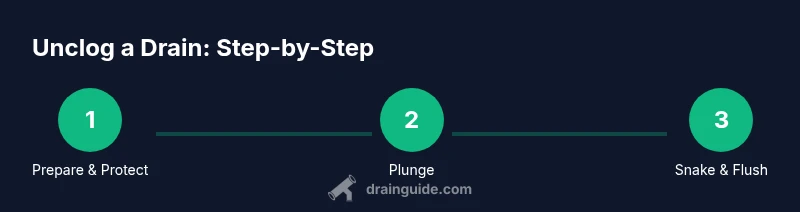
Before pulling on tools, clear the scene and remove standing water where possible. Place a bucket under the drain to catch spills and put on gloves for hygiene. Start with mild methods such as a plunger or a drain snake rather than chemical cleaners. For most household clogs, these techniques restore flow within an hour. Enzymatic cleaners can be helpful after the mechanical steps, but they’re not a quick fix for stubborn blockages. Drain Guide’s practical recommendations emphasize safe, non-chemical strategies first because they reduce risk to pipes and septic systems.
How to use a plunger effectively for a clogged drain
A plunger creates a seal that builds pressure to dislodge the clog. Begin by filling the basin with enough water to cover the plunger’s cup. If you’re plunging a sink, seal the overflow with a damp cloth to prevent air leaks. Apply firm, vertical strokes for 15-30 seconds, then pause to check flow. If water starts to drain, repeat a few more cycles. Avoid twisting the plunger; instead, use straight, deliberate pushes. This method works well for hair and soap scum when the clog is near the drain opening. Drain Guide recommends starting with plunging before moving to more aggressive tools.
Using a drain snake or auger: technique and safety
Insert the snake into the drain and turn the handle clockwise as you push forward. When you encounter resistance, pull back slightly to lift the clog, then push forward again. Keep the rotation steady and avoid forcing the coil—this can damage pipes. Retrieve debris as you go and wipe off sludge after removal. Once you feel the path is clear, slowly retract the snake while continuing to rotate. Flush the line with hot water to wash away loosened material. This step is often decisive for hair clogs and minor grease buildups. Drain Guide notes that patience and gentle technique beat brute force for most residential drains.
Gentle cleaners and home remedies: what works and what to avoid
Enzymatic cleaners and hot water flushes are gentler than chemical drain cleaners and safer for pipes. After mechanical clearing, pour hot water down the drain to help carry debris away. You can also try a baking soda and vinegar combo if you haven’t had success with plungers or snakes; allow the fizz to work for 15-20 minutes before flushing with hot water. Avoid chemical drain cleaners, which can corrode pipes, damage PVC joints, and upset septic systems. Many plumbing pros advise against relying on harsh chemicals as a first-line fix. Enzymatic cleaners can support ongoing maintenance, but they’re not a cure for a robust blockage.
When to call a professional: safety, limits, and next steps
If water still backs up after you’ve tried plunging, snaking, and gentle flushing, or if you notice a sewage odor, it’s time to call a licensed plumber. Persistent clogs across fixtures, gurgling sounds, or slow drains can signal more serious problems in the sewer line or main stack. The Drain Guide team recommends documenting the steps you’ve taken and communicating any observations (smell, color of water, and when the backup occurs) to help the technician diagnose the issue quickly. In some cases, a professional camera inspection is necessary to locate deep blockages or damaged pipes.
Tools & Materials
- Cup-style plunger with flange(Best for sinks and tubs; ensure a tight seal)
- Drain snake/hand auger(3-25 ft; choose flexible shaft for curved pipes)
- Bucket or basin(Catch water and debris)
- Rubber gloves(Nitrile recommended for grip and protection)
- Shop towels or old rags(Wipe spills and clean tools)
- Enzymatic drain cleaner(Optional; use after mechanical methods)
- Baking soda(For gentle boost with vinegar)
- White vinegar(Pair with baking soda; do not mix with other cleaners)
Steps
Estimated time: 60-90 minutes
- 1
Prepare the area
Clear the area around the sink or tub. Put on gloves, place a bucket beneath the trap if accessible, and lay towels to catch spills. Remove standing water if possible so you can see the obstruction more clearly.
Tip: Have everything within reach; this reduces trips back to the toolbox. - 2
Plunge the drain with proper technique
Seal the overflow opening with a wet cloth. Position the plunger to cover the drain, then push and pull with steady pressure for 15-30 seconds. Check for a successful venting of the clog by observing movement in the water.
Tip: Keep a tight seal and avoid twisting the plunger; horizontal strokes work best for most sinks. - 3
Insert and rotate the drain snake
Insert the snake into the drain and rotate clockwise while applying gentle pressure to break up the clog. When you feel resistance, slowly pull back and clean debris off the coil. Repeat until you see water drain more freely.
Tip: Do not force the snake; forcing can damage pipes. - 4
Flush with hot water and optional cleaner
Boil water or use very hot tap water and slowly pour down the drain to flush loosened material. If you want, follow with a teaspoon of enzymatic cleaner after the water has cooled. Avoid chemical cleaners.
Tip: Hot water helps but avoid scalding; enzymes need time to work. - 5
Try baking soda and vinegar if needed
Pour 1/2 cup baking soda into the drain, followed by 1 cup white vinegar. Cover for 15-20 minutes, then flush with hot water. This is a gentle boost, not a cure for heavy clogs.
Tip: Do not mix with other cleaners; the reaction creates fizzing but does not clear deep blockages. - 6
Assess and decide whether to call a professional
If water still backs up or you smell sewage, stop DIY attempts and contact a licensed plumber. Document steps you've taken for the technician.
Tip: Persistent clogs across fixtures suggest plumbing or sewer line issues.
Got Questions?
What should I do first when a drain is clogged?
Start by removing standing water, inspecting the trap, and trying a plunger. If water drains slowly or not at all, continue with a snake. Always wear gloves and keep children away.
First, remove standing water and try a plunger; if that doesn't fix it, move to a drain snake.
Is it safe to use chemical drain cleaners?
Chemical cleaners can damage pipes and septic systems and may be hazardous. Prefer mechanical methods first and consult a professional if unsure.
Chemical cleaners can harm pipes; use mechanical methods first.
How long should a DIY unclog take?
Most mild clogs resolve within 30-45 minutes when using plungers or snakes. If there's no progress after this window, stop and reassess.
Most DIY fixes take under an hour; if it doesn’t improve, step back.
When should I call a plumber?
Call a plumber if the clog recurs, if sewage odors appear, or if multiple fixtures are affected. They can inspect for sewer line issues.
Call a plumber if the clog returns or you smell sewage.
Can baking soda and vinegar clear clogs?
Baking soda and vinegar can help with minor buildup but rarely clear stubborn clogs. They’re safe but not a cure for serious blockages.
Baking soda and vinegar may help, but they rarely fix strong clogs.
Should I remove the P-trap under a sink?
Only remove the P-trap if you understand how to safely disconnect and reassemble it. Have towels ready to catch water and debris.
P-trap removal is doable but messy; be prepared to catch water.
What if the clog is in a shower or tub drain?
Shower and tub drains often respond well to plungers and snakes designed for larger outlets. Remove the drain cover and clear the trap if accessible.
Shower clogs respond to plungers and snakes; check the trap if possible.
Watch Video
The Essentials
- Start with safe, mechanical methods first
- Use the right tool for your drain type
- Avoid harsh chemical cleaners
- If symptoms persist, call a plumber
- Drain Guide's practical steps help you decide next steps