Drain Overflow in Basement: Quick Troubleshooting Guide
Urgent basement flooding can cause lasting damage. Learn a practical, safe troubleshooting flow to diagnose and fix drain overflow in basement, from sump pump checks to backflow prevention, with a clear, action-oriented plan.


A drain overflow in basement is most often caused by a failing sump pump or a clogged main sewer line. Before panic, run a quick check: test the sump pump, inspect discharge lines, and avoid chemical drain cleaners. If the overflow recurs, follow the step-by-step guide to identify and fix the root cause safely.
What drain overflow in basement means for your home
A drain overflow in basement is more than a nuisance—it's a sign that your home's drainage system is under stress. Water backing up into living spaces can damage walls, flooring, and belongings, and it creates a risk of mold growth and structural damage if left untreated. In many homes, the underlying issue is not a single fault but a combination of overwhelmed components, from sump pumps to floor drains and sewer lines. Recognizing the urgency is key: addressing the problem early reduces the risk of costly repairs down the line. Drain overflow in basement situations often correlate with heavy rainfall, rapid snowmelt, or an aging drainage system that no longer handles typical water flow.
To protect your home, you’ll want a calm, methodical approach. Start with the simplest checks and move toward more involved diagnoses. Keep a notebook or notes app handy to track what you find and what fixes you try. Running through a repeatable process helps prevent missed steps and ensures you don’t overlook a crucial component.
Brand context from Drain Guide: treating basement drainage issues with a clear, practical workflow helps homeowners regain control quickly and safely.
The most common scenarios that trigger basement flooding
Flooding in basements can originate from several plausible scenarios. A failing or undersized sump pump is a frequent culprit in homes that rely on a single pump to handle all groundwater. A clogged or backlogged main sewer line can push wastewater back into a basement drain, particularly during heavy rain. Floor drains and sewage ejector pits can accumulate sediment or become blocked, creating backups when water volume surges. Poorly configured or damaged discharge lines may also cause water to back up, especially if the line is kinked or partially blocked.
Groundwater intrusion is another possibility after long wet periods; high water tables can infiltrate basement walls and floors when exterior drainage isn’t sufficient. Finally, backflow preventers installed incorrectly or failing valves can allow sewer water to flow back into the basement.
Understanding which scenario you’re facing helps you choose the right fix and avoid over-treating issues that don’t apply. Drain Guide has seen homeowners succeed when they map symptoms to likely causes and follow a disciplined repair plan.
Immediate checks you can perform right now
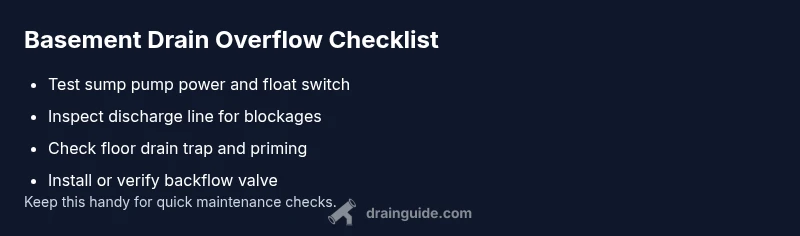
Before calling a professional, run through quick, safe checks:
- Verify sump pump operation: Is the unit plugged in, and is the breaker on? Listen for the pump running and check for unusual noises.
- Inspect the discharge hose: Ensure it’s not kinked, blocked, or directed into a blocked area. A blocked discharge line can trap water and worsen the backup.
- Check the floor drain and trap: If the trap is dry, the sewer gas may make the problem seem worse; priming the trap with water can help prevent odors and backflow.
- Look for visible clogs in pipes: A slow drain elsewhere in the home can indicate a more extensive clog that may require a snake.
- Avoid chemical cleaners: They can damage pipes and create dangerous fumes; use mechanical cleaning methods instead.
If you notice water rising quickly or you see sewage, evacuate the area and call emergency services or a licensed plumber right away.
Diagnostic flow: symptom to diagnosis to fix map
This flowing diagnostic map helps pinpoint the root cause while avoiding unnecessary work:
- Symptom: Water backs up in the basement drain after rainfall or snowmelt.
- Check sump pump status: Is power available? Does the float rise properly? Is the basin clean?
- Inspect sewer main and branch lines: Look for indications of a blockage beyond the house’s line, such as gurgling sounds or a slow drain upstairs.
- Evaluate backflow prevention devices: Is a backwater valve installed and functioning? Are check valves properly oriented?
- Assess groundwater intrusion: Is the basement level actually below the exterior drainage grade? Are exterior downspouts directing water away from the foundation?
- If issues persist after these checks, escalate to professional assessment for pipe replacements or sewer line repair.
Step-by-step fix for the top culprit: sump pump and backflow management
Fixing basement drain overflow often centers on the sump pump and backflow controls. Implement the following fixes in order, testing after each:
- Step 1: Power down safety and access the sump pit. Inspect the power cord, outlet, and breaker. Ensure you’re dry and using proper PPE.
- Step 2: Inspect the discharge line and check valve. Clear any obstructions, straighten any kinks, and verify the check valve is present and functioning to prevent backflow.
- Step 3: Test the sump pump. Add water to the pit to trigger the float; confirm the pump activates and water is expelled through the discharge line.
- Step 4: Clean the intake screen and remove debris from the pit. A clogged intake can reduce pumping efficiency and contribute to slow drainage.
- Step 5: Re-prime floor drain traps and seal gaps around piping where possible. Pour water into the floor drain to ensure it remains primed.
- Step 6: If backflow continues, consider installing or upgrading a backwater valve or seeking professional assistance. Do not rely on chemical drain cleaners as a fix for backflow problems.
If none of these steps resolve the issue, schedule a licensed plumber visit. They can perform more advanced diagnostics, such as camera inspection of sewer lines and evaluating foundation drainage.
Preventing future basement drain overflow
Prevention is easier than remediation. Create a simple maintenance routine that reduces the risk of future overflow:
- Schedule monthly sump pump checks during wet seasons and after heavy rainfall; test the float and clean the basket.
- Inspect exterior drainage: Ensure downspouts direct water at least 3-4 meters away from the foundation, and verify grading around the foundation slopes away from the house.
- Maintain floor drains and traps: Prime traps periodically and replace seals or gaskets if they show wear.
- Consider backflow protection: If your home is prone to backups, install a backwater valve and ensure it’s inspected annually.
- Document issues: Keep a log of flood events, pump maintenance, and any repairs to guide future diagnostics. Drain Guide recommends proactive maintenance to minimize disruption and damage.
Safety considerations and when to call a pro
Safety should be your top priority with basement drainage problems. Wet floors, energized equipment, and sewage backups pose electrocution and contamination risks. Always turn off power to pumps before handling electrical components, wear rubber-soled footwear and gloves, and avoid contact with contaminated water. If you’re unsure about any step—especially when dealing with sewage or the main sewer line—call a licensed plumber immediately. Persistent backups, sewage odors, or water that overwhelms the system after a simple fix indicate it’s time for professional evaluation.
Steps
Estimated time: 60-120 minutes
- 1
Power down safely and access the sump pit
Begin by turning off the sump pump at the breaker and unplugging it if safe. Inspect the pit for standing water, debris, or a stuck float. This initial step protects you from electric shock and gives you a clear view of the pump’s condition.
Tip: Wear rubber gloves and non-slip shoes; keep a dry towel handy. - 2
Check discharge line and install/check valve
Trace the discharge hose from the pump to where it exits the home. Clear any blockages and verify that a functional check valve is present to prevent backflow into the sump or home.
Tip: If you don’t see a check valve, install one toward the exit point to stop backflow. - 3
Test the sump pump
Pour water into the pit until the float activates the pump. Confirm the unit runs and water exits through the discharge line without swelling or backflow. If it doesn’t start, the motor or switch may be faulty.
Tip: Note how long it takes for water to clear; slow pumps may need service. - 4
Clean the intake and pit
Remove any debris from the sump basket and pit, including mud, leaves, or sediment. A clean intake ensures maximum flow and reduces the chance of a repeat overflow.
Tip: Wear eye protection when scooping out debris. - 5
Prime floor drain traps and test for odors
If basement floor drains are present, ensure traps are primed with water. A dry trap can allow sewer gases to escape and may indicate the drain isn’t sealing properly.
Tip: Pour a small amount of water into the floor drain; listen for a seal returning as air moves through the pipe. - 6
Assess backflow protections or call a pro
If water continues to back up after the above steps, consider upgrading to a backwater valve or contacting a licensed plumber for advanced diagnostics.
Tip: Ask for a written estimate and a timeline for any work beyond routine maintenance.
Diagnosis: Water backs up into basement drain after heavy rainfall or snowmelt
Possible Causes
- highSump pump failure or insufficient capacity
- mediumBlocked or clogged main sewer line
- mediumFloor drain or sewage ejector pit clog
- lowBackflow valve or check valve failure
Fixes
- easyTest and service the sump pump: power, float, impeller, and discharge line; clean the basin thoroughly.
- mediumClear main sewer line with appropriate tools or call a plumber for a camera inspection and root removal if needed.
- mediumInspect and clean floor drain trap and reseal; prime trap if it’s dry and verify the ejector pit is clear.
- hardInstall or repair a backflow prevention valve/check valve for basement protection; ensure correct orientation and secure installation.
Got Questions?
Why is there a basement drain overflow after heavy rain?
Heavy rainfall can overwhelm the home's drainage system, especially if the sump pump is undersized or nonfunctional. A clogged sewer line or floor drain can also back up water into the basement. Systematic checks help pinpoint the exact cause and guide safe fixes.
Heavy rain can push water through your drains, especially if the sump pump or sewer line is blocked or undersized. We'll guide you through checks to identify the issue.
Can a faulty sump pump cause basement floods even if the utility room stays dry?
Yes. A sump pump that won’t start or that runs continuously without expelling water can cause or fail to prevent a basement flood. Verify power, float operation, and discharge path before moving on to other components.
A bad sump pump can cause floods even if the room looks dry. Check power, float, and discharge to confirm.
Is a backflow valve necessary for basement protection?
A backflow valve helps prevent sewer backups from entering the basement. If you have frequent backups or an older system, discuss valve installation or replacement with a licensed plumber.
If you have frequent backups, a backflow valve can help. Talk to a plumber about installation.
Are chemical drain cleaners safe for basement drains?
Chemical cleaners can damage pipes and create hazardous fumes, especially in enclosed basements. Use mechanical methods or professional services for backups rather than chemicals.
Avoid chemical cleaners in basements; they can harm pipes and release dangerous fumes. Use mechanical methods or call a pro.
When should I hire a professional for basement drain overflow?
If water continues to back up after basic checks, if you smell sewage, or if the main sewer line appears compromised, hire a licensed plumber for a thorough diagnosis and safe repair.
Call a plumber if backups persist or you suspect sewer line issues.
Watch Video
The Essentials
- Identify if sump pump or sewer backup is the root issue
- Follow a safe, stepwise diagnostic flow
- Avoid chemical cleaners; prioritize mechanical fixes
- Upgrade backflow protections if backups recur