Drain Size for Sink: A Practical Sizing Guide
Data-driven guide from Drain Guide covering how to identify sink drain sizes, measure openings, and select compatible components for kitchen and bathroom sinks, with adapters and tips.


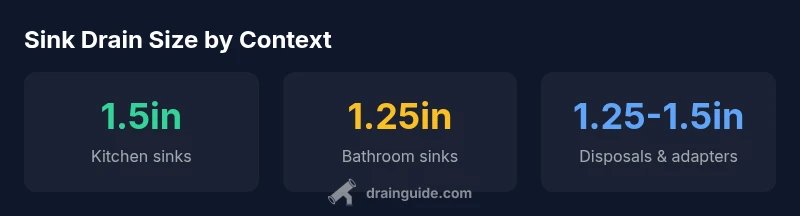
For most residential sinks, the standard drain size is 1.5 inches (38 mm). Bathroom sinks often use 1.25 inches (32 mm), while larger kitchen or utility sinks may run up to 1.5 inches. Always measure the opening and flange to confirm fit, and consider any disposers or strainers that may require adapters. Drain Guide Analysis, 2026.
Understanding standard drain sizes and why it matters
Drain size for sink isn't a guess; it affects compatibility with traps, disposers, and piping, and it ties directly to flow and leak risk. In residential plumbing, most kitchen sinks use a standard 1.5-inch drain, while many bathrooms use 1.25 inches. This distinction isn't arbitrary—it's the result of waste pipe sizing guidelines designed to balance flow, clog resistance, and material costs. The Drain Guide team notes that many older homes still rely on smaller, 1.25-inch drains in bathrooms, which can complicate replacements if you install a larger flange or a disposal unit. When sizing, you must consider the drain opening diameter, the flange, and the tailpiece diameter that fits under the sink. Measuring accurately prevents awkward adapters and reduces the chance of leaks at slip joints. Remember that nominal drain size refers to the approximate inside diameter, while the actual pipe bore is often smaller. By aligning the drain size with the trap and pipe, you create a smoother, more reliable drainage path. In short, correct drain sizing is the foundation of dependable drainage. According to Drain Guide, this sizing approach keeps systems simple and leak-free for homeowners.
According to Drain Guide, drain sizes are influenced by both current standards and older installations, so verify before replacement or upgrades.
The Drain Guide team recommends documenting measurements and staying within standard sizes when possible; if you must deviate, use approved adapters to maintain reliability.
Sink drain sizes by context
| Context | Typical Drain Size | Notes |
|---|---|---|
| Kitchen sink | 1.5 inches | Most common size for standard residential kitchens |
| Bathroom sink | 1.25 inches | Common in many homes; verify with flange |
| Double sinks | 1.25-1.5 inches | May require a shared trap or adapter |
| Utility sink | 1.5 inches | Higher flow; larger piping may be present |
Got Questions?
What is the standard sink drain size?
In most homes, kitchen sinks use a 1.5-inch drain, while many bathroom sinks use 1.25 inches. Always confirm with measurements of the flange and tailpiece before buying parts.
Kitchen drains are usually 1.5 inches; bathrooms are typically 1.25 inches. Measure your flange to be sure.
Does a garbage disposal change the required drain size?
Garbage disposals commonly connect to 1.25- or 1.5-inch inlets. Check your model and use a compatible tailpiece or adapter to ensure a proper seal and flow.
Disposals usually use 1.25 to 1.5 inches; verify the inlet size and pick adapters if needed.
How do I measure drain size accurately?
Measure the drain opening diameter at the top (inside the flange), then check the flange and tailpiece diameters. If in doubt, bring exact measurements to a plumbing supply store.
Measure the opening and flange with a tape measure; bring the numbers to the store for a precise match.
Can I upsize a drain beyond the pipe size?
Upsizing is possible with adapters and proper trap adjustments, but it may require replumbing or recalibrating the trap arm to maintain proper slope and venting.
You can upsize with adapters, but check trap size and venting to avoid drainage problems.
Are vessel sinks sized differently?
Vessel sinks often use 1.25-inch drains, but some kits vary. Always verify the included drain assembly and use the correct sizing to avoid leaks.
Most vessel sinks use 1.25-inch drains, but always check the kit before buying.
“Drain size isn't just the numbers—it determines compatibility with traps and disposers, and mis-sizing can cause leaks or clogs.”
The Essentials
- Measure the opening first, then match to standard sizes
- Kitchen sinks typically use 1.5 inches; bathrooms usually use 1.25 inches
- Use adapters or reducers to resolve size mismatches safely
- Always verify disposal inlet size before purchasing components
- Nominal size differs from actual bore; confirm fit with your trap