How to Clean Sink Drain with Baking Soda: A Simple DIY Guide
Learn a safe, chemical-free method to clean sink drains using baking soda. This step-by-step guide covers materials, techniques, and maintenance to prevent future clogs.


This guide shows you how to clean sink drain with baking soda using a safe, effective method that clears minor clogs and neutralizes odors. You’ll need baking soda, white vinegar, hot water, a kettle, and basic tools. Follow the step-by-step process to refresh your drain without harsh chemicals, then maintain your sink with simple routines.
Why this method works and when to use it
If you're wondering how to clean sink drain with baking soda, this method offers a gentle, chemical-free option for routine clogs. Baking soda acts as a mild abrasive and, when paired with hot water (and sometimes vinegar), helps dislodge soap scum, hair, and grease that slow drainage. According to Drain Guide, baking soda is a safe, user-friendly option for many clogs when used with hot water. This approach is best for light to moderate buildup in kitchen and bathroom drains and avoids harsh chemical cleaners that can irritate skin or corrode pipes. When you know what to expect, you can treat routine clogs without renting specialized tools or calling a plumber. It is important to distinguish between minor grease buildup and a true blockage; if you notice standing water that won't drain after a few cycles, you may need mechanical removal.
When to choose baking soda with vinegar vs other cleaners
Baking soda with vinegar is a classic home remedy that brings fizz and mild acidity to help loosen organic buildup. This combo is particularly helpful for light clogs caused by soap scum and hair. However, for heavy grease, mineral buildup, or a fully stalled drain, you may need mechanical methods or purpose-built drain cleaners (or professional help). For most households, using baking soda and hot water repeatedly provides a safe, inexpensive maintenance routine. If the drain remains slow after a couple of cycles, consider plunging or snaking as a next step rather than applying stronger chemical cleaners.
Tools and materials you’ll need
Before you begin, gather a few simple items. The essentials are baking soda (about 1/2 cup per cleaning session), white vinegar (optional), hot water, a kettle or pot to heat water, protective gloves, and a plunger or drain snake for stubborn clogs. A small funnel or measuring cup helps with pouring. Keep a dry towel handy to catch splashes and wipe up spills. Using the right tools prevents mess and reduces the chance of pushing debris deeper into the drain.
Step-by-step overview to clean a sink drain with baking soda
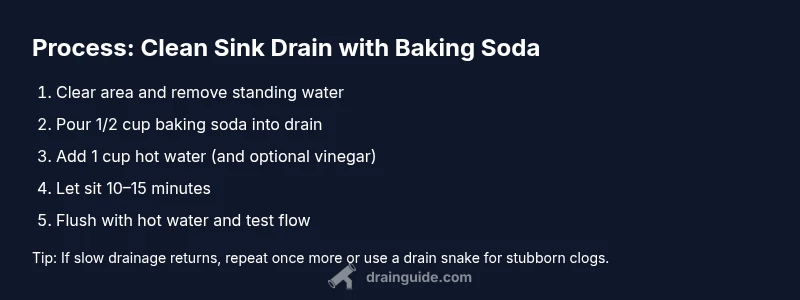
The approach blends dry and wet actions: dry powder to target the inner walls, followed by a hot flush to carry loose material away. Expect a gentle fizzing when vinegar is added, which helps loosen tiny particles. You’ll then flush with hot water to clear loosened material and restore flow. This overview keeps you focused on timing and sequence so you don’t rely on guesswork when a clog reappears.
Common mistakes and safety tips
Avoid mixing baking soda with chlorine bleach or ammonia; this can release harmful gases. Do not pour boiling water into aged or brittle PVC pipes, as heat can cause damage. Always wear gloves, protect your eyes from splashes, and never rely on baking soda alone for a truly stubborn clog. If odors persist after a few cycles, reassess with mechanical methods or consult a plumber.
Maintenance routines to prevent future clogs
Treat your drains as part of a regular home maintenance routine. Run hot water down the drain after each use to carry residues away, wipe away grease from the sink surface, and use a drain screen to catch hair. Perform a baking soda flush (1/2 cup with hot water) monthly or when you notice slow drainage. These habits help keep lines clear and reduce the frequency of more intense interventions.
How to adapt for different drain types
Most kitchen and bathroom drains respond well to baking soda treatments, but metal pipes with a long service life might tolerate more frequent flushes than older PVC lines. For bathroom sinks with metal traps, remove the trap occasionally to clean it manually. Always test a small area if you’re unsure of pipe material, especially in older homes.
Alternatives and when to skip baking soda
If you’re dealing with a blockage caused by a solid object or a mineral buildup, baking soda alone may not suffice. For persistent clogs, you might need a plunger, a drain auger, or a professional cleaning service. In homes with septic systems, moderate use of baking soda and water is generally safe, but avoid repeatedly using strong cleaners that disrupt the bacterial balance.
What to do if you still have a clog
If the drain remains slow after two treatment cycles, stop and reassess. Check the P-trap for blockages, then use a drain snake to mechanically remove hair and gunk. If issues persist beyond this point, it’s wise to consult a plumber to avoid pipe damage or waste backup.
Tools & Materials
- Baking soda(About 1/2 cup per cleaning session)
- White vinegar(Optional; boosts fizz and cleaning power)
- Hot water(Boiled or kettle-hot water for flushing)
- Kettle or pot(To heat additional hot water if needed)
- Rubber gloves(Protect hands during cleaning)
- Drain plunger(Useful for minor blockages)
- Drain snake / auger(For hair or solid obstructions)
- Measuring cup or scoop(Precise pouring helps with consistency)
- Towel or small bucket(Catch drips and keep area tidy)
Steps
Estimated time: 20-30 minutes
- 1
Clear the area and remove standing water
Put on gloves and remove any visible debris from the sink. If water is pooled, scoop it out with a cup so the baking soda can reach the drain opening. Clearing the area helps prevent overflow when fizzing begins.
Tip: Keep towels handy to catch splashes and wipe quickly before residue dries. - 2
Boil water and prepare hot flush
Boil fresh water using a kettle or pot. Hot water carries loosened debris away more effectively than cooler water and reduces the chance of re-clogging.
Tip: Be careful when handling boiling water; keep hands away from the direct flow to avoid burns. - 3
Pour baking soda into the drain
Carefully pour about 1/2 cup of baking soda directly into the drain opening. This powder helps scrub and break loose greasy films on the pipe walls.
Tip: If the drain has a tight opening, use a funnel or spoon to guide the powder in without spilling. - 4
Add hot water and optional vinegar
Pour the hot water into the drain, and if you’re using it, add 1 cup of white vinegar for a fizzing reaction that helps lift grime. Do not mix with other cleaners like bleach.
Tip: Cover the drain briefly with a plug or cloth to trap the fizz for a few minutes. - 5
Let the mixture work
Allow the mixture to sit for 10–15 minutes so the baking soda and vinegar can break down buildup. Avoid running more water during this time.
Tip: Set a timer to stay on schedule and prevent rushing the flush. - 6
Flush with hot water and check drainage
Pour additional hot water to flush loose debris down the line. Re-test drainage; if flow is improved but not perfect, repeat once more or move to a mechanical method if needed.
Tip: If you hear gurgling, give the pipe a little more time and consider a physical clean or snaking if the problem persists.
Got Questions?
Is baking soda safe for all drain types?
For most metal and PVC drains, baking soda is safe when used in moderation and with hot water. Avoid pouring boiling water into older PVC pipes that may crack. If you’re unsure about your pipe material, test in a small area first.
Baking soda is generally safe for most drains, but check your pipe material before using very hot water.
Do I need vinegar?
Vinegar is optional. It can help boost fizz and loosen buildup, but baking soda plus hot water alone can work for many light clogs.
Vinegar isn’t required, but it can help if you have a stubborn buildup.
Why is my drain still slow after treatment?
There may be a more stubborn clog or a blocked P-trap. Inspect the trap and consider using a drain snake or plunging for mechanical removal if needed.
If it’s still slow, there might be something tougher going on; try a snake or call a professional.
How often should I clean sink drains with baking soda?
Use the baking soda method monthly as a preventative measure, or whenever you notice odors or slower drainage.
Most households do it monthly or when they detect slow drainage.
Can this method harm a septic system?
Used in normal household amounts, baking soda and vinegar are generally safe for septic systems; avoid harsh cleaners that disrupt beneficial bacteria.
It’s usually safe for septic systems when used in moderation.
What if the clog is in a bathroom shower drain?
The same baking soda approach works. Remove hair from the drain and use a drain auger if needed for tougher clogs.
Same method works; you may need a snake if hair is involved.
Watch Video
The Essentials
- Start with baking soda and hot water for a safe, chemical-free clean.
- Vinegar is optional but can boost cleaning if used carefully.
- Always flush with hot water after the treatment to restore flow.
- Regular maintenance reduces the need for aggressive interventions.