How to Drain Inflatable Hot Tub with Hose: A Step-by-Step Guide
Learn how to drain an inflatable hot tub with a hose safely and efficiently. This comprehensive guide covers setup, gravity draining, valve connections, and post-drain care to help you store, refill, or relocate your tub with confidence.


Yes—draining an inflatable hot tub with a hose is straightforward. Start by turning off power to the pump, locate the built-in drain valve, attach a garden hose, and route it to a suitable outdoor area with a gentle slope. Open the valve, let gravity do the work, and monitor until the tub is empty.
Why draining an inflatable hot tub matters
Drainage matters for safety, maintenance, and longevity. If you're wondering how to drain inflatable hot tub with hose, you’re about to learn a simple, reliable method that minimizes mess and protects your lawn or drainage area. According to Drain Guide, starting with the pump off and the drain valve closed reduces backflow and preserves the tub’s fittings. A proper drain plan also helps you avoid standing water that can attract mosquitoes or cause mold growth. With the right setup, gravity does most of the work, so you can drain efficiently and prepare the tub for storage or refilling. By following a clear sequence, you’ll reduce cleanup time and preserve your tub’s airflow, seams, and valve integrity. For DIY homeowners, this approach is repeatable and inexpensive, fitting into most spring and summer maintenance routines.
Safety and preparation before you drain
Before you begin, ensure the tub is unplugged and the location is prepared for water discharge. Remove any accessories, filters, or detachable parts that could snag hoses or get damaged during drainage. Place towels or a mat under the tub to catch splashes and prevent moisture from seeping into grass or decking. Clear the area around the drain valve, so you can operate it without obstruction. Drain Guide notes that safety comes first: never force a valve, never lift a full tub, and never drain indoors or into living spaces. If you have pets or children nearby, set a boundary to keep them away from the work zone. Finally, verify the hose length so you can reach your chosen discharge area without kinking the line.
Gravity drain vs pump-assisted draining: what works best
Two common methods exist: gravity draining using the tub’s built-in drain and, when needed, a pump-assisted approach for faster emptying. Gravity draining relies on a continuous downhill slope from the tub to the outlet, which is usually sufficient for moderate water volumes. A pump or siphon can speed up the process if you have a long hose or a flatter yard. However, pumps require power and careful handling near water, so use them only if you’re comfortable with electrical safety and follow manufacturer instructions. Drain Guide suggests starting with gravity drain and only adding pumped assistance if you need to move water more quickly or if the hose cannot reach the discharge area. Always ensure the valve is fully open for maximum flow and minimal air lock.
Step-by-step draining process overview
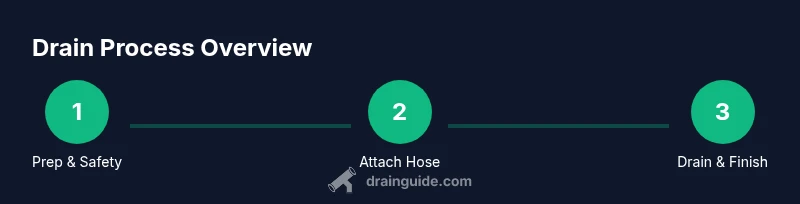
The draining process combines preparation, connection, and monitoring. You’ll locate the drain spout, attach the hose, direct it to a suitable outdoor area, open the valve, and watch the water flow until empty. If the tub has a separate air chamber, you may release air gradually after most water has drained to avoid rapid pressure changes that could stress seams. In many models, you can drain from the bottom valve while the tub remains on its base, but always check your tub’s manual. Keep an eye on the hose for kinks, and ensure the water has a clear path away from buildings, foundations, and slabs. Drain Guide emphasizes keeping a log of steps you follow for faster replication next season.
Cleaning, refilling, and resealing the tub
After draining, rinse the tub interior to remove minerals and soap residues, which helps prevent staining and odor. Allow the tub to air dry completely; wipe down the exterior to prevent mold on fabric surfaces. Inspect the drain valve and hose connections for wear, cracks, or loosened fittings. When you’re ready to refill, use clean water and reinstall any filters or accessories. Refill slowly to prevent overfilling and to maintain even pressure across the seams. If you plan to store the tub, ensure it is fully dry, fold it neatly, and store away from direct sunlight to extend its lifespan. Drain Guide recommends performing a quick inspection before next use to catch any issues early.
Troubleshooting common issues during drainage
If water slows or stops mid-drain, check for an air lock or a kinked hose. Straighten the hose, loosen fittings slightly to relieve pressure, and try tilting the tub to encourage water flow. If the drain valve won’t open, ensure you are turning the correct knob or cap and that it isn’t seized by mineral buildup. For stubborn clogs, disconnect the hose at the valve and flush it with clean water. If you must use a pump, ensure the area around the pump is dry and that cords are kept away from the wet surface. Always stop if you notice unusual noises, smells, or overheating components.
Drying and storage after drainage to prevent mold
Completely dry the interior, including corners and seams, before folding the tub for storage. A dry environment prevents mold and mildew, preserving fabric longevity. Store the tub in a cool, dry place away from direct sunlight and sharp objects. Coil hoses loosely and store away from pets and children. If you anticipate frequent seasonal use, label your storage bag with a reminder to inspect the drain valve and hose connections before the next setup. Drain Guide’s final advice: a dry, clean tub stores better and lasts longer.
Tools & Materials
- Garden hose(Long enough to reach the discharge area; ensure no leaks at connections)
- Hose adapter (if needed)(Some inflatable tubs use a different valve; adapters help fit standard hoses)
- Towels or absorbent mats(Place under and around the tub to manage splashes)
- Screwdriver or coin(Only if your drain valve is tight or has a cap that requires turning)
- Water-safe container or bucket(Optional for temporary water capture or to direct flow near a drain)
- Shop vacuum or submersible pump (optional)(Only use if gravity drain isn’t feasible; follow safety guidelines)
Steps
Estimated time: 20-45 minutes
- 1
Power down and prep area
Turn off the inflatable tub’s pump and unplug the unit if possible. Remove filters and accessories that could obstruct the drain. Clear the area around the tub and place towels to catch splashes.
Tip: Safety first: no power near water. This reduces the risk of electrical shock and damage to the pump. - 2
Attach hose to drain valve
Connect the garden hose securely to the tub’s drain valve or spout. If you need an adapter, install it now and check for leaks. Make sure the hose runs downhill with a gentle slope toward the discharge area.
Tip: Keep the hose tight at the connection to prevent air leaks that slow drainage. - 3
Open the drain valve and start draining
Open the valve fully to allow maximum water flow. If you hear air bubbles, it’s okay—continue until the tub empties. Direct the hose away from your home, gardens, and foundations.
Tip: If water flow slows, briefly tilt the tub to overcome any minor air lock and restore gravity flow. - 4
Monitor flow and troubleshoot
Watch the water level and hose for kinks. If the flow stops, check for a bend, valve obstruction, or air lock. Adjust the tub angle and tighten fittings as needed.
Tip: Keep kids and pets away; a running drain can surprise them and cause accidents. - 5
Disconnect, dry, and store
When empty, disconnect the hose, bow out of the tub, and dry the inner surface. Towel dry the exterior and store the tub in a cool, dry place. Reassemble and test before next use.
Tip: Label storage with a quick check list for next season’s setup.
Got Questions?
Do I need to drain the hot tub completely before refilling?
Not always. If you need to reposition the tub or clean the interior, you may drain partway first and then refill after inspection. Fully draining is usually best before long-term storage.
You don’t always have to drain completely before refilling. You can partially drain for repositioning or cleaning, then refill after inspection.
Can I drain into a yard or storm drain?
Drain water should go to an appropriate outdoor area that won’t cause flooding or soil erosion. Avoid seeping into foundations or into storm drains if local rules prohibit it.
Drain water to a suitable outdoor area and avoid storm drains or foundations. Check local rules if you’re unsure.
What if the drain hose leaks or won’t fit the valve?
Tighten fittings, use a hose adapter if needed, and check for cracks. If leaks persist, replace the hose or adapter before continuing.
Tighten fittings or use an adapter if needed. If leaks persist, replace the hose or adapter before draining.
Is it safe to use a pump to speed drainage?
A pump can speed drainage but requires careful handling near water and power sources. Follow all safety guidelines and unplug equipment when not in use.
A pump can be used to speed up drainage if you’re careful with power and safety rules. Unplug when not actively draining.
How long does draining typically take?
Typical drainage takes about 15-45 minutes depending on hose length, slope, and valve condition. Plan extra time for setup and cleanup.
Most drains take 15 to 45 minutes, depending on hose length and slope. Have a buffer for setup and cleanup.
Watch Video
The Essentials
- Turn off power and prep the area before draining
- Attach hose securely and direct flow away from the house
- Use gravity first; add pump only if necessary
- Dry thoroughly to prevent mold and store properly
- Check local drainage rules before discharge