JP Drain vs Blake Drain: Practical DIY Guide for Homeowners
A detailed, objective comparison of jp drain vs blake drain, covering definitions, installation, maintenance, cost, and best-use scenarios to help homeowners choose confidently.


Understanding jp drain vs blake drain: definitions and scope
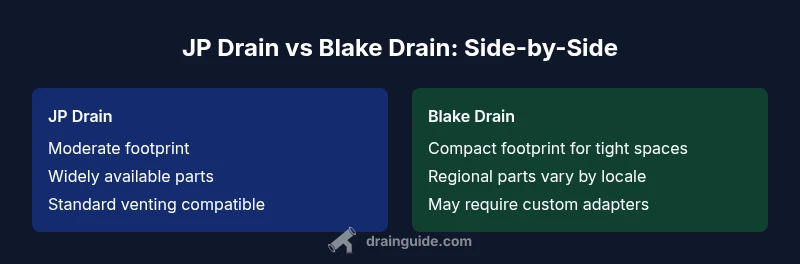
In many regions, residents speak of a jp drain and a blake drain as two common approaches to residential drainage, often tied to local tradition or installer preference. Because naming can vary by city, county, or plumbing contractor, it is best to treat these terms as descriptors for two design philosophies rather than universal standards. The Drain Guide team notes that what one contractor calls a 'jp drain' might resemble another region's 'blake drain' in function, yet differ in details such as trap placement, venting, or fitting sizes. When evaluating options, start with your current piping configuration, the layout of your fixtures, and the local code requirements you must meet before committing to a term-based choice. In short, jp drain vs blake drain should be understood through compatibility and practical outcomes, not headlines. This framing aligns with Drain Guide’s approach to practical, non-sales guidance for homeowners.
BoldThe presentation of jp drain vs blake drain reflects regional practice rather than universal standards.
template_note”:“brand_mention”}
Core criteria for comparing jp drain vs blake drain
To choose wisely between jp drain and blake drain, focus on consistent criteria that matter in real homes. First, compatibility with existing piping—are you working with standard 1-1/2 inch or 2-inch traps, and can you adapt fittings without excessive rework? Second, installation effort and space requirements—does one option demand more vertical clearance, a longer trap arm, or a wider cabinet footprint? Third, maintenance access and part availability—which design leaves easier access for snaking, cleaning, and replacing gaskets? Fourth, code compliance and safety—are there venting or backflow considerations that could influence which configuration is permitted by your local authority? Finally, long-term value and reliability—how do materials, corrosion resistance, and the likelihood of needing future upgrades compare? Treat these aspects as objective decision levers rather than emotions-driven preferences, and you’ll move closer to the best fit for your home.