Repair Drain Pump Washing Machine: Step-by-Step Guide
Learn how to diagnose and replace a faulty drain pump in your washing machine with a safe, step-by-step method from Drain Guide. Includes tools, safety tips, and maintenance to extend pump life.


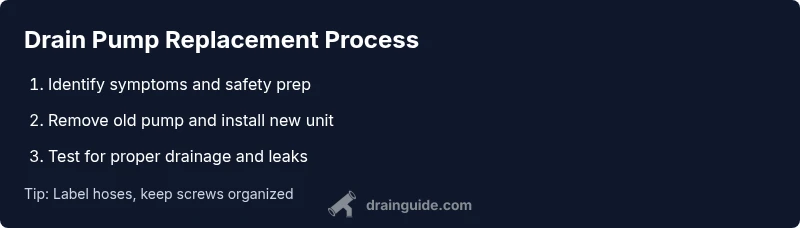
This guide helps you diagnose and repair a failing drain pump in a washing machine, restoring proper drainage. Start by unplugging the unit, draining residual water, and inspecting the pump area. The quick answer below outlines the goal, tools, and safety prerequisites, with a clear replacement workflow. According to Drain Guide, safety and methodical disassembly are essential for a successful fix. Follow the step-by-step in the body for full instructions.
What the drain pump does in a washing machine
The drain pump is a small electric motor paired with an impeller that pushes used wash water out of the tub and toward the household drain during the drain and spin portions of a cycle. On many machines, the pump is located at the bottom front or behind a service panel. If the pump impeller becomes clogged, the motor burns out, or the wiring harness develops a fault, water may not evacuate as it should. A failing pump can lead to standing water in the drum, incomplete cycles, and even leaks if seals or hoses pass by worn fittings. drain pump problems are among the most common causes of drainage issues, and repairing them can extend the life of your washer without a full replacement. Drain Guide emphasizes checking for simple clogs before moving to replacement and ensuring model compatibility when ordering a new pump.
The pump typically connects to a pair of hoses and a small electrical connector. In some designs, there is an integrated valve that directs water flow; in others, a separate valve handles the same job. Understanding your washer’s layout helps you choose the correct replacement part and reduces the risk of cross-connecting hoses during reassembly. This section lays the groundwork for safer, effective work and a solid diagnostic.
Signs your drain pump is failing
Symptoms of a faulty drain pump can appear in several forms. You might notice that the washer fills, but water remains in the tub after the cycle enters the drain phase. A loud grinding, buzzing, or humming noise during draining can indicate a seized impeller or motor windings. Water leakage around the pump area, dampness on the cabinet floor, or a diagnostic code related to drainage (such as a pump fault) can also point to pump problems. If the pump runs but the tub empties slowly, impeller wear or partial blockages may be at fault. In some cases, a simple hose kink or a loose clamp masquerades as a pump issue, so perform a careful inspection before replacement. Drain Guide recommends verifying that the pump is the true culprit rather than a blocked hose or a faulty valve.
Diagnosing drain pump problems safely
Safety first: unplug the washing machine from the outlet and disconnect power at the circuit breaker if needed, and drain any residual water in the tub. Visual inspection helps: look for cracks in the housing, loose clamps, or corroded connectors. If you have access to a multimeter, you can test the motor terminals for continuity when the pump is disconnected from power. A lack of continuity or an open circuit generally indicates a failed motor or damaged winding. If the impeller spins freely by hand and there is no obstruction, the issue may lie elsewhere in the drainage system. Always verify that the pump is properly seated and that hoses connect to their correct ports. Drain Guide notes that drain problems often originate from clogs in hoses or traps, so clear these areas first if you see any blockage.
Tools and replacement parts you may need
Having the right tools and a compatible replacement pump saves time and reduces frustration. Essential items include a replacement drain pump that matches your washer’s model, a flathead and Phillips screwdriver, needle-nose pliers, and a multimeter for electrical checks. A bucket or generous towels help catch residual water, while a flashlight improves visibility in tight spaces. Extra zip ties or electrical tape can help tidy wiring as you reassemble. If the hoses show signs of wear or cracks, be prepared to replace them as well. Always confirm model compatibility by checking your washer’s model number and the pump’s fitment before purchasing. Drain Guide suggests purchasing a pump kit that includes the gasket and clamps to minimize rework.
Step-by-step: remove the old pump
First, power down and unplug the machine, then move it to a location with space to work. Remove the lower panel or service access panel to reveal the drain pump. Place a bucket under the connections and detach the hoses from the pump, noting which hose goes to which port to ensure correct reattachment. Loosen and remove the mounting screws that secure the pump housing. As you pull the pump free, support it with one hand to prevent dropping it and to protect the hoses and wiring. Drain Guide emphasizes keeping track of small parts in a labeled container for easy reassembly.
Step-by-step: install the new pump
Compare the new unit to the old one for port layout and connector type, then slide it into the housing and align the mounting holes. Hand-tighten screws before final tightening to avoid cross-threading. Reconnect the hoses to the correct ports and secure all clamps firmly to prevent leaks. Attach the electrical connector, ensuring the locking tab engages properly. Route wires away from moving parts or heat sources, using zip ties if necessary. Before finalizing, double-check that the pump is seated fully and that there are no kinks in any hose. Drain Guide reminds readers to keep the wiring harness dry and clean during installation.
Step-by-step: test, reassemble, and confirm
With the wiring secure, plug the machine back in and run a short drain-only test cycle with a small amount of water. Observe the pump operation and listen for abnormal sounds. Check for leaks around hose connections and at the pump housing. If the test passes, reattach the front panel or bottom cover, and return the machine to its place. If you notice leaks or the pump doesn’t run, power down again and re-inspect hose connections and the wiring harness. Drain Guide notes that many drainage issues are resolved by reseating hoses and ensuring a clean seal on all clamps.
Common mistakes and troubleshooting tips
Common mistakes include over-tightening hose clamps, which can crack connections, and failing to properly align the pump when reinstalling. Another frequent error is not releasing the locking tabs on electrical connectors, which can damage the harness during removal or reattachment. A loose or misrouted wire can cause intermittent operation or a short. A final tip: always test with a small amount of water first to verify that there are no leaks, then run a full cycle. Drain Guide emphasizes patience and double-checking every connection before powering up.
Maintenance tips to prevent future drain pump failures
To prolong pump life, perform periodic inspections for clogged hoses and filters that can impede drainage. Keep lint traps and pumps clear of debris, and avoid overloading the washer, which can strain the drain system. If you notice recurring clogs, consider a flexible drain hose with a slightly larger diameter or adding a brief clean-out interval to your maintenance routine. Regularly inspect the pump for burn marks or unusual heat, which may indicate electrical issues. Finally, when replacing the pump, choose a model with a robust connector and corrosion-resistant materials to withstand moisture and detergent exposure.
Tools & Materials
- Replacement drain pump compatible with your washer model(Check model number and pump type (front-load vs. top-load))
- Flathead screwdriver(Small size for hose clamps and panel screws)
- Phillips screwdriver(Mounting screws and possible panel fasteners)
- Needle-nose pliers(Loosen hose clamps and detach small fittings)
- Multimeter(Check pump motor continuity when accessible)
- Bucket or towels(Catch residual water and prevent spills)
- Flashlight(Improve visibility in tight areas)
- Electrical tape or zip ties(Secure wires and tidy wiring paths)
Steps
Estimated time: 60-90 minutes
- 1
Power down and unplug
Unplug the washing machine and switch off the circuit if needed. If the unit is hard-wired, disconnect the corresponding breaker. Removing power eliminates the risk of electric shock while you work.
Tip: Double-check the outlet with a tester before starting. - 2
Access the drain pump area
Move the washer to a suitable workspace. Remove the lower front panel or service access panel to reveal the drain pump housing. Take photos before loosening any connections to aid reassembly.
Tip: Label or photo-annotate connectors and hose paths. - 3
Disconnect hoses from the pump
Place a bucket under the connections. Loosen hose clamps or push-in fittings and carefully detach the hoses from the pump. Note which hose goes to which port for correct reattachment.
Tip: Avoid twisting hoses; it helps prevent leaks later. - 4
Disconnect the pump's electrical connector
Gently unplug the wiring harness from the pump. Some models use a locking tab—press it or lift with a small screwdriver. Keep the connector safe and clear of debris.
Tip: Take a photo of the wiring orientation before detaching. - 5
Remove the pump mounting screws and pull out the pump
Use the appropriate screwdriver to remove the mounting screws securing the pump. Slide the unit out from the housing, taking care with hoses and wires.
Tip: Support the pump with one hand to avoid dropping it. - 6
Prepare and install the new pump
Inspect the new pump and ensure the hoses and connector match the old layout. Slide it into the housing and align mounting holes.
Tip: Hand-tighten screws first, then snug with a tool to avoid stripping threads. - 7
Reconnect hoses and electrical connector
Attach the hoses to the correct ports and secure clamps. Reconnect the electrical plug and route the wiring away from moving parts.
Tip: Verify hose alignment to prevent future leaks. - 8
Test the assembly and check for leaks
Plug in the unit and run a short drain cycle with a small amount of water to confirm the pump operates and there are no leaks.
Tip: If you hear grinding or see steam, power down and recheck connections.
Got Questions?
Can a washing machine drain pump be repaired or only replaced?
Typically, replace the pump if the motor is failing or the impeller is damaged. Some minor clogs can be cleared, but ongoing failures usually require a new pump.
Most pumps are replaced when failing; clogs can sometimes be cleared, but replacement is common.
How long does it take to replace a drain pump?
Expect 60 to 90 minutes for a typical front- or top-load washer, plus additional time if panels need removal or hoses require extra care.
Usually about an hour, depending on your model.
Will replacing the pump fix leaks?
If the leak comes from loose hose clamps or fittings, replacing the pump can fix it. Ensure all connections are tight and properly sealed.
Leaks should stop once hoses and seals are reconnected correctly.
What safety precautions should I follow?
Unplug the machine, drain residual water, and discharge static. Use insulated tools and avoid touching metal parts when powered.
Unplug, drain water, and handle components with care.
Do I need to follow model-specific service manuals?
Consult your model’s service manual for screw locations and part compatibility. Manufacturer guides reduce the risk of incorrect assembly.
Check your model’s service manual for specifics.
Watch Video
The Essentials
- Inspect the drain pump for obvious clogs or damage
- Follow safety steps to avoid electrical shock
- Label hoses and connectors to simplify reassembly
- Test the drain function and check for leaks after installation
- Keep spare parts and tools organized for next maintenance