Replace Drain Pump LG Washer: Step-by-Step Guide
Learn how to replace the drain pump in an LG washer with a step-by-step approach, safety tips, and troubleshooting guidance. Drain Guide provides practical, model-aware methods to restore proper drainage without professional help.


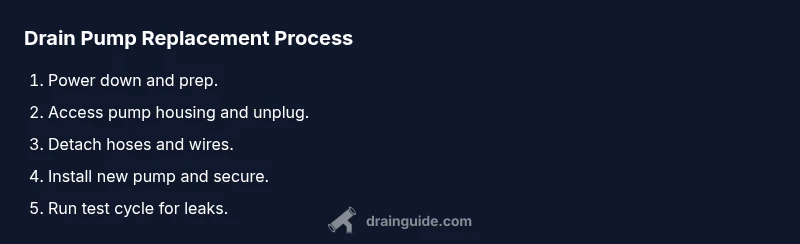
By following this guide, you will replace the drain pump LG washer and restore proper drainage. You’ll confirm model compatibility, gather essential tools, and safely detach the old pump before installing a compatible replacement. The process emphasizes safety, proper orientation, and leak testing to prevent water damage, according to Drain Guide. This is a solid DIY task for homeowners with basic tools.
Understanding the drain pump's role in LG washers
The drain pump is a small but crucial component in many LG front-load and top-load washing machines. Its job is to remove rinse water from the drum at the right point in each cycle. When the pump fails—whether due to a clogged impeller, a cracked housing, or a stuck rotor—the washer may stop draining entirely, leave standing water, or trigger error codes. A faulty pump is one of the most common drainage problems homeowners encounter, and addressing it promptly can prevent secondary issues like mold growth from standing water. Drain Guide emphasizes inspecting the pump’s impeller condition, seals, and electrical connections during diagnosis. If you hear humming but no water movement, or if the drum fills but never drains, you’re likely looking at a pump-related problem that can often be resolved with a replacement.
Choosing the right replacement pump for your LG model
Choosing the correct replacement pump hinges on matching the pump type to your specific LG model. Most LG washers use a particular impeller diameter, discharge size, and electrical connector layout. Start by locating the model number tag on the washer and cross-checking the pump compatibility list in the user manual or on the manufacturer’s site. Do not assume a pump from another brand or a different LG line will fit. Drain Guide recommends verifying both the physical fit (mounting holes, hose outlets) and the electrical interface (plug shape and wire colors). If you have a dual-pump system or a pump with a separate motor, ensure you’re buying the exact replacement unit designed for your model. This minimizes trial-and-error and reduces the risk of leaks or electrical faults.
Safety and prep work before you begin
Before touching any internal components, unplug the washer from the electrical outlet and turn off the water supply to the machine. Move the appliance enough to access the lower front panel if needed, and place towels or a shallow bucket to catch any residual water. Wear safety glasses and work with clean hands to prevent dirt or moisture from entering the pump assembly. Drain Guide recommends setting up a well-lit workspace, taking photos as you go, and labeling hoses to simplify reassembly. If your floor is wet, dry it first to prevent slips. A quick test of the power cord with a non-contact tester can confirm there’s no residual voltage in the immediate area before you start.
Accessing the pump housing on LG washers
Access often requires removing the toe-kick or front service panel. Use the appropriate screwdriver or nut driver to remove screws that secure the panel. Once the panel is loose, gently swing it aside while avoiding strain on electrical connections. Locate the drain hose and the pump housing, typically mounted at the bottom front of the cabinet. Some LG models use a trap or overflow housing; in those cases, you may need to release a locking tab or a wiring harness. Drain Guide notes that taking a moment to visually map the paths of hoses and wires helps prevent misplacement during reassembly. Keep a container nearby to collect any remaining water that may drain out.
Removing the old pump and disconnect components
Begin by disconnecting the power connector from the pump’s electrical plug. Then carefully loosen and remove hose clamps, detach the inlet and outlet hoses, and slide the hoses off the pump barb fittings. Keep track of which hose goes where and note clamp locations so you can reseat them correctly later. If the hoses resist removal, gently twist while pulling, rather than yanking, to avoid kinking or damaging fittings. Take a photo at each step to confirm the orientation when you reinstall the new pump. Drain Guide reminds homeowners to inspect the surrounding area for debris that could obstruct the new pump’s operation and to clean the pump cavity before installing the replacement.
Installing the new pump and securing connections
Position the replacement pump in the mounting brackets and align the bolt holes with the existing holes. Reconnect the hoses to their respective ports, ensuring the hose clamps are securely tightened so there are no leaks. Attach the electrical connector firmly, then inspect the pump for proper orientation so the impeller can rotate freely. If the new pump includes a gasket, install it as directed and wipe away any excess sealant to prevent contamination. Drain Guide emphasizes verifying that all connections are snug but not over-tightened, which could crack fittings or damage seals.
Testing the pump and diagnosing leaks after replacement
With the pump installed, replace the front panel and plug the washer back in. Turn on the water supply, if the appliance was disconnected from the supply line, and run a short test cycle without laundry. Listen for the pump’s normal hum and watch for any leaks around hose connections, clamps, and the pump housing. If you notice a drip, power down the unit again and re-tighten clamps or reseat hoses as needed. Do not run a full wash cycle until you’re confident the system is leak-free. Drain Guide advises performing a brief drain-and-fill cycle to confirm the pump evacuates water correctly.
Reassembly and final verification
Reattach the toe-kick or service panel securely, ensuring no tools are left inside the cabinet. Run a full wash cycle with a small load to confirm drainage and overall performance. Check the area under the washer for any signs of moisture after the cycle completes. If the washer drains properly and there are no new error codes, you’ve completed a successful replacement. Drain Guide highlights documenting the model and replacement date for future service inquiries and warranty considerations.
Tools & Materials
- Replacement drain pump compatible with LG washer(Model-specific; verify model number against the pump compatibility list)
- Flat-head screwdriver(For removing panel screws)
- Phillips screwdriver(For hose clamps and small screws)
- Nut driver or pliers(Loosening hose clamps and retaining nuts)
- Needle-nose pliers(Detach small electrical connectors and hose fittings)
- Bucket or towels(Catch residual water and keep the workspace dry)
- Cleaning cloth and mild detergent(Wipe the pump cavity and panel surfaces)
Steps
Estimated time: 45-60 minutes
- 1
Disconnect power and prep workspace
Unplug the washer and shut off the water supply. Clear a dry, well-lit area and place towels to catch any residual water. This prevents shock and minimizes mess during the repair.
Tip: Have a helper assist with heavy lifting or panel removal if needed. - 2
Access the pump housing
Remove the lower front panel or toe kick as required by your model to expose the pump. Use the appropriate screwdriver to release screws and gently tilt the panel aside without tugging on wiring.
Tip: Keep screws organized and label the panel orientation for reassembly. - 3
Detach hoses and electrical connector
Loosen hose clamps, disconnect inlet and outlet hoses, and unplug the pump’s electrical connector. Take photos at each step to ensure correct orientation during reinstallation.
Tip: Note which hose attaches to which port; misrouting can cause leaks. - 4
Install the new pump
Position the replacement pump in the mounting bracket and align it with its holes. Reattach hoses and clamps, ensuring a snug seal and proper hose orientation. Connect the electrical plug securely.
Tip: If the pump uses a gasket, confirm it is seated evenly before tightening. - 5
Reconnect wires and secure fittings
Double-check all connections, reseat any sensors or brackets, and ensure clamps are snug. Wipe away any debris or moisture from the area before final assembly.
Tip: Avoid over-tightening clamps; this can crack fittings or deform hoses. - 6
Test drain and verify leaks
Before full operation, run a quick drain test by initiating a short cycle. Observe for leaks around the pump housing and hoses and listen for the pump’s normal operation.
Tip: If a leak is detected, power down and reseat the connections before re-testing.
Got Questions?
What signals indicate a failed drain pump in an LG washer?
Common signs include water not draining, standing water after the cycle, or unusual humming from the pump. Error codes related to drainage may appear on the control panel. A physical inspection of the pump and hoses can confirm impeller wear or gasket failures.
If your LG washer won’t drain, check for pump noise or leaks. This usually points to a pump issue.
Do I need special tools to replace the drain pump LG washer?
You’ll need common household tools such as screwdrivers, pliers, and a nut driver. The most important factor is using the replacement pump specifically designed for your model. Avoid improvising with incompatible parts.
A screwdriver, pliers, and the right replacement pump are typically all you need.
Can I replace the pump myself or should I hire a pro?
If you’re comfortable with basic appliance repair and can safely disconnect power and water, replacing the pump is a doable DIY task. However, if you encounter unfamiliar wiring or confirm a dual-pump setup, consider professional help.
Many homeowners handle it themselves, but don’t hesitate to hire a pro if you’re unsure.
Will replacing the drain pump fix other drainage issues?
Replacing the pump resolves many drainage problems but not all. Kinks in the drain hose, clogged filters, or blocked sewer lines can still cause drainage failures. Inspect adjacent components as part of a complete diagnosis.
Sometimes the pump is the culprit, but other drainage parts can cause the same symptoms.
How do I know I installed the pump correctly?
Confirm all hoses are routed correctly, clamps are tight, and the electrical connector is fully seated. Run a drain test and a short cycle to observe proper operation and check for leaks. If a problem appears, recheck connections and reseat parts as needed.
Make sure hoses and the plug are connected properly and test before putting the machine back into full service.
Watch Video
The Essentials
- Verify model-compatible replacement pump before purchase.
- Secure all hose clamps and connections to prevent leaks.
- Test drainage with a short cycle to confirm proper operation.
- Document steps and preserve parts for future maintenance.