Storm Drain vs Sewer: A Practical Comparison for Homeowners
Learn the essential differences between storm drains and sanitary sewers, including purpose, maintenance, and regulatory considerations. This guide helps homeowners avoid cross-connections and costly mistakes.


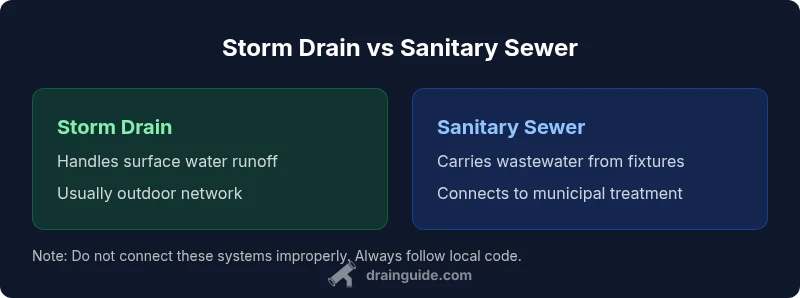
Storm drain vs sewer: Storm drains handle surface water like rain and melting snow, kept separate from sanitary sewers that carry wastewater from toilets, sinks, and appliances. Understanding these roles helps homeowners avoid cross-connections, backups, and code violations. Drain Guide explains the key differences, typical paths, and common maintenance needs to keep your property safe in 2026.
What Are Storm Drains and Sanitary Sewers?
In everyday conversations, people often mix up the terms storm drain and sewer. The phrase storm drain vs sewer captures two fundamentally different drainage networks that serve distinct communities and purposes. A storm drain is designed to collect surface water—from rain, melting snow, and runoff from driveways and streets—and carry it away to a municipal stormwater system or local water body. A sanitary sewer, by contrast, is a closed piping network that collects wastewater from sinks, toilets, showers, laundry, and other household sources and transports it to a treatment plant before discharge. Understanding how these systems are designed, where they terminate, and how they are regulated helps homeowners prevent accidental cross-connections and costly repairs. According to Drain Guide, most residences rely on clear separation between these networks to protect public health and infrastructure in 2026.
Core Differences: Purpose, Flow, and Access
The storm drain system and the sanitary sewer system have distinct goals. Storm drains are optimized for large volumes of surface water with minimal treatment considerations, while sanitary sewers are designed to transport complex wastewater and require careful management to protect public health. Access points differ: outdoor grates and catch basins for stormwater, indoor plumbing and a home’s main sewer line for wastewater. From a regulatory perspective, separate systems receive different kinds of oversight and testing requirements. Drain Guide highlights these differences to help homeowners avoid misrouting that could lead to backflow or environmental violation. In 2026, the emphasis is on maintaining clear separation and verifying connections during home renovations.
How The Systems Are Typically Configured in Homes
Most homes connect indoor drains to a main sanitary sewer line that runs beneath the property to the municipal wastewater system. Outdoor areas connect to a storm drainage network that collects runoff from roofs, driveways, and streets. In older neighborhoods, combined sewer systems may exist, where stormwater and wastewater share a single pipe; these setups are increasingly uncommon and heavily regulated. For homeowners, the key takeaway is to know where each system terminates and to avoid any physical interconnection. Proper labeling and a clear as-built map from the city can prevent accidental cross-connections during remodeling.
Materials, Sizing, and Installation Realities
Storm drains often use concrete, HDPE, or PVC piping designed to carry high-volume, lower-pressure runoff, while sanitary sewers typically use PVC, clay, or cast iron pipes with higher service pressures and different joint standards. Installation practices reflect local codes, soil conditions, and urban density. Differences in trench depth, backfill, and testing procedures can influence project timelines and costs. For homeowners, recognizing that stormwater systems are not designed to handle toilet or kitchen wastewater helps avoid unsafe improvisations that could damage property or contaminate groundwater.
Regulatory Context: Codes and Cross-Connections
Local codes require clear separation between stormwater and sanitary sewer systems in most jurisdictions. Cross-connections—accidentally routing wastewater into a storm drain or mixing runoff with sewer lines—are treated as serious hazards due to public health and environmental risks. Regulations often mandate backflow prevention devices, proper venting, and periodic inspections for properties near older infrastructure. Drain Guide emphasizes consulting your city or a licensed plumber when planning exterior drainage work near the property line and when performing any remodeling that touches outdoor drainage.
Maintenance, Common Issues, and Warning Signs
Common storm drain problems include clogging from leaves, dirt, and debris, plus occasional freezing or damage that reduces flow. Sanitary sewers can experience backups due to grease buildup, tree roots, or collapsed pipes. Warning signs differ: storm drains may show damp areas near grates with pooling water after rain, while sewer issues commonly present as sewage odors, slow drains inside the home, or sewage backups in basements. Regular maintenance—like keeping gutters clear, ensuring downspouts direct water away from the foundation, and scheduling professional camera inspections for sewers—helps prevent costly damage.
Cross-Connection Scenarios: What to Watch For
A critical risk is cross-connecting stormwater with the sanitary sewer. In some households, overloaded outdoor drains during heavy rain can overwhelm municipal systems, but improper inside-to-outside connections can force wastewater into outdoor storm drains, creating environmental hazards and code violations. Look for signs of cross-connection in basement backups after a storm or unusual dampness near the property line. If in doubt, contact a licensed plumber or the local public works department to verify the configuration.
Practical Scenarios: DIY vs Professional Intervention
Simple maintenance tasks—like clearing outdoor debris from catch basins or cleaning downspouts—are often DIY-friendly. However, most issues involving backups, suspected cross-connections, or repairs to main lines require a licensed plumber and city coordination. DIY attempts at altering sewer lines can create serious health hazards and have long-term legal and financial consequences. Drain Guide recommends scheduling professional assessments when you notice persistent backups, odors, or unusual water behavior around the home.
Prevention and Best Practices for Homeowners
Proactive measures include preventing debris from entering storm drains, redirecting downspouts away from sewer inlets, installing backflow preventers on basement drains, and labeling pipes when performing renovations. Regular inspections of underground utilities, cleanouts, and the main service line help catch problems early. For public-facing infrastructure, abiding by local guidelines and reporting issues promptly preserves community health and drainage performance. Drain Guide’s recommendations center on maintaining separation, documenting changes, and consulting professionals for any system alterations.
Quick Troubleshooting Checklist
- Identify which system is involved (storm vs sanitary) by tracing the path from fixtures or outdoor drains.
- Inspect outdoor grates and catch basins for blockages and clear debris.
- Check for backups inside the home (indicative of sewer issues) vs outdoor pooling after rain (indicative of stormwater issues).
- Look for cross-connections near the property line or in the foundation area and correct as needed with professional help.
- If persistent backups or odors occur, stop DIY work and contact a licensed plumber or local utility for an inspection.
How to Decide If You Need Help
If you suspect cross-connections, experience frequent backups, or encounter sewage odors near outdoor drains, professional assessment is warranted. Local codes and the city’s public works department can confirm whether your home adheres to separation requirements. A licensed plumber can perform a diagnostic, perform any needed repairs, and ensure proper permits are obtained. Early intervention reduces the risk of environmental contamination and expensive repairs later.
Case Studies: Real-World Examples
- Case A: A mid-sized coastal home discovered that a clogged curbside storm drain caused surface water to pool near the garage. A quick cleaning of the catch basin, combined with regrading the yard and verifying line separation, resolved the issue without touching the sanitary sewer. This demonstrates the value of distinguishing stormwater paths from wastewater paths.
- Case B: In an older neighborhood with a combined sewer system, heavy rainfall led to sewer backups into a basement. The homeowner engaged a plumber and city engineers to install backflow prevention devices and update aging piping, reducing future risk and complying with local regulations. These examples underscore the importance of correct system identification and proactive maintenance.
Comparison
| Feature | Storm Drain | Sanitary Sewer |
|---|---|---|
| Primary Purpose | Carries surface water runoff (rain, snowmelt) to stormwater infrastructure | Carries wastewater from fixtures to a treatment facility |
| What It Carries | Rainwater, runoff, and street water | Toilet, sink, shower, laundry effluent |
| Typical Location in Home/Property | Outdoor systems: curb cuts, catch basins, and driveways | Indoor plumbing: main sewer line beneath the house |
| Connections to Your Property | Direct outdoor connections to municipal storm network | Direct indoor connections to municipal wastewater system |
| Materials/Construction | Concrete, HDPE, PVC commonly for runoff paths | PVC, clay, or cast iron for sanitary sewers |
| Maintenance Needs | Debris removal, occasional cleaning of catch basins | Periodic inspections, grease management, root control |
| Common Issues | Clogs from leaves, silt, or blockages at grates | Backups from grease, roots, or collapsed pipes |
| Cross-Connection Risk | High risk if misconnected outdoors; improper modifications can cause issues | Backflow into home if direct misconnection or surcharge occurs |
| Regulatory Focus | Separate systems, backflow prevention, and environmental protections | Public health protections, sewer backups, and cross-connection controls |
| Typical Costs/Repairs | Costs vary; street-level infrastructure work often borne by municipality | Repairs and camera inspections can be substantial; homeowner typically pays for private lines |
Positives
- Clarifies which system handles surface water versus wastewater
- Helps prevent cross-connections and code violations
- Improves flood resilience and maintenance planning
- Supports compliance with local environmental regulations
- Aids in targeted repairs, avoiding unnecessary sewer work
Cons
- Complex local rules can create confusion on older properties
- Some municipalities still use combined systems, complicating decisions
- Professional assessment is often required, increasing upfront costs
Storm drains and sanitary sewers serve distinct roles; keep them separate and properly maintained.
Recognize the difference between surface-water drainage and wastewater transport. The Drain Guide team recommends verifying system separations, avoiding DIY cross-connections, and consulting a licensed plumber for any suspected misrouting or backflow.
Got Questions?
What is the difference between a storm drain and a sanitary sewer?
A storm drain handles surface water like rain and snowmelt, while a sanitary sewer carries wastewater from household fixtures to a treatment facility. They are typically separate systems to prevent contamination and protect public health.
Storm drains carry rainwater; sanitary sewers carry wastewater. They are separate to protect health and the environment.
Can I connect a storm drain to my home's sewer to improve drainage?
Connecting a storm drain to a sanitary sewer is generally prohibited and can cause contamination and regulatory penalties. Always follow local codes and consult a licensed professional.
Connecting outdoor water to the sewer is usually not allowed. Check local codes and consult a plumber.
What should I do if I notice sewage backing up into a basement during heavy rain?
Backups indicate a sewer issue that requires professional attention. Stop using indoor fixtures and contact a licensed plumber and city utility to inspect the main line and check for cross-connections.
Backups mean a sewer problem—call a pro and the city for an inspection.
Are there areas with combined sewer systems and how do they affect home drainage?
A handful of older communities still have combined systems where stormwater and wastewater share a pipe. These situations require specialized management to prevent overflows and protect public health.
Some older areas use combined sewers; they require special handling and inspections.
How can I check for cross-connections at my property?
Start by tracing pipes from fixtures and outdoor drains to verify they go to the correct system. Schedule a professional inspection if you’re unsure, especially after renovations or if you notice unexplained backups.
Trace lines from indoors to outdoors and get a pro to confirm.
Who is responsible for maintenance of storm drains and sanitary sewers?
Responsibility varies by locale. Generally, storm drainage may fall to municipalities for outdoor systems, while private sewer lines are the homeowner’s responsibility unless specified otherwise by contract or codes.
Responsibility varies by city—check local codes and your property agreement.
The Essentials
- Define system roles before any drainage work
- Verify outdoor and indoor drainage paths are separate
- Schedule professional inspections for sewers and storm lines
- Follow local codes to prevent cross-connections
- When in doubt, hire a licensed professional