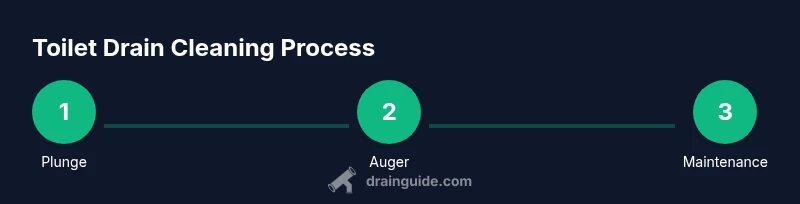
Toilet Drain Cleaning: A Practical DIY Guide
Learn safe, effective toilet drain cleaning with a practical, step-by-step approach. This guide covers plunging, toilet augers, maintenance, and when to call a professional—so your toilet stays clog-free and reliable.


By the end of this guide, you’ll be able to safely clear a toilet drain using common tools and simple methods. Expect to plunge, try a toilet auger, and apply maintenance tips to prevent future clogs. Gather a plunger, toilet auger, gloves, bucket, towels, and basic cleaners before you begin. This approach minimizes splash, protects seals, and reduces the risk of overflows.
Why toilet drain cleaning matters
Toilet drain cleaning is a fundamental DIY skill for homeowners who want to protect their bathrooms from water damage and messy backups. A slow-draining toilet or a partial clog can escalate into an overflow during a routine flush, leading to water damage and costly repairs. According to Drain Guide, regular, safe maintenance reduces emergency calls and extends the life of your toilet and pipes. The Drain Guide team found that mechanical methods—plunging and snaking—are typically more reliable for household clogs than quick chemical fixes. Understanding how clogs form helps you tailor your approach: most blockages come from toilet paper, hair, and foreign objects collecting in the trap and the bend of the drain line. This section sets the stage for a practical, step-by-step plan you can follow with common tools and without professional help.
Safety considerations and PPE
Safety comes first when tackling toilet drains. Always wear rubber gloves, eye protection, and non-slip footwear. Ensure the bathroom is well-ventilated, and keep a bucket and towels within reach to catch splashes. If you notice sewage backing up, foul odors, or the clog is not easily addressed with basic tools, pause and consider professional help. Never mix cleaners, especially bleach with ammonia or acid-based products, as toxic gases can form. Read all labels, follow the manufacturer’s instructions, and store chemicals out of reach. These precautions protect you, your family, and the plumbing system from damage.
Essential tools and materials
Having the right tools before you start saves time and reduces the risk of causing damage. Core essentials include a flange plunger designed for toilets, a toilet auger (drain snake), heavy-duty disposable gloves, a bucket, old towels or rags, dish soap, and optionally baking soda and vinegar for routine maintenance. If a chemical cleaner is considered, use it with caution and never in a septic system without researching safety guidelines. Keep a trash bag handy for disposal of used wipes or debris. Organize tools so you can reach them without stepping into water or making the area slippery.
Assessing the blockage and prep
Begin by removing excess water from the bowl if the toilet is nearly full. You can use a small container or a sponge to lift water into your bucket. Check for obvious causes (toilet paper buildup, foreign objects) and listen for gurgling sounds when you flush gently. If the water level remains high or the bowl backs up, stop and re-evaluate your approach. With the water lowered, you’ll have better leverage for plunging or feeding a snake into the drain. This prep reduces splashes and improves your odds of a successful clearance.
Step 1: Plunge first
A flange-style plunger provides a better seal for toilets than a cup plunger. Position the plunger so the bell completely covers the drain opening and create a tight seal. Use slow, steady pushes—about 15–20 effective strokes—without breaking the seal. The goal is to dislodge the clog and restore a clear path for water. If water doesn’t move after several attempts, give the drain a pause and reassess the blockage’s depth or nature. Pro tip: heat a cup of water and add a few drops of dish soap to help lubricate the clog.
Step 2: Use a toilet auger
If plunging alone doesn’t solve the problem, a toilet auger can reach deeper into the trap and bend. Insert the auger’s flexible rod into the drain slowly, keeping tension on the handle to prevent kinking. Push the auger in until you feel resistance, then twist and pull gently to break up or retrieve the obstruction. Avoid forcing the snake; if you meet hard resistance, withdraw a bit and try a different angle. After clearance, run hot water and attempt a flush to confirm success. Pro tip: keep the auger straight while feeding it to prevent binding.
Chemical cleaners vs enzymatic solutions
Chemical drain cleaners can damage toilet porcelain, seals, and pipes, and may harm septic systems. Enzymatic cleaners are gentler and work over time by digesting organic material, but they require patience and a longer window before flushing. For most household clogs, mechanical methods (plunging and augering) are faster and safer. If you choose cleaners, follow directions precisely, use only a small amount, and avoid combining products. Remember: chemical cleaners are not a universal solution and should be reserved for stubborn, well-understood blockages.
Preventing clogs and maintaining your toilet
Prevention is easier than remediation. Only flush human waste and toilet paper—no wipes, cotton swabs, or feminine hygiene products. Use less toilet paper and consider a toilet with a slightly larger trap seal if yours clogs easily. Regularly inspect the rim jets and bowl for mineral buildup, and occasionally flush with hot water and a small amount of baking soda to maintain cleanliness. For households with hard water, consider a professional descaling approach every year. Consistent maintenance reduces emergency calls and keeps the system healthy.
Troubleshooting common issues
If the toilet still drains slowly after both plunging and augering, the blockage might be farther down the line or in the main sewer line. Listen for unusual gurgling from other fixtures in the house, which can signal a broader plumbing issue. Check for a faulty flapper or fill valve if the toilet tank isn’t refilling properly after flushes. In some cases, a minor sewer line backup requires a professional camera inspection and possibly hydro-jetting. Early detection helps prevent expensive repairs.
When to call a professional
Not all clogs are safe to tackle yourself. If you experience repeated clogs, persistent backups, strong sewage odors, or water backing into sinks or tubs, a licensed plumber is the right next step. Pro plumbers can perform camera inspections, assess sewer line integrity, and determine if factors like tree roots or broken pipes are involved. Early professional assessment can save time and avoid damage to floors and walls.
Real-world scenarios and homeowner tips
In many homes, toilets clog due to ordinary everyday use, but some situations demand extra care. For example, a family with hair buildup in a bathroom may benefit from routine augering every few months, paired with a preventative enzymatic cleaner. In homes with septic tanks, chemical cleaners can disrupt beneficial bacteria and should be used sparingly, if at all. DIY success often comes from following a systematic approach, keeping tools ready, and knowing when to pause and call for help.
Final maintenance checklist
Before ending, perform a quick maintenance sweep: confirm the toilet flushes freely, ensure all tools are cleaned and stored properly, and review safety steps for future cleanings. Keep a simple log of occurrences and steps taken, which helps when you contact a professional. Establishing a routine—monthly quick checks and quarterly deeper cleanings—can prevent most clogs and extend the life of your toilet.
Tools & Materials
- Flange plunger (toilet plunger)(Wide bell fits toilet drain opening)
- Toilet auger (drain snake)(45–60 cm (18–24 in) flexible shaft)
- Rubber gloves(Waterproof, non-slip)
- Bucket(For water and debris)
- Old towels or rags(Protect floor, catch spills)
- Dish soap(Lubricant and help loosening clogs)
- Baking soda and vinegar(Gentle cleaners for maintenance)
- Trash bag(Disposal of debris)
- Ventilation (window or fan)(Keep air quality comfortable)
Steps
Estimated time: 40-60 minutes
- 1
Inspect and prep
Clear the area, remove water if needed, and lay towels. Confirm access to the toilet and ensure you have all tools ready. This reduces mess and allows for a smoother process.
Tip: Have a second person assist if you anticipate a crowd of water. - 2
Turn off water and drain tank
Shut off the supply valve behind the toilet, then flush to drain as much water as possible. Remove remaining water with a cup or sponge to prevent overflow during work.
Tip: Keep a bucket beneath the flange to catch any stray water. - 3
Plunge effectively
Position the flange plunger to seal the opening and use steady, full strokes. Maintain pressure to dislodge the clog, then test by flushing.
Tip: If air leaks, re-seat the plunger for a better seal. - 4
Use the toilet auger
Insert the auger into the drain slowly and rotate as you push. When you feel resistance, continue gently or retract and try another angle.
Tip: Don’t force the auger; damage can occur from excessive force. - 5
Test and cleanup
Flush the toilet to verify drainage is clear. If still blocked, re-evaluate or escalate to a professional. Clean tools and return the area to normal.
Tip: Run hot water down the drain after cleanup to help any residual material clear. - 6
Maintenance and prevention
Implement routine prevention: avoid flushing non-dissolvable items, use less toilet paper, and consider periodic enzymatic cleaning for septic systems.
Tip: Keep a small log of clogs and maintenance actions.
Got Questions?
Can I use a chemical drain cleaner to fix a toilet clog?
Chemical cleaners can damage porcelain and pipes, and they may harm septic systems. For most clogs, mechanical methods like plunging or augering are safer and faster. If you choose chemicals, follow the label strictly and avoid mixing products.
Chemical cleaners can harm your toilet and pipes and aren’t usually the best first choice. Try plunging or snaking first, then consider cleaners if needed.
What is the best tool for a clogged toilet: plunger or auger?
Start with a flange plunger for the initial attempt. If that fails, switch to a toilet auger to reach deeper into the trap and bend. Use whichever method is effective without forcing the blockage.
Use a flange plunger first, then a toilet auger if needed.
How long should I wait after using a snake?
After using a toilet auger, flush the toilet to see if the drain is clear. If not, stop and reassess. Give the line a moment to settle, then re-test.
Flush after using the auger to verify clearance and wait a moment before another test.
Is it safe to flush enzymatic cleaners in a septic system?
Enzymatic cleaners are generally gentler and can be safer for septic systems, but they work slowly. Avoid relying on them for urgent clogs and never mix with other cleaners.
Enzymatic cleaners are gentler on septic systems but slower; don’t rely on them for quick fixes.
When should I call a professional?
Call a professional if clogs persist after multiple attempts, there’s sewage odor, backups in multiple fixtures, or you suspect a sewer line issue. A plumber can perform inspections and prevent further damage.
If clogs persist or you smell sewage, call a professional.
Can I fix a toilet drain without removing the toilet?
Many clogs can be cleared with plunging and an auger without removing the toilet. If the blockage remains or you suspect a deeper problem, you may need professional help.
Most clogs can be cleared without removing the toilet; otherwise, call a pro.
Watch Video
The Essentials
- Start with plunging before augering for efficiency
- Choose tools that fit your toilet’s design (flange plunger, toilet auger)
- Prioritize safety and ventilation throughout
- Prevention reduces future clogs and saves time