Trench Drain vs Floor Drain: A Practical Side-by-Side Comparison for Homeowners
Explore trench drain vs floor drain: differences, best-use scenarios, costs, and maintenance tips for homeowners and DIYers.


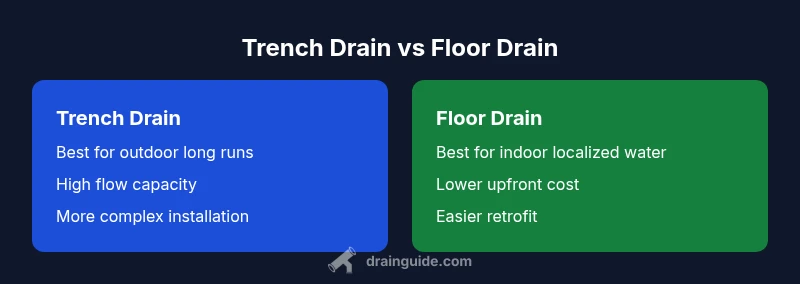
Trench drains and floor drains serve different scale needs. A trench drain channels water along a long run—great for outdoor patios, driveways, and loading zones—while a floor drain captures water at a single point indoors, like a shower or basement. For DIY projects, choose trench drains for high-volume runoff and floor drains for localized spills, then plan for installation complexity and maintenance requirements.
Core Differences Between Trench Drain and Floor Drain
Trench drain vs floor drain: the distinction lies in scale, placement, and expected water volume. A trench drain is a long, open-channel system installed in concrete or asphalt, designed to carry water away along a line. A floor drain is a compact, point-source unit embedded in a floor, intended to collect water at a single location. In practical terms, trench drains excel where runoff or large spills must be conveyed quickly across a surface, such as driveways, garages, or loading docks. Floor drains are ideal for bathrooms, laundry rooms, basements, or utility spaces where water accumulates locally. The decision should hinge on throughput, footprint, and maintenance expectations, not just appearance or cost.
In both cases, selecting the right drain involves anticipating typical water volumes, seasonality, and how often you’ll access the area for cleaning or repairs. Drainage performance improves when the surface is properly sloped toward the drain and when the grate design reduces clogging. This section introduces the trench drain vs floor drain comparison as a framework for deeper planning and installation decisions.
When to Choose a Trench Drain
Choose a trench drain when the project involves long runs of water, high flow, or wide area coverage. Outdoor applications like patios, pool decks, shed floors, or driveway aprons benefit from the continuous channel, which minimizes pooling and reduces the chance of surface icing. In commercial settings, trench drains handle large volumes from rain run-off or equipment wash-down. They also provide flexible options for grading and slope, enabling installation along existing lines without multiple individual drains. Keep in mind that trench drains typically require more planning, excavation, and professional installation, and may involve higher upfront costs. If you anticipate frequent, heavy flows or wide drainage paths, trench drains are usually the more sensible long-term choice.
Outdoor spaces exposed to weather extremes benefit from trench drains, but interior projects with broad spill patterns can also justify a trench system if the surface area and traffic warrant it. For DIYers, the upside is clear: fewer individual outlets mean less potential for pooling. The downside is that trench drains demand careful coordination with existing plumbing, structural constraints, and site access.
When to Choose a Floor Drain
A floor drain is the prudent choice for indoor, localized water concerns. Bathrooms, laundry rooms, basements, and back-of-house kitchens rely on floor drains to capture water at its source. They are generally easier and cheaper to install than trench drains and can be retrofitted into existing slabs with less disruption. Floor drains align with standard plumbing stacks and traps, and come in a wide range of grates and materials to match interior finishes. For occasional spills or modest humidity, a floor drain provides reliable protection with simpler maintenance.
Floor drains excel in spaces where water tends to pool in a small area, such as under a washing machine, near a utility sink, or in a shower recess. DIY installation is often feasible with a controlled cut in concrete or tile, followed by a straightforward hookup to the existing drain line. While they may not move large volumes of water as efficiently as a trench drain, floor drains offer a balanced combination of cost, ease, and aesthetics for indoor settings.
Design and Installation Considerations
Blocking and substrate preparation are critical for both drain types, but trench drains require a continuous trench with a solid base, typically poured in concrete, and a tight-fitting liner or channel insert. Floor drains sit in a routed hole with a compact frame and a removable grate, often installed atop a preformed trap. Slope and grading are essential for both, but trench drains rely on longer runs and may need multiple alignment points to ensure complete drainage. Grates and load ratings vary widely; outdoor trench drains require heavy-duty grates to handle vehicle or equipment traffic, while indoor floors emphasize slip resistance and finish compatibility. Backwater valves and traps are necessary to prevent sewer gas ingress in most installations, and some trench systems require trap primers to maintain water seals during long periods of inactivity. In all cases, plan for adequate access for future cleaning and inspection.
Materials, Grates, and Aesthetic Options
Trench drains are commonly offered in polymer concrete, ductile iron, or stainless steel with protective coatings, designed to resist corrosion and heavy use. Floor drains typically use PVC, stainless steel, or reinforced composites, with grates ranging from decorative to industrial. Outdoor installations favor durable, weather-resistant finishes while indoor options emphasize color, texture, and slip resistance. The chosen materials should align with local climate, salt exposure (in coastal areas), and the level of anticipated maintenance. Matching the channel liner with the surface finish reduces trip hazards and improves overall aesthetics in visible spaces.
Maintenance and Cleaning Best Practices
Preventive maintenance is the best defense against clogs and odors. Regularly remove debris from grates, perform routine flushing of channels, and periodically prime traps where required by code. For trench drains, use a drain snake or vacuum system to clear sediment, followed by a thorough flush with clean water. Floor drains require removing the grate to clean the capture basin, paying attention to hair, soap scum, and mineral deposits. Avoid harsh chemical cleaners that can degrade seals, gaskets, or metal components. Establish a cleaning calendar aligned with the area’s usage and seasonality to keep both drain types functioning effectively.
Installation Costs and Timeframes
Cost considerations hinge on length, material, and local labor rates. A trench drain installation tends to involve excavation, concrete work, and backfilling, which can push the project toward higher upfront costs per linear foot and longer timelines. Floor drain installations are typically quicker and cheaper, especially during renovations or slab cuts. Always budget for additional elements such as liners, grates, backwater devices, and potential permits. While trench drains may demand a larger initial outlay, their long-term performance can justify the investment in high-traffic outdoor environments. Conversely, floor drains offer affordability and speed for interior projects with modest drainage needs.
Code, Permits, and Warranty Considerations
Local building codes govern drainage installations, including trap priming, backflow prevention, and minimum slope requirements. Some jurisdictions require permits for trench drainage installations, particularly outdoors or in areas accessible to the public. Manufacturer warranties vary by product line and installation method, so review coverage for the channel, grate, seals, and liners; improper maintenance or incorrect sizing can void warranties. A well-documented plan, including product specifications and site measurements, can streamline inspections and protect your investment.
Outdoor vs Indoor Contexts: Climate and Foot Traffic
Environmental factors dictate drain selection. Outdoor trench drains must withstand freeze–thaw cycles, UV exposure, and potential chemical exposure, necessitating durable coatings and load-rated grates for vehicle traffic. Indoor drains face humidity, soap residues, and routine cleaning; finishes should minimize slip hazards and blend with interior aesthetics. In both cases, proper slope toward the drain remains essential to prevent standing water. The broader takeaway is that context—outdoor versus indoor, climate, and expected traffic—largely determines the optimal drain type and installation approach.
Common Pitfalls and How to Avoid Them
Common mistakes include ignoring slope requirements, undersizing the drain for the expected water load, or selecting a grate that clogs easily. Inadequate backflow protection can lead to sewer gas intrusion, underscoring the need for proper trap primers and seals. Skipping professional guidance can result in code violations, warranty issues, or poor long-term performance. Conduct a thorough site assessment, confirm local code compliance, and insist on clear installation drawings before breaking ground.
Practical Sizing, Slope, and Connection Guidelines
Size matters for both drain types. For trench drains, calculate length, width, and channel volume to determine required slope and adequate grading toward the outlet. Floor drain sizing depends on the room's water exposure and expected spill volume; larger rooms may need multiple drains or a larger single unit. A common rule of thumb is a minimum slope of 1/8 inch per foot toward the drain, with steeper slopes used for high-traffic or heavy-duty applications. Ensure pipe connections match existing diameters and use appropriate adapters or reducers. Always cross-check with local codes and verify trap primer and venting requirements to maintain water seals and prevent sewer gas entry.
Comparison
| Feature | Trench Drain | Floor Drain |
|---|---|---|
| Best For | Outdoor long runs, high volume, vehicle-ready surfaces | Indoor spaces with localized spills (bathrooms, basements, utility rooms) |
| Throughput / Capacity | High capacity across long runs | Moderate-to-high capacity at a single point |
| Installation Footprint | Requires trench, base, concrete work | Mounted in a floor hole with frame/grate |
| Installation Cost | Higher upfront cost per linear foot | Lower upfront cost per unit; quicker install |
| Maintenance | Long channels; may require longer cleaning cycles | Easier access for routine cleaning |
| Common Applications | Patios, driveways, commercial yards | Bathrooms, laundry rooms, basements |
| Durability & Load | Heavy-duty grates; vehicle traffic compatible | Varies by model; residential to heavy-duty options |
| Code & Permits | Often requires permit, backflow considerations | Typically fewer permitting hurdles indoors |
Positives
- Handles high water volumes over long runs
- Prevents pooling on large outdoor surfaces
- Flexible layout for custom drainage paths
- Long-term reliability with proper maintenance
Cons
- Higher upfront cost and more invasive installation
- Requires significant planning and excavation
- More complex maintenance for long channels
Trench drains are the better choice for outdoor, high-volume drainage, while floor drains suit indoor, localized drainage.
Choose trench drains when you need to move large amounts of water across a surface. Opt for floor drains for targeted water capture with easier installation and maintenance.
Got Questions?
What is the key functional difference between trench drains and floor drains?
Trench drains channel water along a line to cover wide surfaces, ideal for outdoor runoff and long drains. Floor drains collect water at a single point, suitable for indoor rooms and small spills. The choice affects layout, capacity, and maintenance needs.
A trench drain moves water along a line, while a floor drain catches water at one spot.
Can a trench drain be installed indoors?
Yes, trench drains can be installed indoors in large basements, commercial kitchens, or utility areas where long, continuous drainage is beneficial. Indoor installations require careful venting, trap priming, and adherence to local codes, just as outdoors do.
Indoor trench drains are possible, but you’ll need proper venting and permits.
What outdoor contexts are best for trench drains?
Trench drains excel in outdoor settings with heavy surface runoff, such as driveways, loading docks, patios, and pool surrounds. They are especially valuable where long drainage paths reduce pooling and prevent icing.
Outdoor trenches shine for long, high-flow runs.
Do trench drains require trap primers or ventilation?
Most installations require traps to prevent sewer gas, and some trench systems use trap primers to maintain a water seal. Local codes determine whether additional ventilation or backflow protection is needed.
Traps are common; check local codes for primers and venting.
How should I estimate the cost difference between trench drains and floor drains?
Costs vary by length, materials, and labor. In general, trench drains involve higher upfront costs due to trenching and concrete work, while floor drains are cheaper and quicker to install. Get local quotes that reflect your site conditions and permits.
Trench drains cost more upfront; floor drains are cheaper and faster to install.
What maintenance tasks are common to both drain types?
Regularly remove debris from grates, flush lines to clear sediment, and verify traps or priming are functioning. Avoid harsh cleaners that can damage seals or finishes, and schedule periodic inspections to catch small issues before they grow.
Clean the grates, flush the lines, and check traps regularly.
The Essentials
- Assess area and water volume before choosing
- Outdoor spaces favor trench drains; indoor spaces favor floor drains
- Budget for installation complexity and long-term maintenance
- Match grate style and material to environment
- Consult Drain Guide or a local professional for site-specific guidance