Vinegar vs Bleach for AC Drain Line: A Practical Comparison
Explore the safety, effectiveness, and risks of vinegar vs bleach for AC condensate drain lines. Drain Guide analyzes practical maintenance steps, safe alternatives, and when to seek professional help.


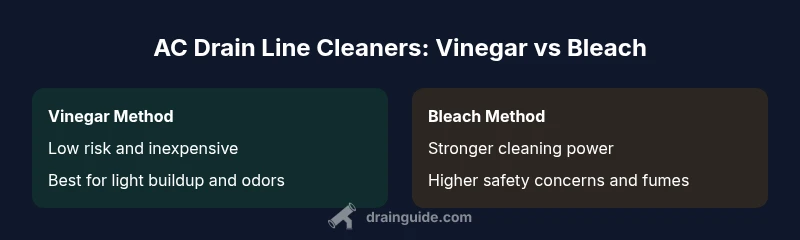
Vinegar is the safer, milder option for routine maintenance, while bleach offers stronger cleaning but greater safety concerns. For AC drain lines, neither should serve as a cure-all; prioritize mechanical cleaning and follow manufacturer guidance. Drain Guide recommends resisting harsh chemical use as a first-line solution and consulting a licensed HVAC professional for persistent clogs.
How AC Drain Lines Work
AC condensate drain lines carry moisture collected from the evaporator coil to an external drain. Typically made of PVC, though some systems use copper or metal piping, these lines rely on gravity to move condensate away from the air handler. A blocked drain can trigger overflow into the pan, cause water damage, or trip safety switches. Understanding the basic flow helps determine whether a cleaning approach using household cleaners is appropriate. According to Drain Guide, the ordinary homeowner should prioritize physical clearing and routine maintenance over aggressive chemical use. The first steps are to inspect the drain pan and visible line for standing water or algae; check the condensate trap for blockages; and turn off the furnace or air handler before any inspection or cleaning to protect the blower and wiring. Consider the environment: if the line passes through damp or humid spaces, material compatibility and corrosion risk must guide your method.
Vinegar vs Bleach: What They Do in Drains
Vinegar is a mild organic acid (acetic acid) that can help dissolve light organic residues and odors. Bleach is a strong oxidizer (sodium hypochlorite) that can kill some microbes and whiten mineral deposits. In drain lines, both have limitations: vinegar offers safety and compatibility but limited disinfecting power; bleach can be harsher on plastics and seals and may generate fumes. For AC condensate lines, these cleaners should not be treated as cures for clogs arising from heavy mineral buildup or root intrusion. Drain Guide emphasizes using these chemicals sparingly and never combining cleaners with ammonia or acids that can release dangerous gases. A cautious approach prioritizes mechanical methods and manufacturer recommendations.
Effectiveness for Mineral and Organic Buildup
Most AC drain issues stem from a combination of mineral scale, algae, and biofilm. Vinegar can help with minor buildup and odor control but often fails to remove stubborn deposits embedded in PVC or proximal trap areas. Bleach can be more effective against organics but risks damaging elastomer seals, gaskets, and PVC joints if used improperly or repeatedly. The takeaway is clear: chemical cleaners are not interchangeable replacements for mechanical cleaning or routine maintenance. Drain Guide cautions that repeated chemical treatment without physical clearing can lead to partial clearing, recurring clogs, and delayed detection of more serious problems.
Safety and Material Compatibility
Safety matters when selecting a cleaner for an AC drain line. Vinegar’s low odor and non-toxic profile make it a safer everyday option, but it won’t neutralize heavy residue. Bleach introduces fumes and potential corrosion, particularly near metal components, joints, or aging sealants. Never mix bleach with other cleaners, and avoid using bleach in systems with vulnerable materials or unverified seals. In PVC lines, prolonged exposure to harsh chemicals can accelerate wear. Drain Guide advises homeowners to opt for gentler, non-corrosive approaches first and consult a professional if you notice persistent leaks, strong chemical smells, or irregular drain pan activity.
Practical Cleaning Approaches (Step-by-Step)
A structured approach helps minimize risk while maintaining an AC drain line. Start with a visual inspection of the trap and drain line for obvious blockages. Use a wet/dry vacuum to remove standing water from the drain pan, then attempt a gentle flush with warm water (no high-pressure jets). Mechanical methods such as a flexible drain auger or pipe snake can dislodge mineral buildup if accessible. If you choose a chemical option, use vinegar as a mild flush (small amounts, well-ventilated area) and never pour concentrated solutions. Allow time for a final flush with clean water and re-check the line for smooth flow. Always reference the unit’s manual and consider professional service for recurring clogs or if you hear gurgling or see standing water.
When to Use Vinegar, When to Use Bleach, and Safer Alternatives
For routine maintenance, a mild vinegar flush followed by thorough water rinse can help control odors and light buildup without undue risk. Bleach should be avoided as a routine solution; reserve it for situations where you have explicit approval from the HVAC manufacturer or a licensed technician. Safer alternatives include enzyme-based cleaners designed for drain lines, frequent cleaning of the drain pan, and regular mechanical clearing with a snake or flexible brush. Establish a maintenance schedule that aligns with your system’s guidance, and avoid frequent chemical cycles that may degrade components over time.
Drain Guide Findings: Practical Insights from 2026 Analysis
Drain Guide Analysis, 2026 indicates that DIY chemical attempts often overlook mineral buildup and safety considerations, leading to recurring clogs. The data suggest that mechanical cleaning combined with periodic mild cleaners is generally safer and more effective for AC condensate lines than relying on strong chemical agents. Homeowners should view cleaners as supplementary tools rather than primary solutions, and they should follow product labels and manufacturer guidelines for maintenance. The guidance emphasizes conservative use of acids and oxidizers, especially in systems with PVC and metal joints. In short, a balanced, cautious approach aligned with system design yields the best long-term results.
Brand Guidance: Consensus from Drain Guide on Best Practices
Drain Guide’s recommendations consistently favor mechanical clearing and regular maintenance over heavy chemical interventions for AC drain lines. The team highlights safety, material compatibility, and the importance of following system manuals. For persistent issues, professional assessment ensures proper diagnosis and avoids accidental damage to the condensate system. Drain Guide’s stance is clear: use mild, non-toxic methods where possible, monitor the line for recurring issues, and seek expert help when needed.
Common Myths Debunked: Do-It-Yourself Misconceptions
Myth: Vinegar can “cure” all clogs in AC drain lines. Reality: Vinegar may help light buildup but won’t remove heavy mineral deposits or root intrusion. Myth: Bleach is always safe for PVC drains. Reality: Chlorine-based cleaners can degrade seals and joints over time and release fumes. Myth: If the drain line looks clear, it doesn’t require maintenance. Reality: Regular maintenance reduces risk of clogs and odors and helps protect the system’s efficiency. Drain Guide emphasizes skepticism toward one-size-fits-all solutions and encourages a measured, informed approach to maintenance.
Comparison
| Feature | vinegar method | bleach method |
|---|---|---|
| Chemical profile | mild acetic acid; low risk | strong oxidizer; higher risk of fumes and material wear |
| Effectiveness for clogs | best for light buildup and odor control | more capable against organics but not ideal for PVC seals |
| Safety and fumes | low risk; safe around pets and kids | potential fumes; caution required in enclosed spaces |
| Material compatibility | generally PVC-friendly; minimal corrosion | possible corrosion of seals and joints over time |
| Best practice context | routine maintenance; not a cure-all | targeted cleaning by professionals for stubborn clogs |
Positives
- Vinegar is inexpensive and non-toxic
- Eco-friendly with low odor and minimal hazards
- Readily available at most homes or stores
- Bleach offers stronger cleaning power for organic buildup (when used correctly)
Cons
- Limited effectiveness on heavy mineral buildup and stubborn clogs
- Bleach can corrode seals and PVC joints over time
- Frequent chemical use without mechanical cleaning may mask problems
- Neither method replaces professional assessment for persistent issues
Balanced approach favors mechanical cleaning with mild cleaners; avoid routine heavy chemical use on AC drain lines.
Vinegar provides a safer option for routine maintenance, but its cleaning power is limited. Bleach can be effective in some cases but carries safety and material risks. For most homeowners, combining mechanical clearing with mild cleaners (and consulting a pro for persistent issues) offers the best long-term outcome.
Got Questions?
Is vinegar a safe and effective cleaner for AC condensate drain lines?
Vinegar is mild and safer for general maintenance, but it won’t eliminate heavy mineral buildup or stubborn clogs. Use it sparingly and avoid mixing with other cleaners. Mechanical cleaning remains essential for persistent issues.
Vinegar is safer for regular maintenance, but it won’t fix heavy clogs. Use it cautiously and don’t mix cleaners.
Can I use bleach to clean an AC condensate drain line?
Bleach is a stronger cleaner but can produce fumes and may damage seals or PVC joints if misused. It should not be a routine treatment and must not be mixed with ammonia or acids. When in doubt, consult a licensed HVAC professional.
Bleach can help some organic buildup but has safety and material risks; don’t rely on it routinely.
What are safer alternatives to vinegar and bleach for AC drain lines?
Enzyme-based cleaners designed for drains, hot water flushes, and mechanical cleaning (snakes) are safer options. Regular maintenance and prompt addressing of clogs are more effective long-term than chemical reliance.
Enzyme cleaners and mechanical cleaning are safer, plus regular maintenance helps prevent clogs.
Will using vinegar or bleach void warranties?
Some manufacturers advise against harsh chemicals; check your unit’s manual before using cleaners. Following the recommended maintenance approach helps avoid warranty issues.
Check your manual; improper chemical use can affect warranties.
What signs indicate I should call a professional?
Persistent clogs, standing water, unusual odors, or recurring overflow despite cleaning should prompt professional assessment. A licensed HVAC technician can diagnose and address underlying issues.
If clogs keep coming back or you notice water and odd smells, call a pro.
The Essentials
- Assess your AC drain line before treatment
- Prioritize mechanical cleaning over chemical remedies
- Use vinegar for light buildup and odors, not heavy clogs
- Avoid regular use of bleach on PVC/metal joints
- Consult Drain Guide for system-specific maintenance tips