AC Drain Line Clean: A Practical DIY Guide
Learn how to safely clean your AC condensate drain line, prevent backups, and protect your home with a practical, step-by-step DIY approach designed for homeowners and DIY enthusiasts.


Goal: safely perform an a c drain line clean to prevent condensate backups, leaks, and mold in your home. You’ll learn to inspect, clear debris, and flush the line using common tools and safe practices. Before you start, gather essential safety gear and avoid chemical cleaners that can damage your AC components.
Why Cleaning the AC Drain Line Matters
An efficient a c drain line clean isn't just about stopping puddles—it's about protecting your home from moisture, mold, and hidden water damage. When condensate can't flow freely, water may back up into the air handler, spill into the pan, and create a damp environment that invites mold and musty odors. Regular maintenance keeps your cooling system running efficiently and reduces the risk of expensive repairs. According to Drain Guide, the condensate drainage path is a quiet drawback in many homes, and neglecting it can lead to avoidable issues. The Drain Guide team found that most clog-related problems start small—slimy buildup, dust, and algae—then grow into costly backups if left unchecked. A proactive approach, including a routine a c drain line clean, helps you spot issues early and maintain proper humidity control.
Tools & Materials
- Nitrile gloves(Chemical-resistant, fits securely; reduce skin exposure.)
- Safety glasses(Protect eyes from splashes and debris.)
- Bucket or tray(Catch any spillage during work.)
- Old towels or rags(Mop up water and keep area dry.)
- Flashlight/headlamp(Inspect dark lines and access points clearly.)
- Wet/dry vacuum(Suction to remove loose debris from the line.)
- Drain auger or plumber's snake(Break through stubborn clogs beyond the trap.)
- Squeeze bottle or spray bottle(Flush with cleaning solution if needed.)
- Vinegar or baking soda (optional)(Assist flushing; avoid corrosive cleaners.)
- Distilled water for flushing(Safer than tap water for cleaning.)
Steps
Estimated time: 45-75 minutes
- 1
Power down and locate the drain line
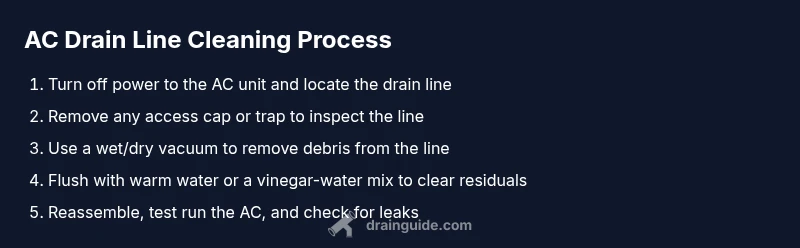
Turn off the AC unit at the thermostat and disconnect the power at the service panel if reachable. Locate the condensate drain line—usually a PVC pipe near the air handler or furnace—along with the drain pan and any access cap. Confirm there is a visible clean path before you begin.
Tip: Never work on live electrical components. If you’re unsure, switch off the main breaker for the unit. - 2
Expose and inspect the line
Clear surrounding insulation or debris to reveal the drain line and any access points. Look for a cap, trap, or cleanout plug. Note signs of staining, algae growth, or standing water in the pan, which indicate a partial or full clog.
Tip: A bright flashlight helps spot hair, slime, or mineral buildup that isn’t obvious at a glance. - 3
Remove the easy clog or blockage
If there is a removable cap or trap, carefully open it and inspect for clogs. Use your gloved hand or a pair of pliers to extract obvious debris. If you can access the line with a flexible snake, gently work it in until you feel friction.
Tip: Avoid forcing the snake; if resistance is strong, stop to prevent damage. - 4
Vacuum out debris from the line
Attach the wet/dry vacuum to the drain opening and create a tight seal around the pipe. Run the vacuum for several seconds to pull out loose particles. Repeat as needed until you notice reduced resistance.
Tip: Keep the nozzle stable for best suction and minimize splashing. - 5
Flush the line with warm water
Fill a squeeze bottle or spray bottle with warm distilled water (and optional vinegar-water mix). Slowly flush from the access point toward the main line, watching for continued flow and listening for any gurgling signals that the path is clear.
Tip: Distilled water reduces mineral deposits that can re-clog the line. - 6
Reassemble, test, and monitor
Reinstall any caps or traps, restore power to the unit, and run the AC for a cycle to verify proper drainage. Check the drain pan for dampness and look for any signs of a lingering odor or leak.
Tip: If you see leaks or persistent backups, stop and consult a professional to avoid water damage.
Got Questions?
Is it safe to use vinegar to flush an AC drain line?
Yes, a mild vinegar solution can help loosen mineral deposits when flushed with water. Do not rely on vinegar alone to clear heavy clogs and avoid using concentrated cleaners near electrical components.
Vinegar can aid flushing in small amounts, but don’t depend on it for tough clogs—use it as part of a gentle rinse.
Can I use chemical drain cleaners on an AC drain line?
Chemical drain cleaners are not recommended for AC drain lines because they can degrade plastics, evaporator coils, and seals. They also pose safety risks in enclosed spaces.
Avoid chemical cleaners; they can damage your AC components and release fumes in your home.
How do I know if the clog is cleared after flushing?
Run the AC and observe the condensate drainage. If water drains freely into the pan and no backflow or overflow occurs, the line is cleared. A persistent odor or damp pan indicates further inspection is needed.
If water doesn’t drain or if you smell mold, stop and reassess or call a pro.
What maintenance prevents future clogs?
Regularly inspect the line, replace or clean the air handler’s filter, and use a yearly flush with distilled water. Keep the area around the unit clean and free of debris.
Do routine checks and cleanings each season to keep the drain line flowing.
When should I call a professional?
If you’re uncomfortable working near electrical components, the line remains clogged after multiple attempts, or you notice mold growth, call a licensed HVAC technician.
If in doubt, a pro can safely clear stubborn clogs and check for underlying issues.
Watch Video
The Essentials
- Inspect before acting to identify the clog source
- Use non-caustic methods (vacuum, flush) first
- Avoid chemical drain cleaners in AC lines
- Test flow after reassembly to confirm success