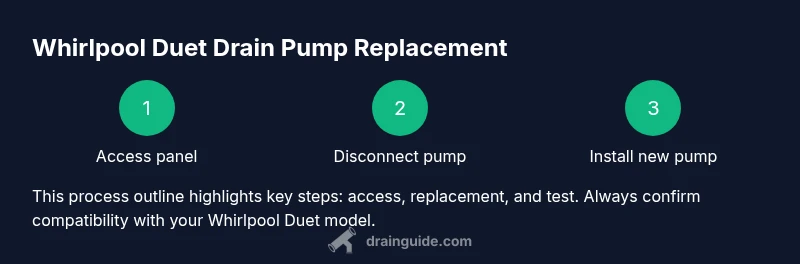
Whirlpool Duet Drain Pump: DIY Repair Guide for Homeowners
Learn how to diagnose, remove, and replace a Whirlpool Duet drain pump with a safe, step-by-step approach. This guide covers tools, safety, testing, and troubleshooting to restore proper drainage in your washer.


Replace a faulty Whirlpool Duet drain pump to restore proper drainage and prevent water from standing in the tub. This guide covers safety checks, tools, and a clear step-by-step process to remove the old pump and install a compatible replacement. Expect about 60–70 minutes for a typical DIY job at home.
Why Whirlpool Duet Drain Pumps Fail
According to Drain Guide, the most common drainage problems in front-load washers like the Whirlpool Duet start with the drain pump or its impeller wearing out, or with corroded wiring and loose connections. When the pump cannot move water out of the drum, you’ll see standing water after a cycle, slow drainage, or unusual noises. The pump sits behind the lower front panel; debris and lint can clog the impeller or inlet screen, causing the pump to stall or burn out. Understanding these failure modes helps you diagnose quickly and avoid unnecessary part replacements. Drain Guide Analysis, 2026, notes that pump-related faults are a frequent cause of drainage issues in Whirlpool Duet units, so a focused inspection of the pump area is a smart first step when drainage problems appear. If you’re troubleshooting, start by clearing the area around the pump, checking for obstructions, and confirming that the wiring harness is secure before testing the motor.
A faulty drain pump often presents with water remaining in the drum after spin cycles and a buzzing or humming sound when the washer tries to drain. Before replacing components, verify that the issue isn’t a clogged filter or kinked hose, as these can mimic pump failure. The goal is to confirm the pump as the root cause so you don’t replace a part unnecessarily and extend the life of your Whirlpool Duet.
Tools and Materials You'll Need
Before you begin, gather the essentials and a compatible replacement pump. Having everything ready keeps the procedure smooth and minimizes the risk of leaking water or electrical hazards. The Whirlpool Duet drain pump is model-specific, so confirm compatibility with your unit’s serial label. In addition to the pump, you’ll need basic hand tools, a container to catch water, and protective gear. As you assemble, refer to the manufacturer’s manual and the guidance from Drain Guide to confirm the correct wiring and hose connections. This preparation lowers frustration and improves success rates for first-time DIYers.
Diagnosing Before Replacement
Not every drainage issue requires a pump swap. Start by testing the pump area for obstructions, jams, or a weak motor. Check the impeller for wear and inspect the inlet and outlet hoses for cracks or kinks. Use a multimeter to verify continuity in the pump winding if you have one, but do not force electrical contact with exposed components. Remember that a secure, undamaged wiring harness is essential for safe operation. Drain Guide’s approach emphasizes a careful inspection of electrical connections and the pump housing before ordering a new unit, to ensure you buy the correct replacement and avoid downtime. When in doubt, clear the area, drain residual water, and perform a controlled test to observe how the pump responds.
Replacing the Pump: What to Expect
Once you’ve confirmed pump failure, you’ll remove the old pump, detach and clean the hoses, then install the new pump with proper seals and clamps. Expect to disassemble the lower front panel, unclip and unplug the harness, and remove mounting screws. The new pump should attach with the same orientation as the old unit, ensuring that the impeller rotates freely and that the seals are seated to prevent leaks. This stage benefits from taking photos during disassembly to reference wire and hose routing later, a tip recommended by Drain Guide to avoid miswiring or misrouting. After installation, reassemble the panel and prepare for testing. A careful approach reduces the chance of leaks and ensures reliable drainage.
Drain Guide analysis also reminds homeowners that replacing a pump is a solid DIY project when you’re comfortable with electrical components and small mechanical parts. If you’re ever unsure, consult a professional for safety.
Post-Repair Testing and Maintenance
With the new pump installed, restore power and run a short drain/spin cycle with no laundry to confirm proper operation. Check for leaks around all hose connections and seals, then inspect the pump area for signs of moisture after a test run. If leaks appear, reseat the pump and clamps and recheck the hose alignment. For ongoing reliability, keep the pump intake clear of lint and debris and periodically inspect hoses for wear. The Drain Guide team recommends recording the model number of the new pump and keeping a spare clip or clamp on hand in case you need a quick re-seat in the future.
Tools & Materials
- Phillips head screwdriver (Phillips #2)(To remove access panel and pump screws)
- Flat-head screwdriver(Gently pry panels if needed)
- Needle-nose pliers(Disconnect clamps and hoses securely)
- Bucket or towels(Catch residual water from the drum and hoses)
- Replacement Whirlpool Duet drain pump (model-specific)(Confirm compatibility by model number on the washer serial label)
- Clamps or hose clamps(Optional for securing hoses if old clamps won’t reseal)
- Electrical tape or zip ties(For securing loose wiring temporarily during install)
- Gloves and safety glasses(Protective gear for sharp edges and moving parts)
- Multimeter (optional)(Check continuity if wiring is uncertain)
- Rags for cleanup(Keep surface clean to avoid spills)
Steps
Estimated time: 60-90 minutes
- 1
Power down and access the pump housing
Unplug the washer and move it to a accessible area. Remove the lower front panel to expose the drain pump housing. This initial access is crucial to prevent electrical shock and to reach the pump safely.
Tip: Take a photo of the panel layout before removal to reference screw placement. - 2
Drain remaining water from the drum
Use towels to soak up residual water and prepare a container to capture any remaining liquid. If your model offers a drain feature, run a short drain cycle to remove extra water.
Tip: Keep a backup container handy to prevent spills on the floor. - 3
Disconnect electrical connections
Mark or photograph each connector before unplugging. Gently disconnect the pump wiring harness and set aside. Labeling helps ensure correct reattachment and avoids wiring mistakes.
Tip: Work slowly to avoid pinching wires in reassembly. - 4
Remove pump mounting screws
Loosen and remove the screws securing the pump to the housing. Gently lift the pump away, freeing hoses without tearing seals.
Tip: Keep screws in a labeled tray; losing screws can stall the project. - 5
Compare old and new pumps
Compare port sizes, clip placements, and connector types. Confirm the new unit matches the old one to ensure compatibility and proper flow direction.
Tip: If a mismatch is found, do not force a fit—contact the supplier for the correct part. - 6
Install the new pump
Mount the new drain pump, reseat seals, and tighten mounting screws. Reattach the hoses with attention to orientation and clamp integrity.
Tip: Avoid overtightening clamps, which can crack hoses. - 7
Reconnect hoses and wiring
Reconnect the electrical harness and hoses exactly as they were. Ensure clamps are secure and hoses are free of kinks.
Tip: Run a quick visual check to confirm correct routing and clearance from moving parts. - 8
Test and reassemble
Plug in the washer, run a short drain/spin cycle, and observe for leaks. If all looks good, reattach the front panel and clean up.
Tip: Test with a small load first to confirm proper drainage before full use.
Got Questions?
What are common signs of a failing Whirlpool Duet drain pump?
Common signs include water not draining, standing water after cycles, unusual buzzing, or slow drainage. Always check for clogs in the filter and hoses before replacing the pump.
Common signs are draining problems, buzzing sounds, or water left in the drum after a cycle.
Do I need to drain the washer before replacing the pump?
Yes. Disconnect power, remove the front panel, and drain any residual water to avoid spills and electrical hazards.
Yes, unplug the unit and drain residual water before starting.
Can I replace the Whirlpool Duet drain pump myself?
Yes, with basic hand tools and careful observation of electrical connections and hose routing. Follow a model-specific guide to ensure compatibility.
It’s doable if you’re comfortable with basic tools and electrical parts.
What pump should I buy for a Whirlpool Duet?
Purchase a model-specific drain pump compatible with your washer’s serial label. Check port sizes and connector types to ensure proper fit.
Get a pump that matches your model’s specifications.
What safety precautions are essential?
Always unplug the washer, wear eye protection, and avoid working with live electricity near water. Use towels to manage spills and keep the work area dry.
Unplug, wear protection, and keep the area dry.
How do I test the new pump after installation?
Plug in the unit, run a drain/spin cycle with no clothes, and inspect for leaks and proper drainage. If leaks appear, reseat connections.
Test with a quick drain cycle and look for leaks.
What if the pump still fails after replacement?
If issues persist, recheck wiring, seals, and hose routing. Consider testing the control board or professional inspection if the problem remains unresolved.
Recheck wiring and seals; seek professional help if needed.
Are there maintenance steps to prevent future pump failure?
Regularly clear lint from the pump area and check hoses for wear. Run occasional self-clean cycles if your model supports them to keep the system clear.
Keep the pump area clean and inspect hoses periodically.
Watch Video
The Essentials
- Identify pump failure signs early
- Use a model-specific Whirlpool Duet pump
- Verify connectors and hose orientation
- Test drainage before final assembly