Why My iPhone Battery Drains Fast: A Practical Troubleshooting Guide
Urgent, practical guide to diagnose why my iPhone battery drain so fast and fix common causes with step-by-step actions. Drain Guide provides expert, actionable steps to restore battery life quickly.


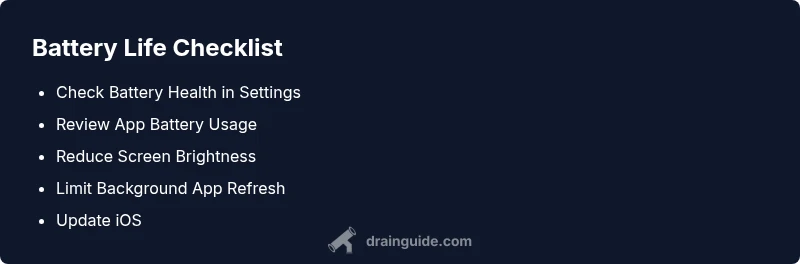
Most quick fixes address aging batteries and persistent background activity. Start by checking Battery Health in Settings, lowering screen brightness, and closing unused apps. Disable Background App Refresh for nonessential apps, limit Location Services, and enable Low Power Mode. If the drain continues, update iOS or consider a battery replacement.
Why Your iPhone Battery Drains Fast
If you’ve noticed the phrase why my iphone battery drain so fast, you’re not alone. In many cases, rapid drain stems from aging hardware combined with active background processes and brighter-than-necessary screens. According to Drain Guide, the most common culprits are a battery whose maximum capacity has declined and sustained background activity that keeps the phone awake longer than needed. This section explains how hardware wear and daily usage patterns interact to shorten your device’s uptime. Understanding these dynamics helps you target the right fixes, not just mask symptoms. By approaching the problem with a systematic mindset, you’ll regain meaningful battery life without sacrificing critical features.
Common Causes You Should Check First
Battery health is the foundation. When maximum capacity drops below the healthy range, the phone can’t hold a charge as long as it did when new. In tandem, high screen brightness, persistent background activity, and aggressive fetch or push settings can dramatically increase drain. Location Services and background refresh for apps you rarely use are frequent energy vampires. If you’ve recently updated iOS, some services may restart in the background and temporarily spike consumption. Drain Guide notes that most users see improvements after a few days of normal use once settings are optimized.
How to Inspect Battery Usage and Health
Begin with a quick health check: Settings > Battery > Battery Health. Look at Maximum Capacity and Peak Performance. A capacity around 80% or lower signals aging hardware, which often means a replacement is worth considering. Then review Battery Usage by App to identify energy hogs. If a single app dominates, consider alternatives or adjust permissions. Don’t forget to enable features like Auto-Lock and reduce screen brightness to reduce baseline drain. Regularly reviewing these metrics helps you catch patterns before they become noticeable performance issues.
Diagnostic Flow You Can Follow
Follow a simple, repeatable flow: (1) Confirm battery health status. (2) Check recent changes, such as new apps or updates. (3) Observe screen brightness and display settings. (4) Review background activity, including Background App Refresh and Location Services. (5) Test Low Power Mode and iOS updates. This sequence helps you isolate whether hardware age or software/usage is the primary driver and provides a clear path to fixes.
Step-by-Step Fix: Reclaim Battery Life (Most Common Cause)
The most common fix starts with battery health and then optimizes usage. Start by checking Battery Health in Settings; if Maximum Capacity is low, plan for replacement. Then enable Low Power Mode, reduce screen brightness, and disable Background App Refresh for nonessential apps. Clear up Location Services permissions for apps that don’t need them constantly. Finally, install any pending iOS updates and reset settings only if problems persist. These steps balance safety with effectiveness and usually yield measurable gains.
Safety Tips and When to Seek Help
If you notice the battery swelling or overheating, stop using the device and seek professional service immediately. Do not attempt to puncture or discharge a swollen battery. Seek Apple Support or an authorized service provider for replacement or diagnostics. Maintaining updated software and avoiding third-party chargers can reduce safety risks while addressing drain.
Prevention: Keeping Battery Health Over Time
To prevent future drain, adopt a routine: keep iOS updated, enable Low Power Mode during long days, keep brightness reasonable, and review app permissions regularly. Schedule periodic health checks in Settings and replace the battery when health falls below your comfort threshold. Small, proactive steps save energy and extend device longevity over years.
Steps
Estimated time: 25-40 minutes
- 1
Open Settings and check Battery Health
Navigate to Settings > Battery > Battery Health. Note Maximum Capacity and Peak Performance. If capacity is notably degraded, plan for a replacement and monitor any quick drop-offs after updates.
Tip: If you see a message about service, prioritize a replacement rather than chasing minor gains. - 2
Review Battery Usage by App
In the Battery section, review which apps consume the most energy. If a single app dominates, consider alternatives or limit its background activity. Uninstall or disable apps that you don’t use frequently.
Tip: Sort by last 24 hours vs. last 7 days to spot persistent drains. - 3
Adjust Screen Brightness and Display Settings
Turn on Auto-Brightness or reduce the manual brightness level. Minimize the time the screen stays on at high brightness and shorten Auto-Lock time to 30 seconds or 1 minute.
Tip: Use Dark Mode if your iPhone supports it to reduce LCD/OLED power use. - 4
Limit Background App Refresh and Location Services
Disable Background App Refresh for nonessential apps and restrict Location Services to while-in-use or never for apps that don’t need it constantly.
Tip: Revisit permissions after app updates—some features may restart in the background. - 5
Install Pending iOS Updates
Check for and install any pending iOS updates, as they often contain bug fixes and battery management improvements that reduce drain.
Tip: Back up before major updates to protect data during the process. - 6
Reset Settings If Needed
If drain persists, consider resetting all settings (Settings > General > Transfer or Reset iPhone > Reset > Reset All Settings). This won’t erase data but will reset preferences.
Tip: Note which settings you re-enable to avoid reinstating old drains. - 7
Plan Battery Replacement If Health Is Low
If Maximum Capacity is below your comfort threshold or the device still drains rapidly after fixes, arrange an official battery replacement.
Tip: Use genuine parts and authorized service to preserve performance.
Diagnosis: iPhone battery drains quickly despite moderate usage
Possible Causes
- highAging battery health (declining maximum capacity)
- mediumHeavy background activity and poor power management
- lowSoftware or OS bugs causing background tasks
Fixes
- easyCheck Battery Health in Settings and consider battery replacement if capacity is low
- easyEnable Low Power Mode and adjust Background App Refresh, Location Services, and brightness
- mediumUpdate iOS, reset settings if needed, and re-evaluate after a few days
Got Questions?
Why does my iPhone battery drain faster after updating iOS?
Software updates can cause short-term drain due to indexing and new background tasks. If it persists, review apps and permissions, and check for additional updates.
Updates can cause temporary drain due to background processes. If it lasts, review app usage and settings.
How can I tell if my battery needs replacement?
If Maximum Capacity is low (around 80% or less) and drain remains fast after optimizations, replacement is typically warranted.
Low battery capacity with persistent drain usually means replacement is needed.
Does enabling Low Power Mode hurt performance?
Low Power Mode reduces background activity and can slightly affect peak performance. For everyday use, it extends battery life without major drawbacks.
It limits background tasks but keeps things usable; performance may feel slightly snappier after disabling some features.
Will charging habits affect battery health long-term?
Modern iPhones manage charging well, but keeping the battery between 20% and 80% when possible can reduce long-term wear.
Battery health benefits from regular charging within a reasonable range.
Is it safe to reset all settings to fix battery drain?
Resetting settings is generally safe and won’t erase data, but you’ll need to reconfigure preferences. It can help resolve stubborn drain caused by misconfigured settings.
It's safe and can fix stubborn drain, but you’ll have to reconfigure preferences afterward.
Watch Video
The Essentials
- Check Battery Health first before taking drastic steps
- Limit background activity and reduce screen brightness
- Update iOS and monitor after changes
- Replace battery when health is significantly degraded