How Big Is a Shower Drain: A Practical Size Guide
Discover how big a shower drain typically is, how to measure yours, and what sizes to choose for reliable drainage. Drain Guide explains standard diameters, variations, and installation tips.


How big is a shower drain? In most homes, the standard residential shower drain is about 2 inches in diameter, with common ranges from 1.75 to 2.5 inches depending on pan design and tile layout. When replacing, measure the opening and confirm the pan’s drain body size before buying a grate or adaptor.
What is the typical shower drain size?
If you're wondering how big is a shower drain, the short answer is: most residential showers use a drain about 2 inches in diameter. In practice, you’ll see sizes ranging from roughly 1.75 inches to 2.5 inches depending on the shower pan design, flange thickness, and tile pattern. In older homes, 1.5-inch drains show up occasionally, but they are less common in modern builds. The drain body, flange, and grate all work together: the opening you measure may differ from the inside trap connection. In many areas, 2 inches aligns with standard pipe and fitting sizes, making replacement parts widely available. If your waste line is 1.5- or 2-inch, the drain size should match the rest of the system to prevent slow drainage or clogs. When evaluating a replacement, distinguish between the rough-in diameter (the interior opening) and the finished opening visible once the grate sits in place. This distinction matters for measuring, selecting a grate, and ensuring a proper fit with your shower pan.
How to measure your shower drain?
To determine the exact size for replacement, start by removing the grate. Use a tape measure or calipers to measure the inside diameter of the opening. If you have a tile-in drain, measure through the tile cutout or the visible portion of the drain housing. For linear or trench drains, record the width and depth of the channel. Note the flange diameter if you’ll replace the grate; some grates rest on the flange, others sit flush with tile. If you can’t access the interior, measure the external dimensions of the drain body and compare against standard sizes. Always consult the manufacturer’s guidelines for your shower pan and any adapters. Finally, verify the connection size to the waste line (most homes use 1.5–2 inches, though older houses can be smaller). Document all measurements before purchasing parts to minimize return risk and ensure compatibility with the new grate and sealant.
Variations by shower type
Shower drains come in several configurations, and size choices often follow the design. A typical one-piece or above-floor drain uses a round 2-inch opening, while tile-in or adjustable pan drains may use 2.0–2.5 inches to accommodate tiling. Linear or trench drains, common in modern, barrier-free showers, vary more widely and are measured by length as well as width. Some European or custom installations use metric sizes, which require a direct conversion to inches for compatibility with standard piping and grates. When choosing, factor in the pan slope and the intended water volume; a larger drain won’t improve performance if the pan is too shallow or the tile is overly steep. The goal is a consistent slope toward the drain that keeps water moving without pooling around the grate.
Why drain size matters for drainage performance
Drain size directly affects how quickly water exits the shower pan. A drain opening that’s too small can cause slow drainage and frequent clogs, especially in homes with hard water or trapped hair. Conversely, a drain that’s too large can create fitting and trap compatibility challenges and may require different grating and lip heights. The overall drainage performance also depends on the pan slope, trap design, venting, and waste line capacity. In most standard baths, a 2-inch drain with a properly sloped pan and a correct gasket performs reliably under typical shower usage. For higher-flow setups or larger spa-like showers, some builders opt for 2.5-inch drains, but this choice should be coordinated with drainage calculations and local code requirements.
How to choose the right size for your project
Start with the existing opening. If you’re retrofitting, aim to preserve the current drain body to avoid extensive pan reconstruction. If you’re installing a new pan, review the pan’s installation guide for the recommended drain size and grate height. Consider tile thickness, grout lines, and the desired finish height; tile thickness often determines the required bullnose or flange depth to maintain a flush surface. Check local code requirements; some jurisdictions specify minimum drain sizes for new showers, particularly in accessible or barrier-free designs. Remember that larger drains can improve flow, but they also require compatible piping, traps, and grates. When in doubt, consult a professional to verify the fixture and piping configuration before purchasing.
Common mistakes when replacing a shower drain
A frequent error is guessing the drain size by eye instead of measuring, which leads to a grate that sits too high or too low. Another misstep is overlooking the pan’s slope, which can undermine drainage even with a correctly sized drain. Failing to verify the waste line size and trap compatibility can cause slow drainage or leaks. Finally, mixing metric and imperial sizes without proper adapters creates a weak seal and potential odor risk. Ensure you have the correct gasket type, flange height, and sealant compatible with your shower pan material (ceramic, stone, or acrylic).
Step-by-step measurement and replacement checklist
- Remove the grate and clean the opening. 2) Measure the interior diameter with calipers or a tape measure; record in inches and millimeters. 3) Check whether your drain is tile-in or a surface mount and note the flange diameter. 4) Confirm the waste line size and vent compatibility. 5) Choose a drain body and grate that match your measured size, tile thickness, and slope. 6) Prepare the pan for replacement with proper waterproofing; apply sealant and test for leaks before tiling. 7) Re-test drainage after installation by running warm water and checking for pooling. 8) Keep maintenance tools handy: hair catcher, pliers, and a wrench for grate removal.
Maintenance considerations for different drain sizes
Maintenance needs vary with drain size. Smaller drains can clog more easily if hair and soap scum accumulate near the opening; use a hair catcher and a maintenance routine every few weeks. Larger drains may require more frequent grate cleaning to prevent debris buildup along longer channels. Regardless of size, keep the trap clean, verify gasket integrity, and inspect the piping for corrosion or leaks. Finally, routine testing—pour a kettle of warm water, then check for proper drainage—helps catch problems before they escalate.
Size ranges by shower drain type
| Drain Type | Typical Diameter | Notes |
|---|---|---|
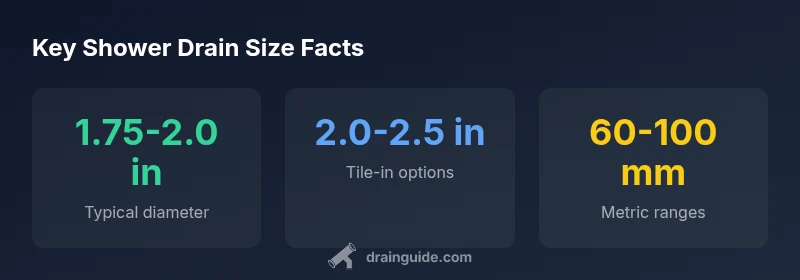
| Standard residential shower drain | 1.75-2.0 inches | Most common size; replacement parts widely available |
| Tile-in/adjustable drain | 2.0-2.5 inches | Common in tile-on-pitch designs; requires precise cut |
| Trench/linear drain | 60-100 mm | Popular for modern showers; different grates and slope requirements |
Got Questions?
What is the standard shower drain size?
Most homes use a 2-inch drain; some installations vary between 1.75 and 2.5 inches depending on pan design and tile layout.
Most showers use a 2-inch drain, with some variations by design.
Can I replace a 2-inch drain with a larger one?
Yes, if the pan, grate height, and waste piping can accommodate a larger opening. Check the pan's specifications and local codes.
Yes, but you must ensure the pan and pipes can handle a bigger drain.
How do I measure the drain diameter if the grate sits flush?
Remove the grate and measure the interior opening with calipers or a ruler; record inches and millimeters for accuracy.
Take out the grate and measure the hole directly.
Do European showers use the same sizes?
European showers often use metric sizes; convert to inches and verify compatibility with local piping standards and codes.
Sizes vary by region; check local rules and convert to inches if needed.
Will drain size affect water flow?
Yes. Larger drains can move more water, but flow also depends on pan slope, trap design, and venting.
Size helps flow, but slope and venting matter too.
Are there safety concerns with larger drains?
Ensure compatible gaskets, adapters, and venting; mismatched parts can cause leaks or odors.
Use only compatible parts to avoid leaks or smells.
“Accurate drain sizing is essential for reliable drainage and reducing clogs over the life of a shower.”
The Essentials
- Measure before replacing to ensure fit
- Most showers use a 2-inch drain
- Tile-in and trench drains vary more in size
- Coordinate drain size with pan slope and waste line