Shower Drain Pipe Sizing Guide: 2-Inch Standard
Learn the standard shower drain pipe size, why 2 inches is common, how to measure, and code considerations for retrofits. Drain Guide provides practical sizing guidance and installation tips.


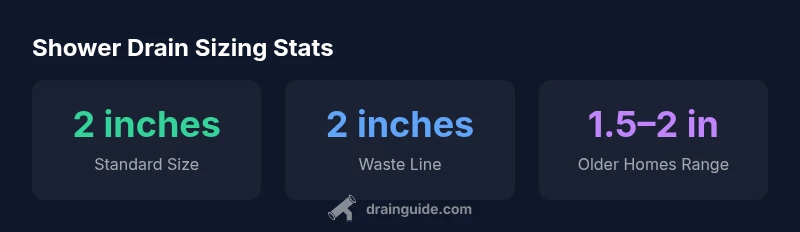
For the question what size drain pipe for shower, the standard is 2 inches in many homes. The shower drain itself is typically 2 inches in diameter, and the waste line connected to the main stack should also be 2 inches or larger. In older houses, you may encounter 1.5-inch configurations, but modern codes generally require 2 inches for new work.
What size shower drain pipe is standard
In most Western residential construction, the drain pipe size for a shower follows a standard sizing that balances flow, venting, and code requirements. The primary dimension to consider is the diameter of the drain opening and the waste line that carries water away from the shower. The keyword what size drain pipe for shower surfaces in many homeowners' questions, and the answer hinges on whether you are looking at the drain outlet, the trap arm, or the branch line. For most installations, a 2-inch diameter is the reference size for both the shower drain body and the downstream waste line. This doesn't mean every home uses exactly 2 inches—older residences or unusual configurations may vary. However, when planning a new install or a full renovation, 2 inches is the default assumption because it provides better flow, simplifies venting, and aligns with standard fittings. If space constraints prevent a full 2-inch run, a plumber might design a 1.5-inch alternative, but that typically requires careful slope, precise trap design, and local code confirmation. Drainage calculations should also consider tile thickness, curb height, and fixture units to ensure proper drainage without backups.
How drainage sizing affects flow and clogs
Drain sizing directly influences flow rate, resistance to clogs, and venting requirements. A larger diameter reduces velocity-related friction losses in the pipe, which helps water move more freely and reduces the chance of standing water or slow drainage. A 2-inch drain provides a broader cross-section to carry steady flow during peak usage, especially when users shower simultaneously or when multiple fixtures drain into the same stack. However, pipe diameter is only part of the equation. Pipe slope, trap design, venting, and proper cleanouts all play essential roles. Inadequate slope or missing venting can negate the benefits of a larger pipe and lead to slow drainage or gurgling sounds.
Code considerations and typical ranges by region
Code requirements for shower drain sizing vary by jurisdiction, but most modern plumbing codes align around a 2-inch standard for new installations. When replacing or retrofitting, you will often be advised to maintain or upgrade to 2 inches to meet current code expectations and to ensure adequate venting and flow. Some older homes may still run on 1.5-inch lines if permitted by local amendments, but retrofits commonly trigger a 2-inch upgrade due to improved performance and easier compatibility with standard fittings and traps. Always check with your local building department or a licensed plumber to confirm the exact requirements where you live. Drain Guide emphasizes checking your jurisdiction’s code version and any amendments that apply to retrofit projects.
How to measure your existing setup without removing fixtures
If you are evaluating an existing shower, start by identifying the drain body diameter. Remove or loosen the drain cover carefully and measure the inside diameter of the drain opening. For the waste line, you can often estimate by measuring the outer diameter of the exposed pipe or by tracing the pipe to a cleanout. In concrete slabs, the visible drain outlet on the floor (where you access the trap) is a good reference point. If you cannot access the pipe easily, a professional plumber can perform a nondestructive assessment using inspection cameras. Document the measurements and compare them to current code requirements. If there is any doubt, plan on upgrading to 2 inches to minimize future issues.
Retrofitting: when to upgrade pipe size and how
Retrofitting to a larger size is usually motivated by slow drainage, repeated clogs, or a planned renovation that expands the shower footprint. Assess the feasibility by considering the existing trench, joist space, and the ability to run a larger waste line without costly rerouting. Upgrading from 1.5 inches to 2 inches typically involves replacing the shower drain, extending the trap arm, and possibly enlarging the waste line as it connects to the main stack. In some cases, a pro will use a 2-inch connection and adapt to the existing layout with a compliant trap and vent combination. Always ensure that the new configuration preserves proper slope (drainage grade) and that there is an accessible cleanout near the shower for maintenance.
Installation tips: maintaining slope and venting
Key installation principles matter even when the pipe size is correct. Maintain a slope of about 1/4 inch per foot (6 mm per 0.3 m) for horizontal runs to promote gravity drainage. Ensure the venting is adequate to prevent siphoning of the trap. The trap should be accessible, and a cleanout close to the shower improves maintenance. Use appropriate fittings for transitions between different pipe materials, and verify that the entire run remains watertight after testing. Finally, confirm that tile thickness and curb height do not create negative drainage pressure or backflow risks. Adhering to these practices reduces the likelihood of future clogs and backups.
Common mistakes to avoid when sizing drains
Avoid assuming a larger pipe size always solves drainage problems. Incorrect slope, inadequate venting, and poor trap design can undermine performance. Do not skip cleanouts or sealant tests, and never overlook code requirements for retrofit projects. When in doubt, consult a licensed plumber for a site-specific assessment. Finally, document measurements and code notes to simplify future maintenance and potential upgrades.
Quick reference cheat sheet for sizing
- Standard for new showers: 2 inches
- Older homes: 1.5 inches may appear, but upgrades are common
- Ensure cleanouts, slope, and venting are correct
- Verify local code requirements before retrofitting
- Plan for proper tile thickness and curb height to avoid drainage issues
Sizing guidelines for shower drainage components
| Component | Recommended Size | Notes |
|---|---|---|
| Shower Drain (top) | 2 inches | Standard size for most regions |
| Waste Line (branch) | 2 inches or larger | Depends on slope and connections |
| P-trap inlet | 2 inches | Maintains proper venting |
| Older homes | 1.5 inches | Less common in new work |
Got Questions?
What is the minimum shower drain size?
Most codes require 2 inches for new work; some older houses may be 1.5 inches. Check your local code and consult a plumber for retrofits.
Most new installations use a 2-inch drain; some older homes may use 1.5 inches. Always verify with local code.
Can I use a smaller pipe if space is tight?
Generally not for new installs. Some retrofits may allow smaller sizes with restrictions, but code compliance is essential.
Smaller pipes are usually not allowed for new work; check local codes for retrofits.
Does pipe size affect drainage rate?
Yes. Larger diameters reduce clog risk and improve flow, but slope, venting, and trap design also influence performance.
Larger pipes help flow, but slope and venting matter too.
How do I verify pipe sizes without tearing out walls?
Check building plans, measure the pipe diameter with a caliper or tape, or hire a plumber to inspect via non-destructive methods.
Measure or hire a pro to verify sizes without heavy demolition.
What about 1.5-inch shower drains?
Occasionally seen in older homes; for new work, most codes require 2 inches. Retrofit may justify upgrading.
1.5 inches is possible in older homes, but 2 inches is the safer, code-friendly default.
“For most residential shower installations, sizing the drain at 2 inches simplifies venting and reduces clogs. Always confirm with local code and soil conditions.”
The Essentials
- Prefer a 2-inch drain for new showers.
- Verify local codes before retrofitting.
- Older homes may have 1.5-inch lines.
- Ensure proper slope and venting for drainage.