Manual Drain Cleaner: A DIY Guide to Clearing Clogs
Meta description: Learn how to use a manual drain cleaner safely and effectively. This Drain Guide tutorial covers tools, step-by-step actions, safety tips, and when to call a pro.


By using a manual drain cleaner, you can clear most simple clogs without harsh chemicals. This guide covers safe prep, the right tools (hand auger, plunger, gloves), and a proven step-by-step method to restore flow in sinks, tubs, and showers. You’ll learn when to try DIY techniques, how to protect pipes, and exactly what to avoid to prevent damage.
What is a manual drain cleaner and when to use it
A manual drain cleaner refers to hands-on tools designed to remove clogs without chemicals. The most common devices are a hand auger (drain snake) and a plunger. These tools rely on mechanical action to dislodge hair, soap scum, grease, and small blockages that accumulate in kitchen and bathroom drains. According to Drain Guide, choosing the right manual drain cleaner depends on the drain type, clog location, and your comfort level with basic plumbing tasks. For most residential sinks and showers, a hand auger or a plunger can restore function without introducing hazardous solvents.
Manual drain cleaners are especially useful for hair-clogged bathroom drains, grease buildup in kitchen lines, and shallow bathtub blockages. They are also more environmentally friendly than chemical cleaners that can corrode pipes if misused. Before starting, ensure you have a clear workspace, good lighting, and a towel or bucket to catch water. When used correctly, a manual drain cleaner minimizes risk to pipes and seals, lowers chemical exposure, and gives homeowners a sense of control over their plumbing.
Safety first: PPE and precautions
Personal protective equipment (PPE) is essential when you work with drain cleaning tools. Slip-resistant gloves, eye protection, and snug clothing reduce splash and debris exposure. A bright flashlight helps you see inside the drain and avoid missed clogs. Tie back long hair and keep pets and children away from the work area. If you have a history of skin sensitivity, consider wearing a long-sleeve shirt and a knee pad setup for comfort. Always unplug power tools and keep liquids away from electrical outlets to prevent hazards. Drain Guide emphasizes planning your sequence before you touch the tool, so you avoid rushed or improvisational moves that could damage pipes or worsen the clog.
Manual vs chemical cleaners: pros, cons, and best use cases
Chemical drain cleaners dissolve clogs but can damage older pipes, epoxy seals, and metal fittings if misused. A manual drain cleaner offers a safer, more controllable option for many clogs, especially in metal pipes or near trap assemblies. The advantage is immediate, quantifiable progress without fumes or caustic residues. If your clog is backed up across multiple fixtures, or if you detect a sewer smell, stop and call a professional. Drain Guide analysis shows that most residential clogs respond well to mechanical methods first, with chemicals reserved for stubborn blockages on a case-by-case basis. Keep in mind that manual methods may take longer than chemical products, but they reduce chemical waste and protect your plumbing ecosystem.
Core techniques: using a hand auger (drain snake)
A hand auger is a flexible tool that you thread into the drain to physically break apart the obstruction. Start by inserting the stiff end into the drain and rotating the handle while feeding the coil forward. Use short, steady pushes and pulls, advancing 1–2 feet at a time. If you encounter resistance, pause and rotate to dislodge the material before continuing. Once you feel the clog loosen, pull the auger back slowly to retrieve debris. Clean the coil with a rag and run hot water to flush remnants. Practice patience: forcing the auger can kink the coil or push the clog further down the line. Always protect the area with towels to contain splash.
Plunger methods: when and how to use for best results
A plunger creates a seal and uses suction to dislodge clogs near the drain opening. For sinks and tubs, choose a cup plunger; for toilets, a flange plunger is more effective. Submerge the plunger and ensure a strong seal around the drain. Use a series of rapid, forceful pushes followed by a steady pull to create pressure waves that move the clog. If water remains low, add a small amount of water to cover the plunger to maximize suction. After several cycles, test the drain by running water. If progress stalls, switch to a hand auger for deeper blockages. Always clean the plunger after use to prevent transfer of debris.
Step-by-step workflow in practice: diagnosing and preparing
Before you begin, map the likely location of the clog: is it in the trap, in the vertical stack, or further down the line? Remove the trap if necessary and visually inspect for obvious debris. Place towels and a bucket to catch water. Start with the least invasive method—plunger for surface clogs—then move to a hand auger for deeper obstructions. Avoid mixing methods in a single attempt, especially around sensitive fittings. If you need to work through multiple drains, tackle the most clogged first to avoid cross-contamination. This approach minimizes mess and keeps the process organized. With the right technique and a manual drain cleaner, you can restore flow without resorting to harsh chemicals.
Common mistakes and how to avoid them
Rushing through steps leads to mistakes: forcing the auger, using excessive torque, or ignoring sharp turns in old pipework. Another frequent error is neglecting to protect floors and fixtures, resulting in water damage or stained carpet. Don’t overlook the trap; clogs often accumulate there and can be removed with ordinary hand tools. Failing to test the drain after each method wastes time and creates false conclusions about the tool's effectiveness. Finally, never mix mechanical methods with chemical cleaners in the same drain—this can create dangerous fumes or unpredictable chemical reactions. By taking your time, using the correct technique, and following a defined plan, you reduce the risk of pipe damage and incomplete clearing.
Maintenance and prevention after clearing a clog
After you clear a clog, keep the drain flowing by using a mild routine: flush with hot water, clear hair from the strainer, and install conservative traps or screens to catch debris. Regular maintenance with a drain-cleaning brush or a quick weekly rinse helps prevent buildup. Be mindful of what goes down the drain: grease, coffee grounds, and fibrous materials are common culprits. An annual check of the P-trap and a quick visual inspection of accessible pipes can catch problems early. If you notice recurring clogs, it may indicate a venting problem or a damaged pipe; at that point, Drain Guide recommends consulting a licensed plumber for a professional assessment.
When to call a professional: Drain Guide workflow and safety considerations
Not every clog is a DIY fix, and recognizing when to escalate is essential for long-term drain health. If you encounter sewage odors, backups across multiple fixtures, persistent clogs despite multiple attempts, or water that won’t drain at all, it is time to seek professional help. A licensed plumber can check venting, inspect the traps, and evaluate pipe integrity with professional tools. Drain Guide's approach emphasizes safe, incremental steps: verify the clog location, apply the least invasive method first, and reassess after each stage. Following a proven workflow minimizes the risk of collateral damage and ensures you preserve the longevity of your plumbing system. The Drain Guide team recommends documenting the steps you took and the results for future reference, so you can make informed decisions about maintenance and when to call for expert service.
Tools & Materials
- Hand auger (drain snake)(3-6 ft residential coil; choose flexible stainless steel for durability)
- Plunger (cup plunger for sinks, flange plunger for toilets)(Use appropriate type to seal the drain)
- Protective gloves(Nitrile or rubber; avoid latex if sensitive)
- Safety glasses(To shield eyes from splashes)
- Flashlight(Bright, hands-free preferred)
- Rags or towels(Old towels to protect floors; catch drips)
- Bucket(To contain water from trap if removing it)
- Adjustable wrench(For loosening trap nuts if needed)
Steps
Estimated time: 30-60 minutes
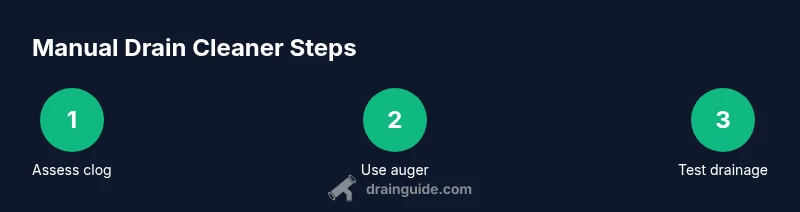
- 1
Assess the clog and prep
Identify the clogged drain and set up the workspace. Put towels down, gather the hand auger, plunger, gloves, flashlight, and a bucket. Confirm you have a clear path to work and that water supply will be contained if needed.
Tip: Create a simple checklist to track progress and avoid missing a critical step. - 2
Access the trap or drain entry
If accessible, consider removing the trap to inspect for obvious debris. Place a bucket underneath to catch water and loosen the trap nuts with an adjustable wrench if needed. Do not force the trap open; handle fittings gently to avoid damage.
Tip: Take a photo before disassembly so you can reassemble correctly. - 3
Thread the hand auger into the drain
Slowly insert the auger into the drain, feeding the coil forward while turning the handle. Use short pushes and rotates to advance 1–2 feet at a time. If you hit resistance, pull back slightly and rotate to break loose the obstruction.
Tip: Keep the coil taut to prevent kinking and improve contact with the clog. - 4
Withdraw debris and test
Retract the auger slowly to pull out gunk and check for relief. Wipe the coil with a rag as you go. After debris removal, run hot water to flush remnants and reevaluate flow.
Tip: If flow remains slow, repeat with a slightly deeper pass rather than forcing further. - 5
Switch to plunger if needed
For surface clogs, seal the drain with a plunger and perform rapid pushes followed by a pull to create pressure waves that push the clog out. Test by running water after several cycles.
Tip: Ensure a tight seal; a poor seal reduces suction and effectiveness. - 6
Final test and cleanup
Run water in the affected fixture and nearby fixtures to confirm full drainage. Disinfect tools, wipe surfaces, and store gear properly. If the clog returns within days, consider a deeper inspection of pipes or venting.
Tip: Document what worked and what didn’t for future DIY attempts.
Got Questions?
What is a manual drain cleaner?
A manual drain cleaner uses hands-on tools like a hand auger or plunger to clear clogs without chemicals. It relies on mechanical action to break up the blockage.
A manual drain cleaner is a non-chemical tool like a snake or plunger used to clear clogs by mechanical action.
Will a manual drain cleaner work on all clogs?
Most hair and soap scum clogs respond well, especially in sinks and showers. Severe or long-running blockages may require professional assistance.
Most common clogs respond, but stubborn issues may need a plumber.
Can I reuse a drain snake on other drains?
Yes, after thorough cleaning and disinfection. Inspect for wear and replace if the coil shows kinking or corrosion.
Yes, clean it well and inspect before reuse.
Is it safe to mix baking soda with a manual cleaning process?
Baking soda and vinegar can be used for mild, preventative flushing, but avoid relying on chemical reactions during mechanical cleaning. Do not mix with strong caustics.
You can use it for maintenance, but don’t rely on it to clear heavy clogs.
How long does it take to clear a clog with a manual drain cleaner?
It varies with clog type and location; many DIY attempts take 30–60 minutes, including setup and testing.
Most DIY clears run under an hour.
What signs indicate I should call a professional?
If you have sewage odors, backups across several fixtures, repeated clogs, or suspect pipe damage, consult a licensed plumber.
Call a pro if you smell sewage or have multiple clogged drains.
Watch Video
The Essentials
- Choose the right manual drain cleaner tool for your clog
- Wear PPE and protect your workspace
- Follow a staged approach: auger first, plunger second, test frequently
- Avoid mixing mechanical methods with chemical cleaners in the same drain
- Know when to call a pro and follow a proven Drain Guide workflow