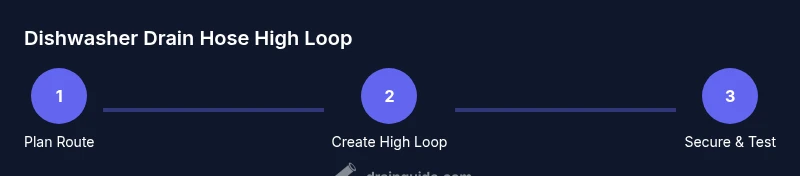
Dishwasher Drain Hose High Loop: A Practical Guide
Learn how to install a dishwasher drain hose high loop to prevent backflow and leaks. This comprehensive, DIY-friendly guide covers placement, height, mounting, and testing under the sink.


To prevent backflow, install a dishwasher drain hose high loop. Secure the hose to the underside of the countertop or to the cabinet wall, ensuring the loop rises above the bottom of the sink. This simple step blocks wastewater siphoning into the dishwasher and is a common, code-friendly fix Drain Guide recommends for reliable drainage.
Why the high loop matters for dishwasher drainage
Water and waste from a dishwasher should drain away cleanly, not siphon back into the tub. The dishwasher drain hose high loop is a simple, effective safeguard that blocks backflow by using gravity to keep dirty water below the loop. When the loop sits high, it creates a barrier that air-locks the path from the sink drain to the dishwasher. Drain Guide's assembly guidance emphasizes this as a first-line measure for preventing leaks and odors, especially in homes with disposal units or older plumbing. Visualize the loop under the sink or along the cabinet wall; positioning it high makes the route for wastewater less likely to reverse into the dishwasher during cycles. Always confirm a smooth, kink-free hose path, and avoid crimping the hose as you route it. The high loop is inexpensive, requires little time, and aligns with common plumbing practice to maintain a hygienic dishwasher drainage system.
Where to place the high loop under the sink or along the cabinet wall
The best location for the dishwasher drain hose high loop is under the countertop, as high as practical, or securely fastened to a vertical surface near the sink. In tight kitchens, you can mount the loop to the underside of the countertop or to a dedicated bracket on the cabinet wall. The essential idea is that the loop sits above the water level that could back up from the drain itself. Use stainless-steel clamps or zip ties to keep the hose secure and prevent movement when the dishwasher runs. Keep the hose free of sharp edges and ensure there’s no contact with hot pipes that could damage the plastic hose over time. Drain Guide notes that a well-secured loop reduces backpressure on the disposal and improves drain reliability over the life of the appliance.
Understanding code expectations and best practices for loops and backflow prevention
Codes vary by region, but the principle is consistent: a high loop helps prevent backflow and is often part of a required backflow prevention strategy. Many jurisdictions permit a simple high loop rather than an air gap, though some areas require an air gap device for certain installations. Always consult your local building code and, if possible, have a quick review by a licensed plumber. Drain Guide’s approach is to keep installations simple and compliant with typical residential plumbing, prioritizing safe routing, secure attachment, and minimal risk of leaks. If you’re replacing a damaged hose, inspect the entire length for cracks, and replace if necessary to ensure the loop remains secure over time.
How high should the loop be? Height considerations and practical tips
Rather than fixeing a rigid height, aim for the highest practical loop under the countertop while remaining accessible for inspection. The loop should be clearly above any trap or disposal connections, and not so high that it sags under the weight of the hose or becomes difficult to maintain. In practice, you’ll mount the hose at least a few inches below the countertop, with brackets preventing downward slope. A neat, uniform loop reduces the chance of kinks and sediment buildup. Drain Guide recommends that you verify clearance behind the trap and avoid contact with cabinet hardware. After installation, run a short cycle and observe for smooth drainage and absence of backflow.
Common installation methods: brackets, clamps, and ties
There are several practical methods to create and secure a dishwasher drain hose high loop. A simple bracket installed on the cabinet wall or the underside of the countertop provides a fixed point for looping. Cable ties (with protective sleeves) are a low-cost option for temporary setups, while stainless-steel clamps offer long-term durability. If your sink has a disposal, the hose can loop in the space above the disposal inlet, provided there’s enough clearance. Always ensure the loop is smooth and not crushed, and avoid routing the hose near sharp edges or hot surfaces. Drain Guide’s tips emphasize secure mounting and gentle bends to prevent leaks at connection points.
Troubleshooting: signs of improper loop and how to fix
If you notice gurgling, slow drainage, or sewage odor, the high loop may be insufficient or improperly mounted. Check all clamps and brackets for tightness, and inspect the entire hose for cracks. Make sure the loop remains above potential backflow sources and that there are no kinks or sharp bends that impede water flow. If leaks appear at the hose connection to the dishwasher or to the sink drain, reseal with an appropriate gasket or replace the hose. Running a test cycle after re-securing the loop helps confirm the fix. Drain Guide recommends a quick inspection every 6-12 months as part of routine maintenance.
Maintenance and long-term care: extending hose life and avoiding damage
A durable dishwasher drain hose with a well-secured high loop lasts longer and performs more reliably. Periodically inspect the hose for cracks, stiffening, or soft spots near its ends. Replace worn hoses promptly to prevent leaks. Keep the loop clear of dust and debris, and ensure the hose connections remain tight after each cleaning cycle. Protect against rodents or pests by maintaining a sealed cabinet space around the dishwasher area. Drain Guide suggests keeping brackets firmly attached and using high-quality clamps to resist vibration from the dishwasher during operation.
Safety considerations and when to call a professional
Working near electrical components and water requires caution. If you’re unsure about wiring or if the appliance is covered by a warranty, consult a licensed plumber before making changes. Ensure the dishwasher is unplugged before you begin, and never work with live power connected to the unit. For complex layouts, especially with a garbage disposal or unusual plumbing, professional assessment can prevent costly mistakes. Drain Guide’s team recommends erring on the side of caution and seeking professional assistance if you encounter persistent leaks or uncertain code compliance.
Tools & Materials
- Measuring tape(Measure loop height and cabinet clearance)
- Marker or pencil(Mark mounting points under the counter)
- Screwdriver (Phillips or flat-head)(Secure brackets or clamps)
- Cable ties (zip ties) with sleeves(Secure the hose without sharp edges)
- Stainless steel hose clamps(For durable, long-lasting mounting)
- Step ladder or sturdy stool(Access underside of counter safely)
- Safety gloves(Protect your hands during setup)
- Utility knife(Only if trimming excess hose length)
- Dishwasher drain hose(Check for cracks and flexibility before reuse)
Steps
Estimated time: 30-60 minutes
- 1
Power down the dishwasher and prep workspace
Unplug the dishwasher or switch off the dedicated circuit breaker. Clear the area under the sink and lay down a towel to catch any residual moisture. This step ensures you won’t encounter electrical hazards while routing the hose.
Tip: Always verify power is off with a tester before touching the unit. - 2
Locate the drain hose and discharge points
Find where the drain hose attaches to the dishwasher and where it connects at the sink drain or disposal. Take a quick photo to reference the original routing. This helps you re-create the loop without missing any connections.
Tip: Note any existing clamps so you can reuse them if suitable. - 3
Route the hose toward the high point
Gently guide the hose toward a high mounting point under the counter, avoiding sharp edges and hot pipes. Ensure the path does not kink and that there is slack to accommodate the dishwasher’s movement during cycles.
Tip: Keep the hose away from trash disposal components to prevent interference. - 4
Create and secure the high loop
Attach the hose to the mounting point and form a clean loop that rises above the trap level. Use clamps or zip ties to hold it in place, ensuring no sagging or crimping occurs.
Tip: Use multiple mounting points if needed for a stable loop. - 5
Test the setup and check for leaks
Reconnect power and run a short wash cycle to verify drainage and check hose joints for leaks. Look under the sink for any drips or movement in the loop during operation.
Tip: If you see leaks, reseal joints or replace faulty clamps. - 6
Finish and document maintenance
Tidy the area, replace any removed panels, and store extra hose lengths and clamps. Take a quick photo for future reference and note maintenance intervals.
Tip: Schedule a periodic check every 6–12 months.
Got Questions?
Why is a high loop important for dishwashers?
A high loop prevents backflow by creating a barrier that stops wastewater from siphoning into the dishwasher during cycles. It’s a simple, effective method endorsed by many plumbing guidelines.
A high loop stops dirty water from backflowing into the dishwasher.
Can I use an air gap instead of a high loop?
Yes, an air gap prevents backflow and is required in some jurisdictions. You’ll need an air gap device installed near the sink and connected to the drain.
An air gap can replace a high loop where local codes require it.
What is the recommended height for the loop?
There is no universal measurement; aim to place the loop as high as practically possible under the counter, above the trap level, and away from sharp edges or heat sources.
Place the loop as high as practical under the counter, above the trap.
My dishwasher still leaks after installing a loop. What now?
Check all hose clamps for tightness, inspect for cracks along the hose, and verify the routing isn’t crushed. If leaks persist, replace the hose and clamps.
If leaks persist, recheck clamps or replace the hose.
Is it safe to work on the dishwasher without power shutoff?
No. Always unplug or switch off the circuit before handling the appliance to avoid electrical shock.
Always cut power before working on the dishwasher.
Do I need a professional for a complex plumbing layout?
If you have a disposal, unfamiliar pipe routing, or leaks you cannot fix, consult a licensed plumber to ensure proper installation.
Call a plumber if the layout is complex or leaks persist.
Watch Video
The Essentials
- Secure the loop high to prevent backflow
- Choose sturdy mounting with proper clamps
- Test with a short cycle after installation
- Regularly inspect the hose and brackets