Drain Hose for Dishwasher: A Complete DIY Guide
Learn how to install, route, and maintain a dishwasher drain hose to prevent leaks and clogs. This Drain Guide tutorial covers hose sizing, high-loop vs air gap methods, secure fittings, testing for leaks, and practical maintenance tips.


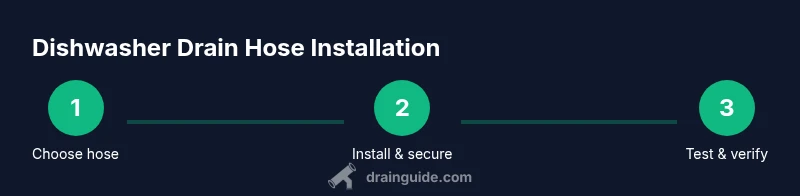
You will learn how to select, install, and secure a dishwasher drain hose to prevent leaks and clogs. This guide covers proper hose size, high-loop/backflow prevention, adding a counter-clip, and testing for leaks. By following these steps, you’ll reduce drainage issues and protect your kitchen from water damage. We’ll discuss common mistakes and safety precautions to help DIY homeowners. Whether you’re replacing an old hose or installing a new setup, this Drain Guide tutorial keeps things simple.
What the dishwasher drain hose does and why proper routing matters
The dishwasher drain hose carries used wash water from the appliance to the sink drain or disposal. A correctly routed hose helps prevent backflow, leaks, and odors, and it protects your cabinet from water damage. According to Drain Guide, a hose that is too short, sags, or lacks a secure connection is a common source of clogs and leaks in many kitchens. Proper routing begins with ensuring the hose reaches the drain high enough above the bottom of the cabinet and stays free of kinks.
Key reasons to route correctly:
- Prevent backflow into the dishwasher when the sink drain is slow or blocked.
- Avoid water spraying onto floors by maintaining secure clamps at every connection.
- Minimize siphoning risk by keeping a stable, unobstructed path.
In practice, plan the path before you touch tools. Identify the dishwasher outlet under the unit, locate the sink tailpiece or disposal inlet, and consider how the hose will travel from the back of the dishwasher to that point. If your cabinet is tight, you may need a shorter hose with a slightly tighter bend. Always aim for a smooth, continuous line with no sharp turns.
Choosing the right hose and fittings
Most dishwashers use a standard drain hose connection, with an inner diameter commonly around 5/8 inch and a flexible outer shell. Start by checking your dishwasher’s user manual or the hose fitting on the appliance to confirm size. Match that to the plumbing you’ll connect into—either a garbage disposal inlet or a sink tailpiece. When selecting fittings, prefer stainless or plated steel hose clamps rather than cheap plastic, and keep spare clamps handy.
In addition to hose diameter, verify the hose length. It should be long enough to reach the drainage point without stretching, yet not so long that it sags or forms loops that trap debris. If you’re replacing an older hose, measure from the dishwasher outlet to the chosen connection point and add a few inches for flexibility. Drain Guide notes that compatibility and secure connections are more important than raw length.
High loop, air gap, and connection points: picking the correct method
To prevent backflow, plumbers typically require either a high loop or an air gap in many kitchens. A high loop is simply a bend near the underside of the countertop, with the hose secured to a cabinet surface. An air gap is a small device mounted on the countertop or sink deck that ensures water flows through a dedicated pathway. In jurisdictions with stringent codes, an air gap is required; elsewhere a high loop that reaches roughly shoulder height is acceptable. The goal is to create a barrier that stops wastewater from siphoning back into the dishwasher.
When planning the path, avoid placing the hose near hot surfaces or sharp edges. Keep the hose away from sharp metal edges and ensure there are no places where debris can accumulate. If you have a double sink or a metal disposal, consider the most direct route that maintains the high loop and avoids kinks.
Installing the drain hose: preparation and securing connections
First, disconnect power to the dishwasher and close the shut-off valve. Remove the old hose if you’re replacing it, and clean the connection points. Attach the new hose to the dishwasher outlet using a clamp, ensuring a tight fit without deforming the hose. Then route the hose along the planned path toward the disposal or tailpiece, creating the high loop. Securely fasten the hose at several points using stainless clamps or zip ties, avoiding loose sections that could shift. If you use an air gap, install it per the manufacturer’s instructions and connect the short hose from the air gap to the disposer or drain.
Testing for leaks and troubleshooting common issues
Once everything is connected, run a short wash cycle with hot water the first time to test the installation. Look for leaks at every connection, especially where the hose meets the dishwasher outlet, the disposal inlet, and the air gap if used. If you see leaks, tighten clamps a little more or reseat the hose; never overtighten, which can damage fittings. If you notice water pooling in the cabinet, recheck the high loop height and consider an extra strap to secure the hose. Common issues include a loose clamp, a misaligned disposal knockout plug, or a kink near the bend.
Maintenance, care, and long-term durability
Inspect the dishwasher drain hose every six months, especially after heavy use or if you notice any leaks. Check clamps and connections for corrosion or loosening, and replace damaged hoses promptly. Clean the hose by flushing with warm water and a mild, non-corrosive cleaner if you notice buildup or odors. Keep the area under the sink dry, and ensure your high loop remains intact when you move or reorganize cabinets. Proper storage and periodic checks extend the life of your drainage system and reduce the chance of sudden failures.
Safety tips and common mistakes to avoid
Never cut corners on hose length—avoid overly long hoses that sag. Do not reuse old clamps or clamps that look corroded. Do not install the hose with the knockout plug still in the disposal inlet. Always turn off power before working and wear eye protection if cutting or trimming hoses. By avoiding these mistakes, you reduce the risk of flooding and costly repairs.
Tools & Materials
- Dishwasher drain hose(New hose rated for appliance drainage; match inner diameter to outlet)
- Hose clamps (stainless steel or high-quality plastic)(Secure connections; prefer worm-drive or spring clamps)
- Screwdriver or pliers(For clamps and fittings)
- Measuring tape(Estimate length from dishwasher outlet to drain point)
- Bucket and towels(Cleanup during replacement)
- Safety gloves(Protection while cutting or trimming hose)
- Air gap kit (optional)(If local code requires an air gap)
- Disposal knockout plug tool (optional)(If using a disposal connection)
Steps
Estimated time: 60-75 minutes
- 1
Power down and shut off water
Turn off the dishwasher at the circuit breaker and close the sink’s shut-off valve to prevent electrical shock and water leaks while you work. This safety step helps you avoid accidental starts and water spills.
Tip: Double-check that the dishwasher is completely de-energized with the door switch before touching any components. - 2
Remove old hose and inspect connections
If replacing, disconnect the old hose and inspect clamps, fittings, and the dishwasher outlet for wear. Clean the connection points to ensure a good seal with the new hose.
Tip: Look for cracks, split ends, or corroded clamps; replacing damaged parts prevents future leaks. - 3
Measure and cut the new hose to length
Measure from the dishwasher outlet to the chosen drain point and cut the hose with a utility knife or shears, leaving a little extra for flexibility. Avoid overly tight fits that may kink.
Tip: Always cut straight and deburr any plastic edge to prevent hose damage during installation. - 4
Attach hose to dishwasher outlet
Slide a clamp over the hose, fit it onto the dishwasher outlet, and tighten securely without over-tightening. A snug fit prevents leaks at the source.
Tip: Tighten gradually and test fit before routing to confirm a clean seal. - 5
Route hose and form high loop or install air gap
Route the hose along the planned path toward the disposal or tailpiece, creating a high loop that keeps wastewater from flowing back. If you’re using an air gap, install it per the manufacturer’s instructions.
Tip: Secure the hose at multiple points and keep the loop stable during cabinet use. - 6
Connect to disposal or sink tailpiece
Connect the hose to the disposal inlet or sink tailpiece with a clamp. Ensure the connection is straight and free of kinks; alignment reduces stress on fittings.
Tip: If your disposal has a knockout plug, remove it only after you’re ready to connect. - 7
Test run for leaks
Run a short cycle with hot water and observe all connections for leaks. If leaks appear, tighten clamps or reseat the hose. Do not over-tighten fittings.
Tip: Check beneath the sink after several minutes of operation; some leaks appear only after a few minutes.
Got Questions?
What length should the dishwasher drain hose be?
Choose a length that reaches the drain without excessive slack. Avoid tight pulls or loops that trap debris. Measure from the dishwasher outlet to the drain connection and add a few inches for flexibility.
Use a length that reaches the drain with a comfortable bend and avoid sagging or kinks.
Can I use a generic hose for dishwasher drain?
Yes, as long as the hose is rated for appliance drainage and matches the outlet size. Use appropriate clamps and ensure compatibility with your disposal or tailpiece.
A generic hose works if it’s rated for appliance drainage and fits your fittings.
Do I need an air gap?
Some local codes require an air gap, while others permit a secure high loop. Check your municipal code and the disposal/inlet configuration to determine the best option.
Air gaps are code-dependent; follow local requirements or opt for a high loop with proper height.
What should I do if I notice a leak after installation?
Turn off power, recheck all clamps and connections, reseat the hose, and ensure the high loop is clear of obstructions. If leaks persist, replace worn components.
If there’s a leak, power off, tighten or reseat, and replace worn parts if needed.
How often should I inspect the drain hose?
Inspect the hose and clamps every 6–12 months, or after a heavy-use period. Look for cracks, corrosion, and loosened clamps, and replace as needed.
Check the hose and clamps every 6 to 12 months and after heavy use.
Watch Video
The Essentials
- Verify hose size and length before installation
- Choose high loop or air gap per code and practicality
- Secure all connections with quality clamps
- Test for leaks after the first run and re-tighten if needed
- Perform regular maintenance to prevent future failures