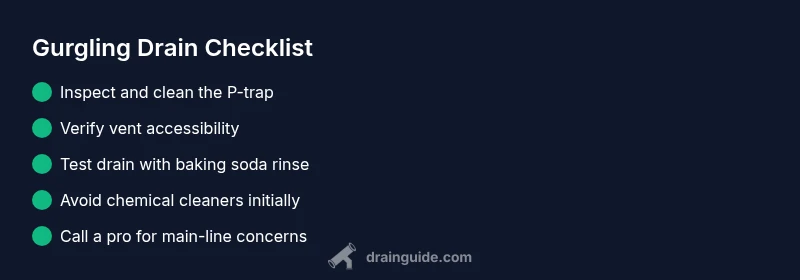
Drain is Gurgling? Quick Troubleshooting Guide
Urgent guide for homeowners: diagnose why drain is gurgling and fix safe, practical steps to restore quiet, clear drains. Includes when to call a pro. Drain Guide.


Drain is gurgling usually means an air pocket forming from a partial clog or venting issue that lets air bubble through the water in the trap. Start with a quick safety check: inspect and clean the P-trap under the sink, flush with hot water and baking soda, and avoid chemical cleaners. If the sound persists, check the vent or call a pro.
Understanding the sound of drain is gurgling and what it means
When you hear drain is gurgling as water drains, it signals air trying to escape through the water in the trap. This is typically caused by a partial clog further down the line or a venting issue that isn’t pulling air out of the system efficiently. The Drain Guide team has found that most gurgling drains respond to targeted fixes rather than harsh chemical cleaners. Understanding the root cause helps you choose safe, effective steps without creating new problems. In this guide, we’ll explore practical diagnostics, safe fixes, and prevention tips tailored for homeowners and DIY enthusiasts. Expect clear, actionable steps you can take today to quiet noisy drains and prevent future gurgling.
Quick checks you can safely perform
Before you disassemble pipes, try these quick, safe checks:
- Inspect the P-trap under the sink for visible clogs or debris; remove and clean if necessary.
- Ensure the trap has water in it and is sealing properly; a dry trap can cause odd sounds.
- Look for a clogged clean-out or a blocked dishwasher air gap (if applicable).
- Flush the drain with hot water followed by a baking-soda-and-water rinse to dislodge minor buildup.
- Do not use harsh chemical drain cleaners as a first resort; they can damage pipes and traps and won’t fix venting issues. Respect safety procedures and wear gloves.
Common causes in order of likelihood
Here are the most frequent culprits behind a gurgling drain, listed from most to least likely:
- Partial clog in the trap or drain line (hair, grease, food debris).
- Venting issue (blocked roof vent or vent pipe leading to the stack).
- Improper slope or hidden drain line damage.
- Shared vent problems in multi-fixture setups or a blocked main line (less common but serious).
Each cause has different remedies, so targeted diagnosis is essential to avoid unnecessary fixes.
Diagnostic flow: symptom → diagnosis → solutions
If the symptom is a gurgling drain, start with simple checks (trap, clean-out, vent access). If those checks fail to resolve the sound, move to more deliberate diagnostics like a hand auger or professional vent inspection. Solutions should match the diagnosed cause: minor clogs respond to trap cleaning, vent issues require vent clearance or professional inspection, and suspected main-line problems should trigger a pro visit. This flow keeps safety intact and prevents unnecessary pipe damage.
Step-by-step fix for the most common cause
The most common fix for a gurgling drain starts with the P-trap. Remove the trap, clear out debris, and reassemble securely. Then flush with hot water and a baking-soda rinse to prevent future buildup. If the gurgling persists, inspect the drain line for minor obstructions and test the vent. For any sign of a sewer smell or backups, stop and call a plumber to avoid hazardous exposure. This approach targets the most frequent culprits without rushing to chemical cleaners or invasive procedures.
Tips & Warnings
- Safety first: use gloves, eyewear, and bucket to catch water and debris.
- Avoid chemical drain cleaners in gurgling drains; they may worsen vent issues or damage seals.
- Keep a simple maintenance routine: monthly hot water rinse, baking soda, and a yearly trap check.
- If you’re uncomfortable with any step, or the sound persists after basic fixes, seek professional help promptly to rule out main-line or venting problems.
Prevention and maintenance for quiet pipelines
To minimize future gurgling, adopt a routine that keeps traps sealed and vents clear. Regularly inspect kitchen and bathroom sinks for slow drainage, avoid pouring grease down disposals, and use a mesh screen to catch hair and debris. Periodic professional vent checks can catch issues before they become noticeable noises. A proactive approach keeps drains quiet and reduces the chance of backups or odors.
When to call a professional for gurgling drains
If the gurgling persists after you’ve performed the safe checks and basic fixes, or if you notice sewage odors, slow drainage on multiple fixtures, or water backups, it’s time to involve a licensed plumber. Persistent gurgling can indicate a vent stack problem, main-line obstruction, or septic/sewer-related issue that requires specialized tools and expertise.
Steps
Estimated time: 45-60 minutes
- 1
Shut off water and prep
Place a bucket under the P-trap and assemble tools. Shut off the water supply to the sink to prevent spills while you work.
Tip: Have towels handy for spills and a camera to document the setup before disassembly. - 2
Remove and clean the P-trap
Place a container beneath the trap and use pliers to loosen the slip nuts. Clean out hair and debris from the trap and the elbow pipe.
Tip: Keep track of small parts; take a photo for reassembly if needed. - 3
Reassemble and test
Reattach the trap tightly, ensuring a water-tight seal. Run hot water for several seconds to flush residual debris.
Tip: Check for leaks after reassembly; tighten nuts if you see moisture. - 4
Flush with baking soda and hot water
Pour a cup of baking soda, followed by hot water, down the drain to loosen buildup and deodorize.
Tip: Avoid boiling water if the pipes are PVC joints that may have low heat tolerance. - 5
Inspect the vent path
If you have access to the vent path, look for obvious blockages or buildup, especially in roof vents. Avoid climbing on the roof if you’re unsure.
Tip: If roof access is daunting, contact a pro for vent inspection. - 6
Test the system and monitor
Run multiple drain cycles to confirm the gurgling has subsided. Note if any other fixtures show similar symptoms.
Tip: Keep a log of which fixtures are affected and when the sound occurs.
Diagnosis: Kitchen sink or bathroom drain sounds gurgly when water drains
Possible Causes
- highPartial clog in trap or drain line
- mediumVent stack blockage or poor venting
- lowImproper slope or hidden pipe damage
- lowMain sewer line issue
Fixes
- easyClear debris from the P-trap and reassemble securely
- mediumInspect and clear vent openings; check roof vent or clean-out access
- mediumCheck drain slope and look for hidden damage; consider professional assessment
- hardIf main line or sewer issue suspected, contact a licensed plumber
Got Questions?
What causes a gurgling drain?
A gurgling drain is usually caused by air being pushed through water in the trap due to a partial clog or venting issue. Other factors can include improper drain slope or a blocked main line.
Gurgling is typically from air in the trap due to a partial clog or venting problem, sometimes from a slope issue or main line blockage.
Is gurgling in multiple fixtures a sign of sewer issues?
If several fixtures gurgle, it could indicate venting problems or a main-line obstruction. Check vents and call a pro if odors or backups appear.
If many fixtures gurgle, it may mean a vent problem or main-line issue; you should check vents and call a plumber if backups occur.
Can baking soda and vinegar fix a gurgling drain?
Baking soda and vinegar can help with minor buildup and deodorizing, but they won’t address venting issues or deep clogs. They’re a light maintenance step.
Baking soda and vinegar might help a little, but they won’t fix venting or deep clogs; they’re more of a maintenance step.
Should I use chemical drain cleaners for gurgling drains?
Chemical drain cleaners are not recommended for gurgling drains as a first fix; they can damage pipes and traps and don’t reliably address venting problems.
Chemicals aren’t a good first fix for gurgling drains; they can damage pipes and misaddress venting issues.
When should I call a professional for gurgling drains?
Call a plumber if basic fixes don’t resolve the issue, or if you notice sewage odors, backups, or signs of a main-line problem.
If basic fixes don’t help or you smell sewage, call a professional plumber.
What can block vent pipes besides leaves?
Roof or vent pipes can accumulate debris, nests, or snow; a blocked vent prevents air from escaping and can cause gurgling. A professional can safely inspect roofs and vents.
Vent blockages can be caused by debris or nests; a pro can inspect safely.
Watch Video
The Essentials
- Inspect the P-trap first; it’s the most common culprit.
- Vent issues require direct attention; don’t ignore a noisy vent.
- Avoid chemical cleaners as a first resort for gurgling drains.
- Call a professional if the noise persists or you notice odors or backups.