Electric Drain Cleaning: A Practical DIY Guide
Learn how to safely perform electric drain cleaning with a step-by-step workflow, essential tools, safety tips, and maintenance advice to restore free-flowing drains without professional help.


This guide shows how to perform electric drain cleaning safely and effectively, from selecting the right powered auger to completing a clog-clearing cycle without harming pipes. According to Drain Guide, you’ll learn tool choices, essential safety steps, a practical workflow, common mistakes to avoid, and how to verify a clear drain, in under an hour with minimal disruption.
What is electric drain cleaning?
Electric drain cleaning uses powered augers (electric snakes) to break up or grab clogs that hand tools can’t dislodge. The rotating cable works inside the pipe to cut through hair, grease, soap scum, and mineral deposits, while the tool’s motor provides consistent torque. Compared with manual snakes, electric models can reach deeper sections and maintain steady pressure, reducing the risk of operator fatigue. For homeowners, it’s a practical way to tackle stubborn blockages in sinks, showers, and tubs when water won’t drain properly or gurgling returns after flushing. Drain types matter; plastic components tolerate less aggressive agitation than metal systems, so choose the auger accordingly and follow manufacturer recommendations to avoid damage. Drain Guide emphasizes using the correct cable diameter and length for the job, plus proper safety precautions to protect yourself and your fixtures.
Is electric drain cleaning right for your home?
Electric drain cleaning is usually appropriate for stubborn clogs in residential plumbing, especially when routine plunging fails. It’s particularly effective for hair blocks in bathroom drains and grease clogs in kitchen lines, but you must respect pipe material and fixture design. PVC pipes tolerate augers well when used carefully, yet old galvanized or cast-iron lines can be more sensitive to aggressive feeding. Consider access to the drain, the presence of a trap, and whether you have a cleanout or an accessible opening for straight-line insertion. Drain Guide notes that if you’re unsure about pipe condition, drilling into the wrong spot or forcing the cable can cause leaks or joint damage; in such cases, pause and consult a professional.
Choosing the right tools and safety gear
Start with a powered auger that matches the clog location and pipe diameter. Look for models with adjustable speed, sufficient cable length, and a comfortable handle. Always wear safety goggles, non-slip gloves, and sturdy footwear. A bucket, towels, and a flashlight keep your work area clean and well-lit. If a trap removal is necessary for better access, have pliers handy. Read the device’s manual for proper cable feeding direction and stopping points. Drain Guide’s guidance emphasizes pre-checking the drain’s accessibility and choosing a tool that won’t exert excessive force on joints.
Common mistakes and how to avoid them
Rushing the insertion or forcing the auger can bend or snap the cable and damage the pipe. Using too much pressure against a hard, immovable blockage may also crack fixtures. Avoid using chemical drain cleaners in combination with electrical tools, as chemical reactions can cause unpredictable behavior in the line and lubricants. Don’t skip safety gear or neglect disconnecting power when adjusting the tool. Take time to inspect the trap and remove any debris safely. Drain Guide cautions that improper technique can lead to return clogs; slow, deliberate feeding with frequent pauses is often more effective than brute force.
Preparing your workspace and drain access
Clear the area around the sink or shower, lay down towels, and place a bucket to catch water. If you have a cleanout, remove the cap to gain direct access; otherwise, you may need to disassemble a trap to gain entry. Plug nearby outlets or unplug the auger when not actively using it to avoid accidental starts. Check for standing water and drain it away as needed before you begin. A bright flashlight helps you monitor cable progression and identify when you’ve reached a clog or a bend in the pipe. Drain Guide recommends testing the drain with a slow, controlled feed before applying full torque to avoid sudden resistance.
Extending reach for stubborn clogs
If the clog resists, gently rotate the auger’s handle while advancing the cable; avoid yanking or forcing the line, which can damage joints. When you feel resistance, pause, reverse, and retract slightly before continuing forward. For particularly deep clogs, you may need a longer cable or a second entry point. Cleaning the cable between attempts prevents transferring debris deeper into the system. After clearing a blockage, run hot water to flush particles and verify flow. Drain Guide notes that patience with longer feeds often yields better results than quick, repeated short pushes.
Maintenance after use and prevention tips
Clean the auger thoroughly, wipe dry, and store it in a dry area to prevent corrosion. Inspect the cable for kinks or wear and replace damaged sections promptly. Rinse the trap area and dry it to prevent mold. Regularly clear hair from traps and screens, and consider installing mesh strainers to catch debris before it enters the pipes. For prevention, establish a routine drain-cleaning schedule, avoid pouring oil or grease down drains, and run hot water after use to reduce buildup. Drain Guide emphasizes routine checks and timely maintenance to extend tool life and preserve pipe integrity.
When to call a professional
If you encounter a blockage that won’t budge after multiple attempts, or if you notice persistent slow drainage despite cleaning, professional diagnosis is warranted. Signs of deeper issues include frequent backups, strong sewer smells, or unusual noises in the pipes. A licensed plumber can assess pipe condition and service the main line if needed. Drain Guide’s verdict is to escalate to professional help when there’s risk to the plumbing system or unknown pipe materials.
],
toolsMaterialsThaiIncorrectFieldNoteRemovedInFinal
Tools & Materials
- Powered electric drain auger (electric snake)(Choose a model with at least 15 ft of cable and adjustable speed if possible.)
- Safety goggles(Protect eyes from splashes and debris.)
- Work gloves (rubber-coated)(Grip and hand protection.)
- Bucket(Catch water and debris during operation.)
- Old towels or rags(Keep work surface dry and clean up spills.)
- Flashlight or headlamp(Bright light to inspect the drain area.)
- Pliers or small adjustable wrench(Useful for loosening traps if needed.)
- Plumbing-safe cleaner or cleaning cloth(Optional for post-cleaning after the job.)
Steps
Estimated time: 45-75 minutes
- 1
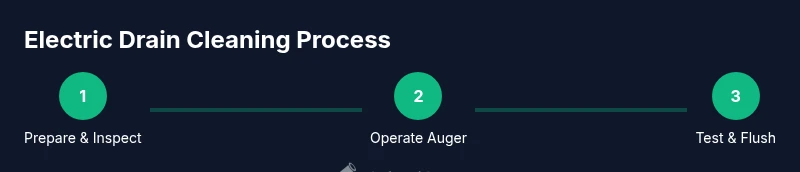
Prepare and safety-check
unplug the auger, put on PPE, and clear the workspace. Inspect the area to identify the access point and remove any obstacles that could hinder cable alignment. This step reduces the risk of accidental starts and helps you work more comfortably.
Tip: Double-check that the device is unplugged before handling the cable. - 2
Access the drain
Expose the drain access by removing the trap if necessary or opening a cleanout. This creates a direct path for the auger and helps you reach the clog without forcing the tool through bends.
Tip: If you must remove a trap, have a bucket ready to catch water and debris. - 3
Attach and insert the auger
Feed the cable into the drain slowly, keeping tension on the cable and guiding it toward the clog. Stop feeding when you feel resistance or reach a bend. Maintain steady speed to avoid kinks.
Tip: Never push beyond resistance; back off and reassess rather than forcing forward. - 4
Engage and break up the clog
Operate the auger with a controlled rotation to break up the clog. Pause occasionally to prevent overheating the motor and to test progress by running water.
Tip: If you can’t move past the clog after several attempts, consider a longer cable or another entry point. - 5
Retract and clean the cable
Slowly retract the cable while rotating to prevent debris from catching on the edges. Wipe the cable and inspect for nicks or wear that could indicate damage.
Tip: Never yank the cable while retracting; a gentle, steady pull is safer. - 6
Flush and test the drain
Run hot water for several minutes to flush the line. Check for smooth drainage and remove any remaining debris with a rag or plunger if needed.
Tip: If drainage remains slow, repeat the process starting from Step 3 with a new portion of cable. - 7
Clean up the work area
Disassemble the setup, wipe surfaces, and store the auger dry and clean. Dispose of any debris according to local guidelines.
Tip: Clean tools promptly to prevent corrosion and ensure longevity. - 8
Evaluate results and plan maintenance
Assess drainage performance and decide on preventive steps, such as routine maintenance or a future check for potential sewer line issues.
Tip: Schedule regular maintenance to minimize future clogs and extend pipe life.
Got Questions?
What is electric drain cleaning?
Electric drain cleaning uses a powered auger to clear clogs by breaking up or pulling debris through the pipe. It’s more effective for stubborn blockages than manual methods and can reach deeper sections of the plumbing system.
Electric drain cleaning uses a powered auger to clear clogs deep in the pipes, often working when plungers fail.
Is electric drain cleaning safe for PVC pipes?
Yes, when used correctly with the appropriate cable and technique. Avoid excessive force and choose a cable size that suits the pipe diameter to minimize the risk of damage.
Yes, if you use the right cable size and apply gentle, controlled movements.
Can I use chemical drain cleaners with an electric auger?
Do not mix chemical cleaners with powered augers. Chemicals can react unpredictably, damage pipes, and create hazardous fumes.
No, don’t mix chemical cleaners with an electric auger.
When should I call a professional?
Call a professional if the clog persists after multiple attempts, you smell sewer gas, or drainage remains slow despite cleaning—these can indicate deeper sewer or pipe issues.
Call a pro if the clog won’t clear, smells indicate sewer gas, or drainage stays slow after cleaning.
What maintenance should I do after using an auger?
Rinse and dry the auger, inspect the cable for wear, and store it in a dry place. Clean traps and the work area to prevent corrosion and mold growth.
Rinse, dry, and inspect the auger, then store it safely and clean up the area.
Are there safety risks with electric drain cleaning?
There is a risk of electric shock near water and potential pipe damage if used improperly. Always unplug the tool when not in use and wear PPE.
There are some safety risks; always unplug the tool when not in use and wear PPE.
Watch Video
The Essentials
- Learn how to safely perform electric drain cleaning
- Choose the right auger and protective gear
- Follow a careful step-by-step process
- Verify drainage flow and perform post-cleaning maintenance