Footing Drain vs French Drain: A Practical Comparison
Learn how footing drain vs French drain differ, when to choose each, and practical homeowner tips for placement, materials, and maintenance to protect foundations and improve landscape drainage.


In most homes, footing drains protect foundations by intercepting groundwater around the foundation, while French drains manage surface and subsurface water along landscapes. When comparing footing drain vs french drain, placement, purpose, and soil conditions drive the best choice. Both systems rely on perforated pipe, media, and proper outlets to move water away efficiently.
Defining the concepts: footing drain and French drain
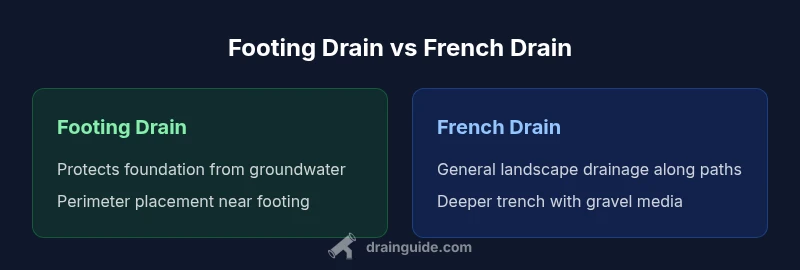
In residential drainage, two common terms often confuse homeowners: footing drain and French drain. The main difference between footing drain vs french drain is their primary objective and placement. A footing drain is designed to intercept groundwater around the foundation and route it away from the footing, reducing hydrostatic pressure on basement walls. A French drain is a more general-purpose drainage trench that collects surface and subsurface water along a landscape path and conveys it to a daylight outlet or sump. For most properties, understanding these distinctions helps you plan where water should go and which system to install first. Tools and materials differ slightly, but both rely on a perforated pipe surrounded by media to slow, filter, and direct water away from problem areas. Throughout this guide, we will compare the two side-by-side and provide practical installation tips, maintenance steps, and cost considerations to help homeowners make informed decisions.
Primary purposes and typical installations
Footing drains are anchored to the foundation, typically running along the perimeter just inside or outside the footing, with the outlet directed away from the structure. They are built to prevent basement dampness, frost heave, and foundation cracking by redirecting groundwater before it reaches the footings. French drains, by contrast, are trench drains placed where water accumulates in landscapes—along driveways, under decks, or in sagging yards. They collect runoff or groundwater and carry it to daylight or a sump well. In many cases, homeowners install both systems in sequence, ensuring foundation protection while also handling general drainage across the yard. The trade-off is complexity and cost, but the payoff is a drier foundation and drier, more usable outdoor spaces. When deciding, map high-water zones, slope, soil type, and the path water takes after a rainstorm.
Structural vs landscaping considerations
Footing drains interact with the building’s structural elements, requiring careful planning around footings, walls, and gravel-free zones to avoid undermining the foundation. The trench proximity to the footing means you must maintain proper backfill and compaction to prevent settlement. French drains are more forgiving from a structural standpoint, as they sit in the landscaping zone and can blend with grading work. However, both systems influence soil moisture and can alter the appearance of borders or beds. When plumbing and electrical lines are present, minor rerouting may be necessary. A professional assessment helps determine whether the soil pressure is high enough to justify a footing drain, or if a French drain will suffice with an efficient surface grading plan.
Design choices: perforated pipe, gravel, fabric
Both systems rely on perforated pipe, but the surrounding media varies with intent. Footing drains commonly use a narrow zone with the perforated pipe close to the foundation and a lighter aggregate fill, sometimes with a moisture barrier or filter fabric near the trench interior. French drains use a deeper, wider trench filled with gravel and fabric to create a wide filtration bed that slows infiltration and traps sediment before water enters the pipe. The choice of pipe material—HDPE, PVC, or corrugated plastic—depends on local codes and existing drainage hardware. Placement of the outlet determines energy losses and drainage velocity, so plan daylight outlets, storm sewer connections, or sump wells accordingly. Always implement a clean-out at the downstream end for maintenance.
Soil and groundwater dynamics impacting performance
Soil type profoundly affects drainage performance. Clay soils tend to retain water and can prolong saturation, making footing drains more critical in preventing hydrostatic pressure. Sandy soils drain quickly but can carry sediment rapidly to the outlet unless filtration media is well designed. High groundwater tables and frequent heavy rains create sustained moisture around foundations, increasing the value of a footing drain. Conversely, sloped landscapes with persistent surface runoff benefit from a French drain that intercepts water before it reaches problem areas. In all cases, the system should be designed to match the expected water volumes and to connect to a suitable discharge path, whether a daylight outlet or a dedicated sump.
Cost implications and installation timelines
Costs for footing drains and French drains vary with length, trench depth, media, and labor. A footing drain tends to require careful integration with foundation walls, which can increase labor time and price, especially on large homes or complex foundations. French drains may be quicker to install in simple landscapes but can require more excavation and media. Seasonal weather, soil moisture, and access constraints influence timelines. In many cases, contractors propose a staged approach: install a foundation drainage component first, then add landscape drainage later if needed. These projects pay off over time by reducing moisture-related issues and protecting structural components.
Maintenance, inspection, and longevity
Maintenance focuses on keeping outlets clear and ensuring gravity flow remains unobstructed. Inspectors should check for root intrusion, sediment buildup, and crushed sections of pipe, especially near daylight outlets. A well-designed system includes a reliable clean-out and a plan for flushing out sediment periodically. Longevity depends on material quality and soil environment; HDPE pipes tend to resist corrosion, while backfill materials must maintain filtration without clogging. Proactive maintenance helps prevent costly failures, such as clogged outlets or broken pipes, and extends the life of the drainage system.
Choosing between footing drain and French drain: decision framework
When water issues are concentrated at the foundation, a footing drain is typically the priority. If the landscape drainage problem is broad or slopes toward the house, a French drain may be the better starting point. In many homes, a hybrid approach works best: a footing drain to protect the foundation, plus French drains to manage surface water across the yard. Create a simple decision matrix that weighs foundation risk, slope, soil type, and available outlets. Consider local climate patterns and your tolerance for ongoing maintenance. Finally, verify that any drainage plan complies with local codes and HOA rules.
Common pitfalls and best practices
Avoid burying drains too deep or away from the downhill slope, which reduces gravity-driven flow. Do not skip filter fabric near gravel media, as sediment will clog the system. Ensure the outlet discharges to an appropriate area and never into basements, crawl spaces, or neighboring properties. Use a proper clean-out and schedule annual inspections, especially after heavy rains or freeze-thaw cycles. Finally, hire a drainage professional for complex foundations or poor soils rather than risking structural damage.
Comparison
| Feature | Footing drain | French drain |
|---|---|---|
| Primary purpose | Foundation protection by intercepting groundwater around the footing | General drainage along landscape paths to manage surface and subsurface water |
| Typical placement | Perimeter around the building footing, often very close to foundation | Along slopes, driveways, decks, or other landscape features |
| Pipe/media configuration | Perforated pipe with light fill near foundation; outlet away from structure | Deeper, wider trench with gravel bed and fabric to filter sediment |
| Filtration approach | Minimal gravel; emphasis on foundation moisture control | Heavy media with gravel and fabric to slow infiltration and trap sediment |
| Soil considerations | High priority in clay or high water table areas | Effective in broad landscape drainage; works well with slopes |
| Maintenance | Outlet clean-out; less accessible to service near foundation | Accessible clean-out; sediment management in landscape trenches |
| Cost/complexity | Typically higher due to foundation integration and precision | Often moderate to high depending on trench depth and media |
| Best for | Protecting foundations and basements from groundwater | Relieving yard saturation and surface water pooling |
Positives
- Direct foundation protection reduces basement moisture risk
- Effective for large landscape drainage when placed correctly
- Can increase property value by mitigating moisture issues
- Relatively straightforward to diagnose with proper outlets and cleanouts
- Allows targeted water management when combined with grading
Cons
- Installation can be intrusive and require professional planning
- Misdesign can shift water toward neighbors or back toward the foundation
- Maintenance relies on outlet accessibility and filter media condition
- Requires careful permitting and adherence to local codes in some areas
Footing drains excel at foundation protection; French drains excel at general yard drainage. Use both where water is a multi-zone problem, with a professional design to balance costs and long-term performance.
Prioritize foundation protection if you have basement moisture concerns. Add landscape drainage if surface pooling or slope water is persistent. A combined approach often yields the best overall drainage and protection.
Got Questions?
What is the difference between footing drain and French drain?
Footing drains run along the foundation to keep groundwater away from the footings, protecting the basement. French drains are broader landscape trenches designed to collect and move water away from yards, decks, or driveways. They serve related but distinct purposes.
Footing drains protect the foundation; French drains handle yard drainage. Both are part of a comprehensive plan.
Can I install a footing drain around my entire house?
A footing drain is closely tied to the foundation and often requires professional assessment and excavation. While some homeowners can handle portions themselves, a full perimeter installation typically benefits from a licensed contractor.
It's possible in parts, but most homeowners hire a pro for a complete perimeter installation.
When should I install footing drain vs French drain?
If groundwater near the foundation causes dampness or basement moisture, start with a footing drain. If the problem is surface or landscape water pooling, a French drain is a logical starting point. In many cases, a hybrid approach works best.
Foundation moisture? Start with footing drain. Landscape pooling? Start with a French drain.
What maintenance is required for these systems?
Regular inspections of outlets and clean-outs are essential. Look for sediment buildup, root intrusion, and crushed sections. Schedule annual checks, especially after heavy rains or thaw cycles.
Keep outlets clear and inspect for sediment; check yearly.
Do these systems require permits or codes?
Permit requirements vary by jurisdiction. Check with your local building department or homeowners association before starting, and ensure compliance with drainage and grading codes.
Local rules vary—check with officials before you dig.
Is DIY installation feasible for footing and French drains?
Basic trenching and pipe placement can be doable for simple runs, but complex foundation interactions or poor soils usually require a pro for safety and effectiveness.
Simple runs may be DIY, but complex cases benefit from a pro.
The Essentials
- Assess foundation moisture risk before selecting a system
- Footing drains protect foundations; French drains handle landscape drainage
- Plan daylight outlets and proper discharge paths
- In clay soils or high water tables, prioritize footing drains
- Consult a drainage professional for complex soils or large properties