French Drain vs Trench Drain: A Practical Side-by-Side Guide
Compare french drains and trench drains to decide which drainage solution fits your yard, foundation, and surface runoff needs. Learn design, installation, and maintenance insights for homeowners.


For homeowners evaluating drainage options, the quick verdict is: French drains excel at sub-surface moisture control around foundations, while trench drains shine at handling large surface runoff. When comparing french drain vs trench drain, consider soil conditions, slope, and water source to pick the right approach.
What are french drain and trench drain? Definitions and core roles
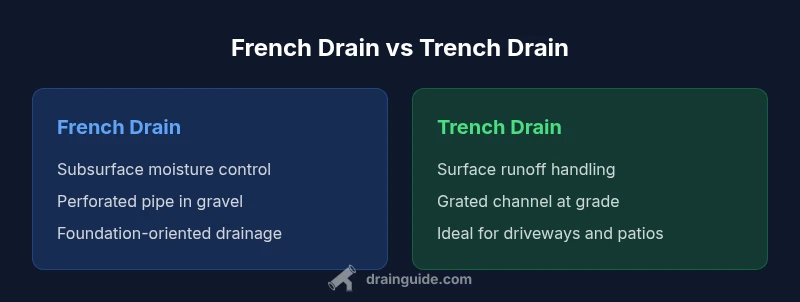
A french drain is a shallow, perforated pipe set in a gravel-filled trench that redirects groundwater away from foundations and low-lying areas. It operates mainly beneath the surface to relieve hydrostatic pressure and prevent damp basements or crawl spaces. A trench drain, by contrast, is a surface channel with a grate that captures and conveys runoff at grade level, such as from roofs, driveways, or patios. In the debate of french drain vs trench drain, the fundamental distinction is subsurface moisture management versus surface water collection. According to Drain Guide Team, choosing the right approach starts with understanding where the water comes from and how it travels through your landscape. Drain Guide Analysis, 2026, emphasizes that soil type, slope, and local rainfall patterns are decisive factors in this decision.
In practice, many homeowners end up needing both systems in different zones of the property. The key is to map water sources, observe flow paths after rain, and then align those observations with the strengths of each system. While a french drain can prevent basement moisture intrusion, a trench drain can prevent water pooling on a driveway or pool deck. This section lays the groundwork for the nuanced comparison of french drain vs trench drain later in the article.
Core design differences: construction, materials, and capacity
The two drainage concepts look different on the ground. A french drain is a dug-out trench containing a perforated pipe wrapped in filter fabric and surrounded by gravel or clean rock. It relies on sub-surface movement and the surrounding soil to disperse water gradually. A trench drain is a concrete or polymer channel installed at grade with a grate on top. It collects surface water as it runs across a surface and moves it to a designated discharge point. Here, the crucial decision in the french drain vs trench drain debate is not only how water is collected but where it is meant to travel next. Perforated pipes versus solid channels, gravel backfill versus concrete channels, and the presence or absence of grates all affect maintenance, infiltration rate, and long-term durability. Drain Guide stresses that the installation quality and the surrounding landscape have a larger impact on performance than the chosen system alone. Across soil types from sandy to clay, the path water takes after discharge determines the system that will perform best for your site.
In many projects, homeowners opt for a hybrid approach: a french drain to handle underground moisture around a foundation, complemented by a trench drain to manage surface runoff from a walkway or patio. The choice often hinges on the water source and grade; steeper slopes favor quick surface conveyance, while flatter terrains require deliberate sub-surface management to prevent pooling downstream.
When to choose a French drain
If your primary concern is sub-surface moisture—especially around a foundation, crawl space, or basement—then a french drain is often the better choice in the french drain vs trench drain decision. French drains work well in soils with moderate permeability where water can migrate laterally toward a perforated pipe. They are particularly effective when the water table rises or when damp soils persist after rain. Homeowners with basements or high humidity in lower levels will often find relief through a properly designed french drain that collects groundwater before it reaches the living space. Drain Guide observations highlight that site-specific soil composition and hydrostatic pressure are the most influential variables, more so than aesthetic considerations or cost alone. In practice, plan for a trench width that suits the pipe size and backfill and ensure minimal encroachment on landscaping when routing the trench. A well-designed french drain can be a quiet, durable solution with low maintenance if properly installed and covered with proper fabric and gravel.
When to choose a trench drain
A trench drain excels at rapid surface water removal, making it a strong candidate for areas with frequent surface runoff such as driveways, patios, or pool decks. When you expect straightforward, heavy rainfall-driven flows, a trench drain provides immediate conveyance to a lower discharge point, helping prevent water from pooling in high-traffic zones. The trench drain's surface channel, often paired with a grate, can be integrated into hardscape plans for both functional and aesthetic reasons. It is especially useful where water cannot easily infiltrate the soil or where surface contaminants must be blocked at the point of entry. The choice between french drain vs trench drain in this scenario should consider the expected water volume, debris load, and the grading of the surface to ensure the channel remains unclogged and effective during storms. Drain Guide notes that local drainage codes and surface slope should be evaluated before installation to avoid unintended sediment transport or erosion.
Installation considerations: planning, materials, and permits
Planning a french drain or trench drain requires a site survey, a grading plan, and a realistic assessment of maintenance needs. For french drains, soils with good infiltration and moderate permeability respond well, but very sandy or very clay-heavy soils may require adjustments in backfill or incorporate a dual-flow design. In trench drains, the surface environment, grate type, and drainage channel capacity drive the material choice and installation depth. Permits may be needed for larger projects, especially if the drainage discharges into stormwater systems or requires trenching in public rights-of-way. Whether you pursue a DIY install or hire a professional, prepare clear diagrams, measure the length of the channel or trench, and specify the discharge path. Drain Guide advocates a detailed site analysis as the foundation for any project in the french drain vs trench drain comparison, noting that proper backfill selection and filter fabric are essential to prevent clogging and ensure long-term performance.
Performance and maintenance: longevity, clog resistance, and upkeep
Maintenance hinges on how well water is directed and how well debris is managed. French drains require periodic inspection of the trench for sediment buildup and sediment control in the gravel layer; a clogged perforated pipe can reduce efficiency and increase moisture around the foundation. Trench drains depend on grate and channel cleanliness; leaves, dirt, and other debris can obstruct flow and cause backups if not addressed. The longevity of either system improves with proper installation, proper backfill, and a covered, filtered trench or channel that minimizes sediment intrusion. Drain Guide emphasizes routine checks after heavy rain events, flushing or broom-cleaning the channel or pipe as part of a proactive maintenance plan. Debris management, sediment control, and ensuring a clear discharge path help maintain the effectiveness of either system in the long run, reinforcing that the french drain vs trench drain decision should also be guided by how easy it is to maintain in your climate and landscape.
Cost and timeline considerations
Cost and schedule are influenced by scope, soil, and local labor costs. For most homeowners, a key part of choosing between a french drain and a trench drain is understanding that costs may vary with materials, trench depth, backfill, and whether permits are needed. Materials like perforated pipe, geotextile fabric, gravel, and concrete or polymer channels each contribute differently to the overall price. In addition, excavation time, backfill quality, and coverage with soil or pavers affect both the time to complete and the final appearance. Drain Guide analysis shows that regional differences and site constraints can shift the overall budget and timeline, so a site-specific estimate is necessary for an accurate plan. Plan on a realistic schedule that allows for inspection and adjustments, rather than rushing the installation to save costs, to ensure reliable performance for years to come.
Common myths and mistakes to avoid in the french drain vs trench drain decision
A common myth is that bigger is always better. In reality, the right size depends on water source, slope, and soil. Another pitfall is skipping a proper filter fabric or using inadequate backfill, which can accelerate clogging and reduce performance. In some cases DIY installations neglect to trench the soil profile correctly, leading to uneven sewer-grade slopes or misaligned discharge. Drain Guide's experience indicates that the most consistent outcomes come from a thorough site assessment, accurate channel or trench design, and attention to local codes. A thoughtful approach to the french drain vs trench drain debate minimizes the risk of over-engineering or under-serving the project, ensuring long-term effectiveness and peace of mind for homeowners.
How Drain Guide evaluates your property: a practical framework
Drain Guide proposes a simple, repeatable framework to compare french drain vs trench drain across properties. Start with a water source map: identify groundwater, roof runoff, and surface water. Then assess soil permeability, slope, and the final discharge destination. Finally, consider maintenance capacity and local codes before selecting a system. By following this framework, homeowners can make an informed choice grounded in site realities rather than marketing claims. The Drain Guide Team promotes this approach as a reliable way to balance performance, cost, and ease of maintenance when deciding between the french drain and trench drain options.
Comparison
| Feature | French Drain | Trench Drain |
|---|---|---|
| Water handling focus | Subsurface moisture control around foundations and basements | Surface runoff downspouts, driveways, and patios |
| Typical installation depth | Shallow to moderate depth below grade | At or above grade level with a surface channel |
| Primary channel | Gravel-backed trench with perforated pipe | Concrete or polymer channel with a grate |
| Maintenance needs | Periodic inspection of gravel and pipe; potential pumping for severe infiltration | Regular debris removal from grate; occasional cleaning of channel |
| Best for | Foundations, basements, damp crawl spaces, soil-driven drainage | Patios, driveways, and areas with high surface runoff |
Positives
- Subsurface drainage reduces basement dampness
- Low-profile footprint blends with landscape
- Long-term effectiveness with proper installation
- Flexible design options for various soils
Cons
- Higher upfront installation effort and cost
- Requires careful backfill and fabric to avoid clogging
- May need professional design for complex properties
- Limited effectiveness for large-scale surface runoff without adjuncts
French drain generally performs better for foundation moisture; trench drain excels at rapid surface runoff control
Choose a french drain for sub-surface moisture management around structures. Opt for a trench drain when surface water in hardscape areas is the primary concern.
Got Questions?
What is the primary difference between a french drain and a trench drain?
The primary difference is where water is collected: a french drain handles subsurface moisture with a perforated pipe in a gravel trench, while a trench drain collects surface runoff through a grate at grade. The choice depends on the water source and drainage goal.
French drains collect water under the ground, trench drains collect water on the surface.
When should I install a french drain instead of a trench drain?
Install a french drain when damp soil or groundwater threatens foundations or basements. It’s best for subsurface moisture control rather than immediate surface flooding.
Choose a French drain for subterranean moisture control.
Can I install either drain system myself?
DIY installation is possible for simple sites, but most projects benefit from professional design to ensure correct slope, backfill, and discharge routing. Complex sites may require permits.
DIY is possible but plan for professional help if in doubt.
What maintenance is typical for these drains?
French drains require periodic inspection of the trench; trench drains need grate cleaning and debris removal. Both benefit from confirming the discharge path remains clear after storms.
Regular checks and cleaning keep both systems working.
Are there code requirements I should know?
Local codes govern discharge points and setbacks. Always check with your municipal authority before starting an installation to avoid violations or improper drainage.
Check local codes before you install.
Is one option universally better than the other?
No single option fits every site. Evaluate water source, soil, slope, and traffic patterns to decide whether french drain vs trench drain provides the best long-term solution.
There isn't a universal winner; match to site conditions.
The Essentials
- Assess water sources before choosing a system
- French drains target underground moisture, trench drains handle surface runoff
- Site conditions and slope heavily influence performance
- Professional design reduces the risk of clogging and failure
- Maintenance planning improves long-term reliability