How to Unclog a Drain with Garbage Disposal
Learn practical, safe steps to unclog a drain with a garbage disposal. This guide covers diagnosing the cause, hands-on clearing methods, maintenance, and when to call a professional for stubborn jams.


Discover how to unclog drain with garbage disposal safely and effectively. You’ll diagnose the clog, perform mechanical clearing first, and apply maintenance tips to prevent future jams. According to Drain Guide, always unplug the unit, secure the area, and start with simple checks before escalating to tools and cleaners for best results.
How clogs form in garbage disposals
Clogs in garbage disposals typically arise when organic fibers, starches, or grease accumulate at the inlet or in the surrounding drain piping. Fibrous foods like celery and onions can wind around the impeller, while grease and oils cling to the walls of the pipe, trapping other debris. Over time, this build-up reduces water flow and creates blockages that resist normal draining. According to Drain Guide, the most common culprits are food particles that don’t dissolve and fats that solidify in the trap. Understanding these dynamics helps you target the right area—whether it’s the disposal inlet, the P-trap, or the drain line behind it—during the clearing process. A proactive approach also lowers the chances of recurring clogs, making future maintenance simpler and cheaper for homeowners.
Safety first: power, water, and hands
Before you touch anything, safety must come first. Always unplug the disposal or switch off the circuit breaker to eliminate the risk of accidental blade rotation. Do not place hands or tools into the disposal while it’s connected to power. Wear sturdy gloves and use a flashlight to clearly inspect the interior and the drain pathway. Keep a bucket and towels ready to catch water and debris. These precautions protect you from sharp edges and avoid electrical hazards while you work. If the area is wet or slippery, pause and dry the surface before continuing.
Quick diagnostic checks you can do
Start by ruling out a sink clog versus a jam inside the disposal. Remove the disposal’s bottom cover if accessible and look for any obvious obstruction. Check the P-trap under the sink for standing water or items that shouldn’t be there. If you detect standing water or a foul odor in the trap, clear the trap as needed. Use a flashlight to search for stuck utensils or large pieces of food. If the disposal hums but won’t turn, that typically indicates an obstruction near the impeller, not an electrical fault. Keep the water running while you test, and note any unusual noises that may indicate a damaged component.
Mechanical clearing methods: tools and approaches
Mechanical clearing relies on physical methods to remove jams. Start with basic tools such as tongs or needle-nose pliers to extract obvious debris. A bucket of water and a plunger can help create pressure to loosen blockages in the trap or drain line. If the jam is stubborn, a hand auger (drain snake) can be threaded into the drain side of the disposal to break up or pull free the obstruction. Rotate the auger slowly as you advance to minimize damage to the pipes and blades. Always maintain a dry, organized workspace to avoid accidental slips or misplacements of tools.
Clearing jams with a plunger and tongs: step-by-step
Use your sink plunger to seal the drain opening and create suction that may dislodge clogs in the trap or near the disposal inlet. Press the plunger firmly and perform several short, forceful pumps. Remove the plunger and check for water flow; repeat if necessary. Simultaneously, use tongs or pliers to grab loose debris visible inside the disposal or accessible in the trap. Do not poke blindly; work slowly to avoid pushing debris further into the line. After removing debris, run cold water to verify that the flow improves and the disposal operates smoothly.
Using a drain auger through the disposal inlet
Feed the drain snake into the disposal inlet with light, steady pressure while turning the handle clockwise. When you encounter resistance, pause and gently twist to break up the obstruction. Withdraw the auger slowly to pull debris free, then re-test with water. If you feel resistance that won’t yield, back out the tool and reassess the path; forcing it can damage the blades or the motor. Clean the auger tip after use to prevent transferring residues into the drain.
Enzymatic cleaners and when to avoid chemical cleaners
Enzymatic cleaners are a gentler alternative to harsh chemical cleaners and are less likely to harm PVC pipes or the disposal’s seals. They gradually break down organic matter, which can help prevent future buildup. Avoid caustic or acidic chemical drain cleaners, especially when a disposal is present; these products can corrode metal parts and degrade seals, increasing the risk of leaks or motor damage. For stubborn, persistent clogs, consider a professional evaluation rather than mixing options that may compromise your system.
Reassembling, testing, and preventive maintenance
After clearing the clog, reassemble any removed components and run plenty of cold water through the system for several seconds to confirm clearance. Check that the disposal sounds normal within a few seconds of starting. If the unit still hums or leaks, stop and inspect the seals and electrical connections. Preventive maintenance includes running cold water while grinding small amounts of food, avoiding fibrous wastes, and cleaning the grind chamber monthly with a gentle brush. Regularly inspect the P-trap for buildup and clean as needed to reduce future clogs.
Authoritative sources
For further reading on safe residential drainage practices, consult these sources: https://epa.gov/homes, https://extension.umn.edu, https://extension.psu.edu. These resources provide guidance on household plumbing safety, maintenance basics, and best practices for clearing minor clogs without damaging the disposal or piping. Always cross-check recommendations with a local licensed plumber if you’re unsure about any step.
Tools & Materials
- Bucket or large container(To collect water and debris)
- Dish soap(A small amount to help loosen grease)
- Heavy-duty rubber gloves(Protect hands from sharp edges)
- Flashlight(To illuminate the inside and trap)
- Tongs or needle-nose pliers(For removing visible obstructions safely)
- Sink plunger(Used to pressurize and loosen blockages)
- 12- to 18-inch drain snake (hand auger)(Breaks up stubborn jams beyond the trap)
- Rags or towels(Keep area dry and clean)
- Safety glasses(Eye protection if splashing occurs)
- Flat-head screwdriver(Only if needed to remove housing)
Steps
Estimated time: 30-45 minutes
- 1
Power down and secure
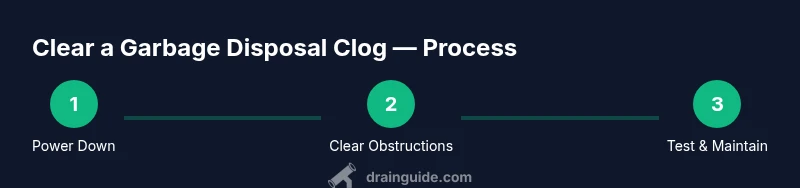
Unplug the disposal or switch off the circuit breaker. Verify there is no power by attempting the reset button and inspecting for any residual motion. Keep hands away from the blades and ensure the area is dry before touching any components.
Tip: Double-check the power is truly off—a live unit can rotate suddenly even after rinsing. - 2
Inspect area and remove obvious debris
Look inside the inlet and around the trap for visible clogs. Use tongs to remove any large pieces of food, plastic, or wrappers. Wipe the interior and the sink area with a damp cloth before proceeding.
Tip: Only remove material that you can reach safely; forcing your hand deeper can injure you or damage the unit. - 3
Reset the disposal and test
Find the reset button on the bottom of the unit and press it firmly. Plug the unit back in or turn the circuit back on, then run cold water and switch on the disposal to test if it operates smoothly.
Tip: If the reset button pops out again, you may have a deeper jam or a faulty motor. - 4
Clear jams with tongs or a snake
Use tongs to retrieve visible obstructions. If you detect a jam deeper in the line, carefully feed the drain snake through the disposal inlet while turning the handle slowly. Stop if you feel resistance and back out gently.
Tip: Never insert metal objects into the disposal—this can damage blades or cause injury. - 5
Flush and re-test
After removing obstructions, run cold water through the system for several seconds. If the sink drains slowly, repeat the clearing steps once more before concluding.
Tip: Keep a consistent flow of water to carry debris away from the disposal and prevent re-clogging. - 6
Maintenance to prevent future clogs
Regularly clean the disposal chamber with a brush and run water with small, non-fibrous food particles. Avoid dumping grease or coffee grounds down the disposal and periodically check the trap for buildup.
Tip: Run a weekly quick rinse with water to maintain free-flowing drains.
Got Questions?
Can I safely use a plunger on a clogged garbage disposal?
Yes, you can use a plunger to try to clear a clog around the disposal, but ensure a proper seal and avoid forcing material into the unit. If plunging doesn’t relieve the clog, proceed with mechanical clearing or a drain snake.
You can try a plunger, but don’t force it; if it doesn’t work, move to mechanical methods.
Do coffee grounds or fibrous foods cause disposals to clog?
Fibrous foods and grease are common culprits. Coffee grounds can accumulate, but it’s the combination of fibrous material and grease that often causes clogs in the drain lines.
Fibrous foods and grease are the usual culprits, not coffee grounds alone.
What should I do if the disposal won’t reset?
Check the circuit breaker and ensure power is restored. If the reset button still won’t engage, there may be a deeper jam or hardware issue requiring professional service.
If it won’t reset after checking power, you may have a deeper problem and should consider a pro.
How long should I wait before testing again after clearing?
Wait a short period to ensure the area settles, then run cold water and test the disposal. If it remains jammed, repeat the clearing steps or seek professional help.
Give it a moment, then test with cold water again. If it’s still jammed, try again or call a pro.
When should I call a professional for a disposal clog?
Call a professional if multiple clearing attempts fail, if you notice leaking, or if you suspect motor damage or wiring issues.
Call a professional if clearing keeps failing or you see leaks or electrical concerns.
Watch Video
The Essentials
- Unplug before any inspection or clearing.
- Prioritize mechanical clearing over chemicals.
- Test thoroughly after clearing to confirm flow.
- Maintain regular cleaning to prevent future clogs.