HVAC Condensate Drain Line Cleaner: A Homeowner’s Step-by-Step Guide
Learn to safely clean an HVAC condensate drain line with a dedicated cleaner. This homeowner-friendly guide covers when to clean, product choices, and a practical, step-by-step method to prevent clogs and mold growth.


You will learn how to safely clean an HVAC condensate drain line using a dedicated cleaner. This quick process helps prevent clogs, overflows, and mold growth by restoring proper drainage. Before you start, gather gloves, eye protection, a drain-cleaner labeled for condensate lines, a bucket, and towels. Follow the step-by-step method below for a clean, code-compliant maintenance task.
What is an HVAC condensate drain line and why it clogs?
The condensate drain line is a small-diameter pipe that carries water produced by the evaporator coil as humidity condenses into liquid. Over time, minerals, algae, sediment, and biofilm can build up inside the line, causing slow drainage or complete clogs. A clogged condensate line can trigger an overflow pan, indoor humidity increases, and even mold growth in the HVAC cabinet. Regular cleaning with a dedicated hvac condensate drain line cleaner can restore proper flow and protect your home’s air quality.
Drain Guide emphasizes that routine maintenance reduces emergency calls and keeps your cooling system running efficiently. If you notice water pooling near the furnace or a gurgling sound from the drain, it’s a clear sign you should inspect the line promptly.
Key terms: condensate, drain line, overflow pan, mold, biofilm, bacteria. Regular checkups align with best practices for home maintenance and HVAC care.
Safety and preparation
Before you begin, shut off power to the furnace or air handler at the service panel to prevent any accidental startup. Put on eye protection and gloves, and lay down towels or a drop cloth to catch spills. Have a bucket ready for any wastewater and a clean rag for quick wipe-downs. Clear the area around the condensate drain line so you can access the cleanout or access point safely. This step minimizes slip hazards and protects electrical components from moisture exposure. Drain Guide recommends treating this as a normal home maintenance task, not a DIY emergency repair, to avoid rushing.
If your system uses a trap, plan to remove any visible debris with a disposable rag after you drain the line. Keep children and pets away during the process for safety.
Choosing the right cleaner for condensate drains
Pick a cleaner labeled specifically for condensate drain lines. Look for products that are biodegradable, non-acidic, and safe for metal and plastic components. Avoid cleaners that rely on strong acids or bleach, as they can corrode metal parts and damage the surrounding insulation. Read the label for dwell time and recommended dilution, and never mix cleaners with other chemicals. Drain Guide notes that most condensate cleaners are designed to break down biofilm and mineral deposits without harming HVAC components.
Consider stocking a maintenance kit that includes a cleaner, disposable towels, and a small brush for gentle agitation. If you’re unsure, consult the product’s safety data sheet or contact the manufacturer for compatibility guidance. A well-chosen cleaner makes the job safer and more effective over time.
Step-by-step overview
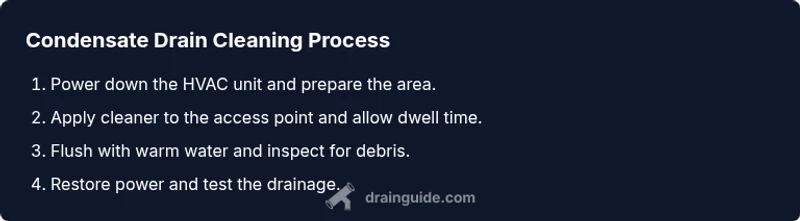
This section provides a high-level view of the process. The detailed, step-by-step instructions follow in the dedicated STEP-BY-STEP block. You’ll perform a controlled clean, then flush the line and verify drainage before returning power to the system. Expect a total task time of under an hour for a typical residential setup, depending on line length and access.
By following a consistent sequence, you reduce the risk of overlooked clogs and ensure a thorough clean. The goal is clear drainage, minimal odor, and reduced risk of water damage or mold growth in the cabinet or attic space.
Maintenance and prevention after cleaning
After cleaning, implement a preventive routine to keep the condensate line clear. This includes a seasonal check of the trap, pan, and line for debris, as well as ensuring proper slope for drainage. If your system does not have a built-in float switch or overflow alarm, consider adding a simple monitoring device to alert you to slow drainage. Regularly inspecting the line and pan helps catch issues early and extend the life of your HVAC equipment.
Recordkeeping is helpful: note the date of each clean and any observations (odor, color of condensate, flow rate). Drain Guide recommends scheduling a yearly check as part of your home maintenance calendar, especially in humid or mineral-rich water areas.
Tools & Materials
- gloves(Nitrile or latex, chemical-resistant; length enough to reach the drain area)
- eye protection(Goggles or safety glasses to protect eyes from splashes)
- bucket or container(Medium-sized, to collect wastewater and drips)
- towels or absorbent rags(For spills and surface protection)
- drain cleaner labeled for condensate lines(Check label for condensate compatibility; avoid acids)
- soft-bristle brush or pipe-cleaning brush(For gentle agitation inside the line if accessible)
Steps
Estimated time: 45-60 minutes
- 1
Power down and prep area
Turn off the HVAC unit at the breaker or disconnect switch and unplug any removable components if accessible. Clear the work area, lay towels, and place a bucket beneath the line’s lower access point. This prevents accidental starts and keeps the space clean while you work.
Tip: Blocking the power prevents injury if the blower fan cycles on during the process. - 2
Locate the drain access point and pan
Find the condensate drain line’s access point and the overflow pan beneath the evaporator. If there’s a trap or clean-out plug, note its location. A clear map of the drainage path helps you plan the cleaning steps and avoid missed sections.
Tip: A flashlight can help you see inside the access point without prodding blindly. - 3
Prepare the cleaner dose
Read the product label to determine the recommended dose for a single cleaning. Do not exceed the stated amount. Prepare the cleaner according to the label, keeping it in its original container and away from children.
Tip: Never mix cleaners with other chemicals; this can create dangerous fumes. - 4
Apply cleaner to the drain line
Pour or inject the cleaner into the access point as directed by the label. If you can access the interior of the line, apply gently to avoid forcing debris further into the system.
Tip: Use a slow, controlled pour to prevent splashing and overflow. - 5
Allow dwell time
Let the cleaner sit in the line for the recommended dwell period (often 5–15 minutes) to break down biofilm and mineral buildup.
Tip: Use this time to inspect nearby areas for leaks or unusual moisture. - 6
Flush the line with water
Rinse the line with warm water to push loosened debris toward the pan. Collect any wastewater in the bucket and wipe surfaces that may have gotten wet.
Tip: Warm water helps dissolve residues better than cold water. - 7
Inspect the drain and pan
Check for obvious clogs dislodged during flushing. Remove any debris with disposable towels or a drain brush, if accessible, and ensure the pan drains freely.
Tip: If you still see slow drainage, do not force the line; reassess the path for additional blockages. - 8
Restore power and test
Reconnect power, run the HVAC fan for a few minutes, and observe the condensate discharge. Confirm the line drains properly and there are no leaks around the pan or access point.
Tip: If in doubt, monitor for 24 hours to ensure the drain remains clear.
Got Questions?
What is an HVAC condensate drain line?
The condensate drain line carries water produced by the evaporator coils as humidity condenses. Keeping it clean prevents overflows, mold, and humidity issues in the home.
The condensate drain line carries water from the AC’s evaporator. Keeping it clean avoids leaks and mold.
Do I need to disconnect power before cleaning?
Yes. Always turn off power to the HVAC unit before starting to prevent injury from sudden starts or shocks.
Yes, power off first to stay safe.
Can I use bleach or vinegar in the condensate line?
Avoid harsh acids or bleach. Use a cleaner labeled for condensate lines and follow the product’s safety instructions.
Avoid bleach—use a product labeled for condensate lines and follow the label.
How often should I clean the condensate drain line?
Clean as part of seasonal maintenance, or whenever you notice slow drainage, odors, or backups.
Clean it as part of your seasonal HVAC checks, when you notice slow drainage.
What are signs of a clogged condensate drain?
Water pooling near the furnace, high humidity around the unit, or a gurgling sound from the drain indicate a clog.
Water pooling or gurgling sounds mean the drain may be clogged.
What safety equipment is essential?
Gloves and eye protection are essential to protect against splashes and chemicals.
Wear gloves and safety glasses to stay safe.
Watch Video
The Essentials
- Clean condensate lines with a dedicated, labeled cleaner
- Shut off power before starting and use PPE
- Dwell time and dosing matter for effectiveness
- Test drainage after cleaning and maintain a regular schedule