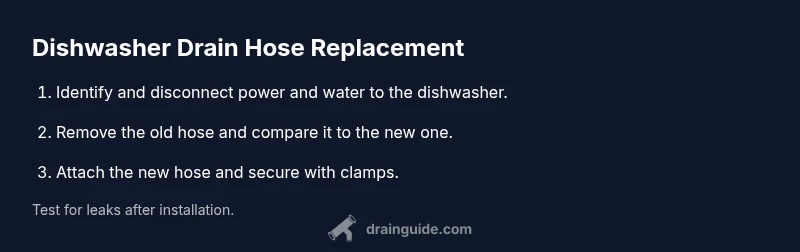
How to Replace a Dishwasher Drain Hose
Learn how to replace a dishwasher drain hose with a clear, step-by-step approach. This guide covers signs of wear, tools needed, safety tips, and best practices to prevent leaks and backups.


In this guide, you will learn how to replace a dishwasher drain hose and restore proper drainage. You’ll identify when replacement is needed, gather the right tools, and follow a safe, step-by-step process. By the end, you’ll prevent leaks and backups with a correctly installed hose and clamps. This quick answer sets expectations and directs you to the detailed steps.
Why replacing the dishwasher drain hose matters
A worn or cracked drain hose is a leading cause of water leaks, clogs, and backups under the sink. Over time, heat, chemical cleaners, and movement can degrade the hose’s lining and connectors. Replacing a damaged hose not only stops leaks but also improves drainage efficiency and reduces mold risk. According to Drain Guide, a worn drain hose is a common source of leaks in many kitchen drain systems, so inspect it and replace when you notice cracking, bulging, or wet spots along the hose.
Choosing the right replacement hose
Not all dishwasher hoses are interchangeable. When selecting a replacement, check the hose diameter, length, and the type of end connectors to match your model. Look for a hose made of durable, flexible material with a secure clamp system. In addition, ensure the hose is rated for hot water and dishwasher use, and that the installation path avoids sharp bends. Drain Guide analysis shows that using an incorrect size or loose clamps is a frequent cause of leaks after replacement, so measure carefully and confirm compatibility before purchasing.
Common mistakes to avoid
Common mistakes include using metal clamps in place of the original clamps, not disconnecting the power or water supply, and forcing the hose through tight spaces. Avoid kinking or over-extending the hose, which can trap water and cause backups. Do not reuse old fittings if they show wear. Always test with the dishwasher empty and run a short cycle to check for leaks. If a leak persists, double-check the clamps and hose routing. For safety, unplug the unit before starting and wear gloves to protect hands from sharp edges.
When to call a professional
If you encounter persistent leaks, cracks that extend into the hose’s fabric, or if the hose routing passes near electrical components, consider professional help. A licensed appliance technician can confirm the hose compatibility, verify the drain connection, and ensure the air gap (if present) is correctly installed. The Drain Guide team recommends contacting a pro if you are uncomfortable handling wiring, disposal connections, or complex under-sink routing.
Tools & Materials
- new dishwasher drain hose(Choose a hose with appropriate ends to fit your model)
- hose clamps (stainless steel or high-quality plastic)(Two clamps—one for the dishwasher connection and one for the drain connection)
- bucket or towel(Catch water and protect cabinet surfaces)
- screwdriver (flathead or Phillips, depending on clamps)(Remove and secure hose clamps)
- needle-nose pliers(Assist with clamps or hose fittings)
- utility knife or scissors(Trim hose if you have to shorten; but do not cut too short)
- gloves(Protect hands from sharp edges and contaminants)
- flashlight or headlamp(Better visibility under sink)
- spare parts(Have extra clamps and adapters on hand)
Steps
Estimated time: 40-60 minutes
- 1
Turn off power and water supply
Unplug the dishwasher or switch off the circuit at the breaker. Shut off the under-sink hot water supply to prevent any accidental sprays. Have a towel ready, since some residual water will drain from the lines.
Tip: Verify power is off with a tester before touching any electrical components. - 2
Move the dishwasher for access
Carefully pull the appliance away from the cabinet to expose the back and bottom where the drain hose connects. If the unit is hard to move, disconnect the supply lines first and use a helper to avoid injury. Place a bucket or towels to catch any remaining water.
Tip: Keep the power cord out of the way and avoid tugging on electrical wiring. - 3
Remove old hose and clamps
Loosen and remove the hose clamps. Detach the hose from the dishwasher fitting and from the drain or disposal side. Note the routing so you can replicate the path with the new hose.
Tip: Take a quick photo of the existing setup for reference. - 4
Prepare the new hose
Compare the new hose to the old one for length and end fittings. If necessary, trim only a small amount to avoid making the hose too short. Slide fresh clamps onto the hose ends before connecting.
Tip: Do not over-trim; aim for a clean, straight run with no bends. - 5
Install the new hose
Attach the hose to the dishwasher drain outlet and secure with clamps. Connect the other end to the drain or disposal, ensuring a secure seat and no kinks. Tighten clamps firmly but avoid overtightening that could crush the hose.
Tip: Check that the hose alignment avoids sharp bends or contact with sharp cabinet edges. - 6
Test for leaks and finalize
Restore power and run a short empty cycle to check for leaks. Inspect every connection, especially where the hose meets fittings. If you see a drip, reseat the hose and re-tighten clamps.
Tip: Run multiple cycles to ensure long-term seal integrity.
Got Questions?
What signs indicate I should replace the dishwasher drain hose?
Look for visible cracks, bulges, soft spots, mold, or frequent leaks. If you notice water backing up or dampness around the hose, replacement is often the best option.
Watch for cracks, bulges, or damp spots. If leaks persist, plan a hose replacement.
Can I replace the hose myself, or should I hire a pro?
Most homeowners can replace a dishwasher drain hose with basic tools. Ensure power is off and there’s no plumbing issue behind the unit. If you’re uncomfortable with gas or electrical work, hire a professional.
You can do it yourself if you’re careful—just follow safety steps and keep the area dry.
What tools do I need to replace the hose?
You’ll typically need a screwdriver or pliers for clamps, a new hose, clamps, a bucket, towels, and gloves.
Have the screwdriver and pliers ready, plus a new hose and clamps.
Is a damaged hose always the cause of leaks?
Not always. Leaks can also come from loose connections, faulty gaskets, or clamps that aren’t tight enough. Inspect all joints.
Leaks aren’t always from the hose; check all fittings and gaskets first.
How long does replacement take?
Most replacements take about 30 to 60 minutes, depending on under-sink access and how easily you can reach the hose ends.
Usually under an hour, if you have clear access.
Do I need to disconnect from the disposal or air gap?
If your setup uses a disposal or air gap, disconnect the hose from those components and reattach to the new hose with proper clamps.
Yes, disconnect from the disposal or air gap if present and follow the routing requirements.
Watch Video
The Essentials
- Inspect the hose for wear before replacement
- Match hose length and connector type to your model
- Secure clamps firmly and avoid kinks
- Test with an empty cycle to confirm no leaks
- Consult a professional if unsure about wiring or complex routing