Sinus Drain Procedure: Safe Home Saline Irrigation Guide
Learn a safe sinus drain procedure using nasal saline irrigation at home. This practical guide covers steps, materials, safety tips, troubleshooting, and expert observations from Drain Guide to help you improve nasal drainage.


Safe nasal saline irrigation can help sinus drainage at home. Follow a clear, step-by-step guide and observe safety notes to minimize discomfort. For a complete procedure with tips and cautions, see the full Drain Guide article. Read the full article for step-by-step instructions, safety notes, and expert tips from Drain Guide.
What is the sinus drain procedure and why it helps
A sinus drain procedure, in the context of home care, usually refers to a controlled nasal saline irrigation designed to help clear accumulated mucus, reduce congestion, and improve drainage from the sinuses. The goal is to gently flush out irritants without forcing fluid into the ears or throat. This practice is widely used as a noninvasive way to support nasal hygiene, especially during seasonal allergies, colds, or sinus pressure. According to Drain Guide, understanding the anatomy of the nasal passages and the direction of flow is essential for effective, safe irrigation. The sinus drain procedure is not a replacement for medical treatment in cases of persistent fever, severe facial pain, or suspected infection, but it can be a helpful adjunct when used correctly. The Drain Guide team emphasizes that patients should always start slowly, monitor for discomfort, and stop if symptoms worsen. By learning the basics, homeowners and DIY enthusiasts can empower themselves to support drainage with confidence while minimizing risk.
Key ideas include using sterile saline solutions, selecting a comfortable irrigation device, and maintaining a clean routine. Proper technique matters as much as the solution itself. This article uses practical guidance to help you perform the sinus drain procedure safely at home, aligning with standard recommendations from major public health sources. The goal is to improve nasal hygiene, not to diagnose or treat serious conditions without professional advice.
When to use a home saline rinse safely
Home saline irrigation is generally appropriate for temporary congestion due to colds, allergies, or irritants. It can be a useful daily routine for certain individuals seeking relief from stuffed sinuses or postnasal drip. Drain Guide cautions that you should not rely on irrigation if you have a nasal fracture, a recent facial trauma, active sinus infections with high fever, or uncontrolled nasal bleeding. In these cases, seek medical evaluation first. If you are pregnant, have a compromised immune system, or suffer from chronic nasal polyps, consult a clinician before adopting a regular nasal irrigation routine. Always use sterile saline and clean equipment to reduce the risk of introducing contaminants. If you experience persistent symptoms beyond a few days, consider a professional assessment to rule out underlying issues such as chronic rhinosinusitis or a deviated septum. Drain Guide observes that patient safety and personal comfort should guide how often irrigation is performed.
Choosing your irrigation device: neti pot vs squeeze bottle
There are several safe devices for nasal irrigation, with the neti pot and squeeze bottle being the most common. The neti pot offers a gentle, circular flow that some people find easier to control, while squeeze bottles provide adjustable pressure, which can help if you have thicker mucus. Regardless of device choice, ensure the tip is clean, the flow is gentle, and you never force water through a blocked passage. The Drain Guide analysis shows that comfort and proper technique are more important than the device itself. Clean the device between uses with warm soapy water, rinse thoroughly, and allow it to air dry. If you use a neti pot, keep the spout clean and inspect seals for any cracks. For squeeze bottles, replace caps if they show signs of wear. In both cases, use sterile saline and cooled, boiled water or distilled water when mixing.
Step-by-step overview of the safe nasal saline irrigation
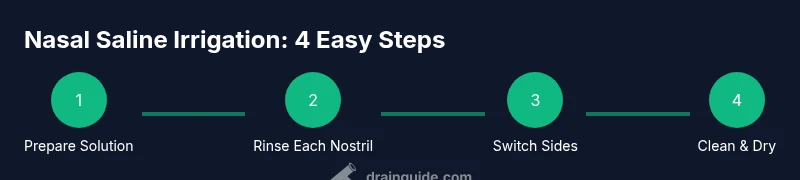
This section provides a high-level overview of the sinus drain procedure, which is expanded in detail in the STEP-BY-STEP block. Start with a clean workspace, gather your materials, and prepare a lukewarm saline solution. Position your head and device correctly to direct the flow toward the upper nasal passages. Breathe through your mouth and avoid swallowing the rinse. After completing both nostrils, gently blow the nose to remove excess fluid and clear any residual mucus. Finally, clean and dry your irrigation device to prevent bacterial growth. The goal is a comfortable, balanced rinse that supports drainage without discomfort. Drain Guide recommends avoiding aggressive force or improvised solutions that can irritate the nasal lining.
Post-irrigation care and common sensations
After irrigating, most people notice a sense of relief, clearer breathing, and reduced postnasal drip. Mild nose burning or a temporary salty taste is normal when using a new saline concentration. If tingling or burning persists beyond a few minutes, check your solution concentration and water temperature. Use a tissue to gently blot any excess moisture and avoid rubbing inside the nostrils. If you notice persistent runny nose or water dripping into the throat, adjust your head position for the next session. Hydration helps keep mucous membranes healthy, and a light moisturizer around the nostrils can prevent irritation from frequent irrigation. Drain Guide highlights that consistent technique over several days yields the best results, but you should pause if you experience unusual symptoms or pain.
Troubleshooting common issues
Common issues include watery discharge after irrigation, a transient burning sensation, or a sense of fullness in the ears. To troubleshoot, verify that the saline solution is properly mixed and not too concentrated, recheck water temperature, and ensure you’re not tilting your head too far forward. If you feel pressure or pain in the ears, reduce the flow and angle, then resume slowly. For persistent mucus that won’t clear, consider repeating the rinse with a lower volume and shorter duration. If symptoms worsen or dehydration occurs, stop and seek medical care. Drain Guide reminds readers that irrigation is a supportive measure, not a cure for structural problems or infections requiring antibiotics or surgery.
Authority sources, safety guidelines, and practical considerations
Always consult reliable sources when starting any nasal irrigation routine. Authoritative references provide guidance on safe practice, device hygiene, and when to seek medical help. Notable sources include public health and medical education resources that emphasize sterile technique, proper concentration, and patient safety. If you have a history of sinus surgeries, consult your clinician before attempting regular irrigation. The Drain Guide approach aligns with best practices from public health organizations and medical libraries. For further reading, you can explore resources such as the National Institutes of Health and related public health information. For more technical guidance and evidence, see the cited sources below.
Putting it into practice: a simple at-home routine
A practical routine can be integrated into daily hygiene. Start with a short warm-up rinse, then gradually increase to a gentle full rinse for both nostrils. Use a fixed time of day that fits your schedule, such as after waking or before bed. Keep a log of routines and symptom changes to discuss with a clinician if needed. The routine should feel comfortable and not painful; if it does, pause and reassess your method. Drain Guide notes that small, consistent steps consistently yield better long-term outcomes than intense, infrequent sessions.
Tools & Materials
- Sterile saline solution packets (0.9% NaCl)(Follow package directions; do not use raw seawater or homemade solutions unless advised by a clinician.)
- Neti pot or saline irrigation squeeze bottle(Choose a device you find comfortable; rinse before first use and between sessions.)
- Distilled or boiled water, cooled to body temperature(Water safety is essential; do not use boiling hot water.)
- Measuring cup or cap for mixing(Ensure accurate saline concentration according to the sachet instructions.)
- Towel or protective underlay(Prepare to catch drips and keep the area clean.)
- Mild fragrance-free soap and clean container for cleaning equipment(Clean your irrigation device after each use and air dry thoroughly.)
Steps
Estimated time: 15-25 minutes
- 1
Prepare your workspace and solution
Set up a clean bathroom sink or tray. Wash your hands, measure the saline per packet instructions, and mix with the recommended water temperature. Stir gently until completely dissolved and inspect for any cloudiness. This initial preparation reduces irritation and ensures a consistent rinse.
Tip: Use lukewarm water (around body temperature) to prevent a cold shock to sensitive nasal passages. - 2
Position your head and posture
Lean forward slightly with your head tilted to the side. Aim the irrigation toward the upper nasal passage rather than directly into the nasal cavity’s center. Mouth open, breathe through it to avoid swallowing the rinse.
Tip: A gentle tilt keeps water from entering the ears and helps with drainage. - 3
Begin the rinse with device on one side
Place the spout at the entrance of the top nostril and slowly squeeze or pour the saline until the liquid runs out through the opposite nostril. Pause if you feel fullness, then resume slowly.
Tip: Start slow to gauge your comfort and avoid coughing from sudden pressure. - 4
Switch sides and continue
Repeat on the other nostril by tilting your head to the opposite side. Use controlled, slow streams. If you feel uncomfortable, stop, rinse, and adjust your head position before continuing.
Tip: Do not force the liquid; this can irritate nasal mucosa. - 5
Finish and clear nasal passages
Blow the nose gently to remove excess solution and mucus. If needed, you can perform a gentle sniff or a small breath through the mouth to help clearing. Avoid vigorous nose blowing immediately after irrigation.
Tip: Patience matters; rushing can irritate delicate nasal tissue. - 6
Clean and dry your equipment
Disassemble the device, rinse all parts with warm soapy water, rinse again, and air-dry completely before storage. Regular cleaning reduces bacterial growth and extends device life.
Tip: Never share irrigation devices to prevent cross-contamination.
Got Questions?
Is nasal irrigation safe for children?
Nasal irrigation can be safe for children when supervised by an adult and using age-appropriate devices. Start with a lower volume and gently monitor their response. Consult a pediatrician before starting a routine.
Yes, with supervision and appropriate device choice for kids; always consult a pediatrician first.
Can I use homemade saline solution?
Commercial saline packets are preferred for consistent salt concentration. If you make saline at home, use precise measurements (about 0.9% saline) and sterile water; incorrect concentrations can irritate mucosa.
Homemade solutions are possible only with careful measurements and sterile water.
How often should I perform this sinus drain procedure?
Frequency depends on symptoms and medical advice. Many people start with once daily during a congestion flare and reduce as symptoms improve. Do not exceed guidance from your clinician.
Follow your clinician’s guidance; start with daily sessions during a flare, then adjust.
What signs indicate I should seek medical attention?
If you develop fever, severe facial pain, swelling, neck stiffness, or vision changes, discontinue irrigation and seek medical care. Persistent nasal bleeding or worsening symptoms warrant professional assessment.
Seek medical care if fever, severe facial pain, or bleeding occurs.
Neti pot or squeeze bottle—which is better?
Both are effective if used correctly. Choose the device you find more comfortable and practice proper cleaning. The key is consistent technique and water safety.
Choose the device you prefer and focus on safe technique and hygiene.
Is nasal irrigation effective for sinus infections?
Nasal irrigation can help relieve congestion and mucus buildup but is not a cure for bacterial sinus infections. Seek medical care if symptoms persist beyond a few days or worsen.
It helps with symptoms but isn’t a cure; see a clinician if it lasts.
Watch Video
The Essentials
- Learn a safe nasal saline irrigation technique for sinus drainage.
- Use sterile saline and clean equipment to reduce infection risk.
- Maintain comfortable head positioning and gradual flow for best results.
- Stop irrigation if you experience severe pain, bleeding, or fever.
- This method supports drainage but is not a substitute for medical care when needed.