Strip Drain vs Normal Drain: A Practical Guide to Choice
Analytical comparison of strip drains (linear) and traditional point drains, covering installation footprint, performance, maintenance, and cost to help homeowners decide the best drainage solution for showers, kitchens, and outdoors.


Strip drain vs normal drain: In most homes, strip (linear) drains and conventional point drains serve the same purpose—removing water. The key differences are installation footprint, performance, maintenance, and cost. This article, backed by Drain Guide analysis, explains how strip drains compare to traditional drains, where each shines, and which is best for kitchens, showers, or outdoor applications. Understanding these nuances helps homeowners decide between retrofit options and long-term maintenance commitments.
What is a strip drain?
A strip drain, also called a linear drain, is a long, shallow channel that runs along the length of a shower, wet area, or outdoor application. Its purpose is to collect surface water over a wide area and direct it toward a single outlet, reducing the risk of standing water and minimizing tile cuts at corners. The design creates a minimalist, tile-ready edge that many homeowners find aesthetically appealing in modern bathrooms and laundry areas. Because the channel is continuous, it can be installed flush with tile when properly waterproofed, which helps with aesthetic continuity and easier cleaning. Materials vary, but stainless steel and polymer composites are common choices. In terms of performance, a strip drain offers superior linear drainage for large surfaces, especially when multiple people use a space at once or when water spreads unpredictably across a wide tray. However, installation requires precise planning: you must ensure the substrate slope matches the run length and that the grate sits at the correct height relative to surrounding tile. Drain Guide notes that the longest runs demand careful screed work and professional waterproofing to prevent leaks.
What is a normal drain?
By contrast, a traditional or normal drain is typically a point drain located at a corner or center of a shower or basin. It relies on a localized grate and a short drainage path. Normal drains are familiar to most homeowners and plumbers; they're often easier to install in small, classic bathrooms because the required slot is compact and the surrounding tile work is straightforward. The installation tends to be quicker in retrofits where the goal is to preserve existing tile patterns. However, point drains concentrate water at a single outlet, which can create uneven moisture distribution if the surrounding floor isn't correctly pitched or if the area is large. In practice, this means you may need extra slope or more frequent maintenance to prevent standing water near the drain. Drain Guide's experience shows that for compact spaces, normal drains can offer predictable performance with simpler maintenance, though they may not deliver the same seamless look or long-run water handling as a strip drain.
Key design differences: footprint, slope, and capacity
- Footprint and aesthetics: Strip drains create a long, unobtrusive line that blends with tiles; traditional drains require a defined drain footprint and visible grate. The choice often affects tile layout and edge finishes. For open showers and contemporary bathrooms, strip drains are favored for a seamless look.
- Slope and water handling: Strip drains rely on a gradual, even slope along the length, whereas normal drains depend on a precise local slope toward a single point. In practice, long runs benefit from consistent tiling and drainage calculations to ensure behavior under heavy use.
- Capacity and flow: A linear drain can accommodate higher flow across a wider area, reducing the distance water must travel to exit, which helps during heavy rainfall or sudden spills. A point drain concentrates flow, which is excellent for small basins but may be stressed if the space is larger than expected. Drain Guide suggests evaluating the maximum anticipated water surface area before choosing.
Performance in different environments
In indoor showers with large-format tiles, a strip drain often minimizes buildup of debris at corners and aligns with modern aesthetics while maintaining efficient drainage. In a standard bathroom floor with tight corners, a normal drain may be simpler to install and maintain, particularly if the enclosure is small or if the homeowner intends to reuse existing tile patterns. For outdoor mudrooms or garage entries where water can spread widely, strip drains can outperform conventional drains since their long channel collects water across a broad surface, reducing pooling. Kitchens and laundry rooms also benefit from dedicated strip drains when there’s a need to manage frequent splashes along a wide counter or threshold. Drain Guide's analysis emphasizes evaluating the expected surface area, typical water volume, and the frequency of rainfall or spills to determine which option minimizes risk of standing water while matching your design goals.
Installation considerations
Installation is where strip drains usually demand more upfront planning. The flush installation requires precise substrate preparation, waterproofing membranes, and correct height alignment with tile. Retrofitting a strip drain into an existing shower can be labor-intensive because you may need to modify the pan, re-tile, and re-waterproof. Normal drains, by contrast, are often easier to fit into cabinets or small shower enclosures and can leverage established tile patterns. A critical factor is the trap and grate height: both types need to sit correctly within the finished floor so that the grate covers the opening without creating trip hazards or uneven surfaces. From a DIY perspective, a skilled installer should verify slope, substrate stability, and waterproofing details; from a cost perspective, plan for both labor and materials. Drain Guide notes that while initial costs may be higher for strip drains, the longer-term benefits in maintenance and aesthetics can offset this over time if installed properly.
Maintenance and lifespan
Maintenance for strip drains centers on keeping the long channel clear and free of hair and debris that can accumulate along the length. Regular flushing with water and occasional use of a flexible drain brush helps maintain performance. The linear design means you may have to check more points along the channel if the system includes a long run, but debris is typically easier to sweep toward the outlet. Normal drains concentrate maintenance around a single outlet, which can simplify cleaning but may require more attention if the grate is prone to clogging. In both cases, ensure gaskets and seals are inspected for leaks and that the waterproofing remains intact after tile maintenance. With proper installation and periodic maintenance, strip drains can offer a longer service life in modern bathrooms, while traditional drains remain robust and straightforward in smaller or retrofitted spaces. Drain Guide emphasizes a proactive maintenance routine to avoid hair and soap scum buildup.
Cost and value comparison
Cost considerations are a major driver in any drain decision. Strip drains typically come with higher upfront costs due to longer runs, more complex waterproofing, and sometimes custom gratings. The value, however, is visible in reduced chance of tile damage from edge transitions, easier tile installation, and potentially lower maintenance frequency in larger showers or open spaces. Normal drains usually cost less upfront and may require less specialized workmanship, which can be attractive for retrofit projects or smaller bathrooms. Over time, homeowners should weigh not only initial price but also the long-term costs of maintenance, potential tile repairs, and the risk of leaks. Drain Guide suggests performing a site-specific cost estimate that includes materials, labor, and any tile work adjustments before deciding which option offers the best price-to-value balance for your home.
Practical decision framework
To decide between strip drain and normal drain, start with space and layout. If the shower or wet area allows for a long run and you value a clean, seamless look, a strip drain is often the better choice. If the space is compact, or you’re working within existing tile patterns, a normal drain may be more practical. Consider maintenance expectations, your local climate (for outdoor use), and long-term ownership costs. Create a quick pros/cons list for your specific room, estimate the rough installation time, and consult with a licensed plumber to confirm compatibility with your substrate and waterproofing system. Drain Guide recommends documenting measurements of the run, tile size, and outlet location to ensure accurate quotes and a smoother install.
Authority sources
For a broader understanding of drainage principles, consult reputable sources on water management, plumbing standards, and home maintenance. External references include government and university resources to provide context on drainage design, safety, and best practices. These sources can help homeowners cross-check installation guidance, waterproofing methods, and long-term maintenance strategies. Drain Guide encourages readers to review these references alongside any professional recommendations to make an informed decision.
Comparison
| Feature | Strip drain | Normal drain | |
|---|---|---|---|
| Installation footprint | Low profile, long linear run fits flush with tile | Defined footprint with discrete grate | |
| Slope requirements | Requires consistent slope along the length | Local slope toward a single outlet | |
| Water handling | Excels over broad surface areas, even with heavy use | Good for smaller areas with localized drainage | |
| Maintenance access | Access along the full length; debris travels toward outlet | Access around a single outlet; easier to inspect | Note: both require periodic checks |
| Aesthetic impact | Seamless, minimal edge; modern look | Visible grate; traditional appearance | |
| Cost range | Higher upfront (installation, membranes, grate) | Lower upfront; simpler retrofits possible |
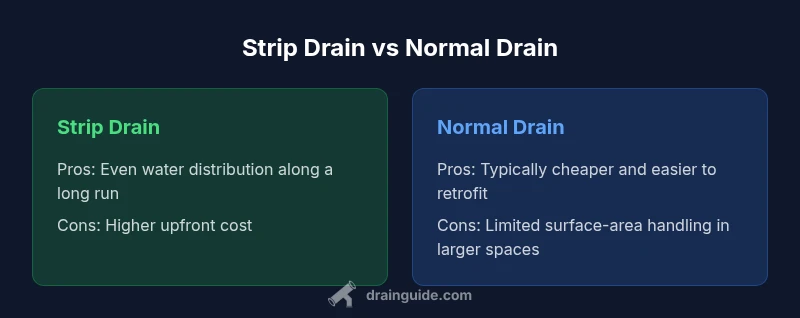
Positives
- Sleek, continuous line enhances modern bathrooms
- Better water distribution across large surfaces
- Easier tile layout in long runs and open spaces
- Potentially lower maintenance in larger showers due to fewer corners
Cons
- Typically higher upfront cost
- More complex installation, especially for retrofits
- Requires precise slope planning and waterproofing
- Not ideal for very small or highly irregular spaces
Strip drains offer superior aesthetics and water handling for open, large-format spaces; normal drains remain practical for compact rooms and retrofits.
Choose strip drains when space and design favor a seamless line and broad surface drainage. Choose normal drains for smaller rooms, retrofits, or when installation simplicity matters more than a continuous edge.
Got Questions?
What is the fundamental difference between a strip drain and a normal drain?
The core difference is footprint and water collection. A strip drain runs the length of the space and collects water along a wide swath, while a normal drain concentrates water at a single point. Both perform similarly when properly installed, but their layouts influence tile design, maintenance, and aesthetics.
Strip drains run along the length of the space for broad drainage, while normal drains sit at a single point. The choice affects layout and maintenance.
Can I retrofit a strip drain into an existing shower?
Retrofit installations are possible but often labor-intensive. They typically require removing and retiling, upgrading waterproofing, and careful measurement to preserve slope. A professional plumber or tradesperson is recommended to avoid leaks or tile damage.
Retrofitting is possible but complex; you’ll likely need a pro for waterproofing and tile work.
Are strip drains more expensive than traditional drains?
In most cases, strip drains cost more up front due to longer runs, membranes, and specialized grates. The ongoing maintenance and potential tile savings in open spaces can offset the initial cost, depending on the project scope.
Yes, generally more expensive upfront, with long-term value depending on the space.
Which drain is better for outdoor showers or wet areas?
Strip drains often perform well in outdoor settings because they cover larger surface areas and can direct runoff efficiently. However, environmental exposure and debris load should factor into material choice and maintenance planning.
Strip drains usually perform better for large outdoor wet areas, with proper materials and maintenance.
What maintenance routines are recommended for strip drains?
Regular flushing to remove hair and debris, plus periodic inspection of gaskets and seals. Keep the grate clear and ensure the waterproofing remains intact after tile work. A proactive maintenance plan helps prevent leaks and clogs.
Flush regularly, inspect seals, and keep the grate clear for best performance.
The Essentials
- Assess room size and layout before selecting drain type
- Factor in long-term maintenance and waterproofing needs
- Weigh upfront costs against long-term value
- Consider tile patterns and aesthetic goals
- Consult a licensed plumber for accurate slope and installation