Where Is Drain Filter on Washing Machine
Discover where the drain filter sits on most washing machines, how to remove and clean it, and simple maintenance tips to prevent clogs. Drain Guide delivers clear, step-by-step guidance for DIY homeowners.


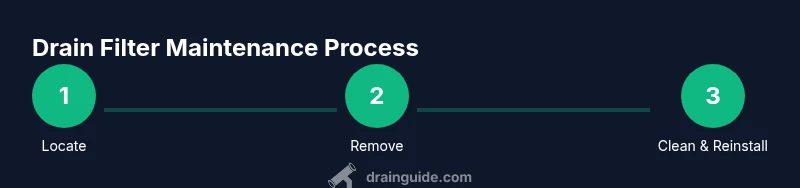
You’ll locate the drain filter by opening the front access panel of your washer and removing the filter cover. Unplug the machine first, place a shallow tray under the opening, then twist out and clean the filter thoroughly. Reinstall, run a test cycle, and clean the housing to prevent future clogs.
What the drain filter does and why it matters
The drain filter is a small screen or grate inside the washing machine’s drainage path. Its job is to catch lint, coins, hair, and other debris before wastewater leaves the drum and travels through the hose. Over time, this debris can accumulate and cause slow draining, Gurgling noises, or complete clogs. By locating and cleaning the drain filter on a regular basis, you reduce the risk of backups and improve overall performance. According to Drain Guide, understanding the filter’s purpose helps homeowners diagnose drainage problems quickly and perform safe maintenance without calling a repair technician. Regular maintenance also helps protect the pump and reduces wear on seals, contributing to a longer-lasting washer.
Typical locations and configurations you might see
Many modern front-loading machines place the drain filter behind the lower front kick panel. Some models have a small access door on the right or left side of the bottom front panel. A few top-loading models route drainage through the center agitator housing, with a filter located within the tub neck or near the pump. It may be obvious in some machines, while others require removing a guard or panel. Drain Guide notes that while the exact location varies by brand and model, the general access point is near the bottom front and clearly marked by a small grate or screws.
- Front-loaders: typically behind the toe-kick panel or a small access door at the bottom front.
- Top-loaders: filter often located behind an equally small access panel near the bottom or side.
- Compact machines: may have a compact filter behind a rear panel or under the drum access plate.
Always consult your owner’s manual for exact instructions and diagram references. If you don’t have the manual, manufacturer support sites or a quick model search will usually reveal the correct filter location.
Safety and prep before you reach for the filter
Power off the washer and unplug it before starting any maintenance. Clear the area around the machine and place a shallow tray or towel beneath the access panel to catch any standing water. Wear rubber gloves to protect your hands from sharp edges and use a flashlight to improve visibility inside the filter housing. If your model uses hot water lines, avoid contact with steam or hot metal—let the machine cool briefly before you remove any coverings. By following these safety steps, you minimize the risk of electric shock or spills and create a safer working environment.
Step-by-step access and removal (high-level overview)
Accessing and removing the drain filter involves five practical actions: locate the access panel, remove the cover, unscrew or pull out the filter, inspect the housing for trapped debris, and prepare to clean. While each model is different, most washers share a similar sequence that keeps you safe and reduces water spillage. Drain Guide emphasizes taking your time and testing the drain path after reassembly to confirm proper flow. In addition to lint and coins, keep an eye out for worn seals or gasket material around the housing, which can also affect drainage.
Cleaning, inspection, and reassembly
Once the filter is out, rinse it under running water to remove lint, hair, coins, and fabric fibers. Use a soft brush or old toothbrush to scrub any stubborn residue from the screen and frame. Inspect the filter housing for cracks, rust, or dark buildup, and wipe with a clean cloth. Reinsert the filter securely, ensuring it sits flush with the housing and does not bow or tilt. Replace the cover or panel, re-seat any screws, and run a short rinse cycle to clear out any remaining debris in the line. If you notice a leak around the panel after reassembly, recheck the seal and tighten fittings as needed.
Maintenance routine to prevent future clogs
Create a simple monthly maintenance habit: unplug, inspect, and clean the drain filter for 5–10 minutes. Use a damp cloth to wipe away residue around the housing and check the drain hose for kinks. Consider a light flush with warm water to dislodge fine fibers that accumulate slowly. Avoid using harsh cleaners inside the filter area; these can degrade seals. Keeping a small tray handy during cleaning can help manage any water that escapes during the process.
Troubleshooting if drainage remains slow after cleaning
If the washer still drains slowly after cleaning, check the drain hose for kinks or blockages beyond the filter. Ensure the pump is running by listening for the hum during draining; a worn pump may require replacement. Inspect the filter’s o-ring or gasket for wear, as a poor seal can limit flow. If the machine is still under warranty, contact the manufacturer’s service line before attempting more invasive repairs. Drain Guide suggests documenting symptoms and steps taken to facilitate service calls.
Tools & Materials
- Flathead screwdriver (if needed to remove screws)(Use a small screwdriver; avoid overtightening screws during reassembly)
- Phillips screwdriver(Only if your model uses Phillips head screws)
- Shallow tray or absorbent towels(Catches water and debris to prevent spills)
- Rubber gloves(Protect hands from sharp edges and cleaning residue)
- Old toothbrush or soft brush(Scrubs the filter screen without damaging it)
- Mild dish soap(Light cleaning if buildup is stubborn)
- Flashlight(Improves visibility inside the housing)
- Bucket or pan for collecting water(Useful if your tray isn’t sufficient)
- Clean rag or microfiber cloth(Dry and wipe components after cleaning)
Steps
Estimated time: 30-45 minutes
- 1
Power down and prepare the area
Unplug the washing machine and move it if needed to access the front panel. Place a tray underneath the access area to catch water. Put on gloves and gather your cleaning tools before you begin.
Tip: This first step reduces electrical risk and keeps your workspace tidy. - 2
Access the drain filter
Open the front kick panel or access door according to your model. Use a flashlight to locate the filter cover. Remove any screws, then gently pull out the cover to reveal the filter.
Tip: Some panels use clips instead of screws — apply even pressure to avoid breaking the cover. - 3
Remove the filter
Carefully twist or pull the filter out from its housing. Note its orientation so you can reinstall it correctly. Have a towel ready to manage any residual water in the housing.
Tip: If the filter is stubborn, twist in small increments rather than forcing it out. - 4
Clean the filter and housing
Rinse the filter under warm running water, removing lint and debris. Scrub the screen with a brush and wipe the housing with a cloth. Check seals for wear.
Tip: Avoid using sharp tools; gentleness preserves the filter and gasket. - 5
Reinstall and test
Reinsert the filter in the correct orientation, replace the cover, and securely fasten screws or clips. Reconnect power and run a short rinse cycle to confirm there are no leaks and proper drainage.
Tip: If you hear unusual sounds or leaks, stop and recheck the seal. - 6
Document and maintain
Record the date of maintenance and what you cleaned. Schedule monthly checks to prevent buildup and ensure smooth drainage over time.
Tip: Consistency is the key to avoiding major clogs.
Got Questions?
What is the drain filter on a washing machine and what does it do?
The drain filter catches lint, coins, hair, and other debris to prevent clogs in the drain hose and pump. Regular cleaning reduces drainage problems and prolongs the life of the washer.
The drain filter catches debris to prevent clogs and should be cleaned regularly.
Where is the drain filter usually located?
Most washers place the drain filter behind a small access panel at the bottom front. Some models have a kick panel or a side panel access door. Always check your manual for the exact location.
It's usually behind a bottom front access panel; check your manual for the exact spot.
How often should I clean the drain filter?
Clean the drain filter every month or whenever you notice slow drainage or a backup. Regular cleaning helps keep the pump and hoses clear.
Clean monthly or when drainage slows to prevent clogs.
Can I clean the filter without unplugging the washer?
No. Always unplug the washer before removing the filter to avoid accidental starts or electric shock.
Always unplug before removing the filter.
What if the washer still drains slowly after cleaning?
Check the drain hose for kinks and the pump for wear. If problems persist, consult manufacturer support or a professional technician.
If drainage remains slow, inspect hose kinks and pump wear, and seek professional help if needed.
Are there differences between front-load and top-load machines?
Yes. Front-load washers typically have the filter behind the toe-kick, while top-load models may have a filter inside the tub neck or under the lid area. Use the manual as your guide.
Location varies by model; consult the manual for precise instructions.
Watch Video
The Essentials
- Identify the exact drain filter location before you start.
- Unplug the machine and prepare for water spillage.
- Clean the filter and housing thoroughly to restore drainage.
- Reassemble securely and test with a short cycle.
- Establish a monthly maintenance routine to prevent clogs.